Was this really the “saving” of premature babies? Why are the people paying to see them, like they’re some kind of freak show?
Recently, the unseen masculines were going after the disabled children. I witnessed them in the astral wheeling a beautiful girl of about 10 or 11 into the park. There, they began punching her hard in the face. I woke.
Whoever these entities are, they’ve been toying with the genetics of “actual” human beings for a long time.
These are time traveling, interdimensional whackjobs. Wheeling and dealing in human livestock. They’ve been prostituting humanity throughout the Universe … God does not want this to happen anymore.
May God have Mercy on Divine Feminine and the Loving Ones coming from her Womb. Amen.
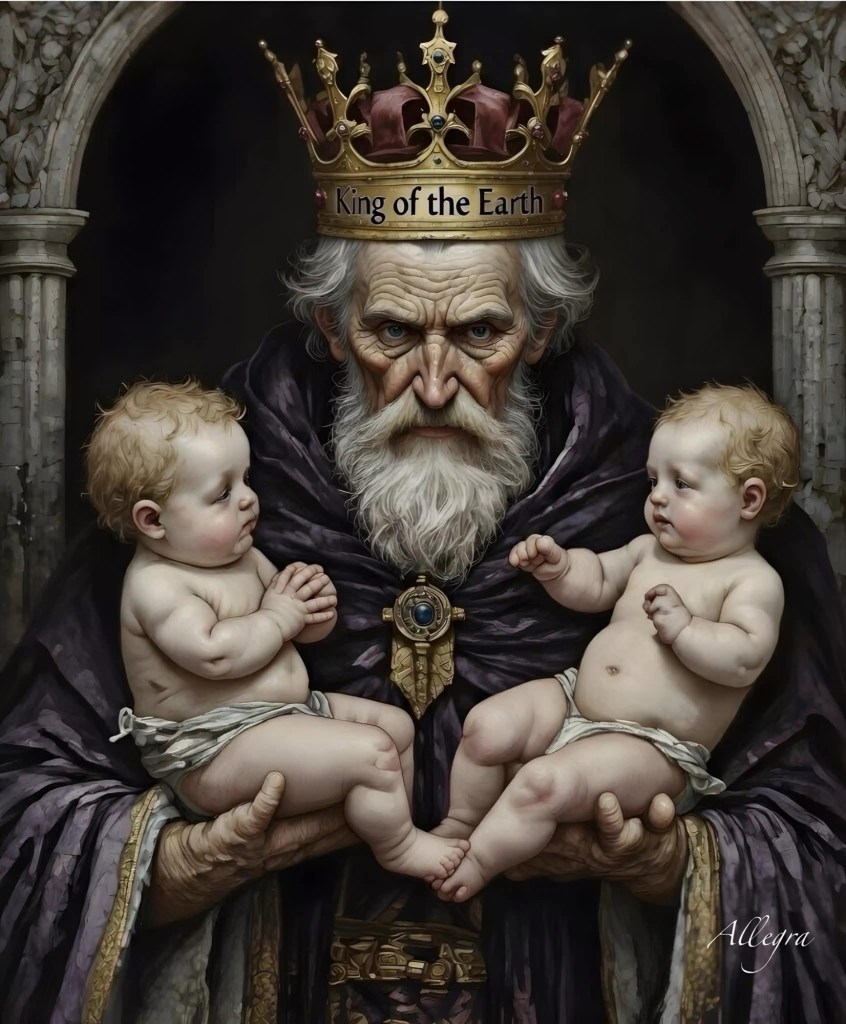
As the Epstein files are released, these documents confirm what many of us have known for years. The Wealthy Elite Class, the Kings of the Earth, the Stars of Hollywood, and the Music Mogels have been sacrificing children for power and money.
Nothing is new under the sun. We can read about child sacrifice all throughout the Old Testament of the Bible. The pagan cultures would sacrifice their children for money and power.
An example is the King of Moab who sacrificed his oldest son in exchange for a military victory.
2 Kings 3:27 AMP Then the king of Moab took his eldest son, who was to reign in his place, and offered him [publicly] as a burnt offering [to Chemosh] on the [city] wall [horrifying everyone].
The modern day Kings of the Earth are still sacrificing children in exchange for power. That’s because the power and the life is in the blood.
Lev 17:14 You see, the life of every creature is its blood; blood represents life. Blood is life.
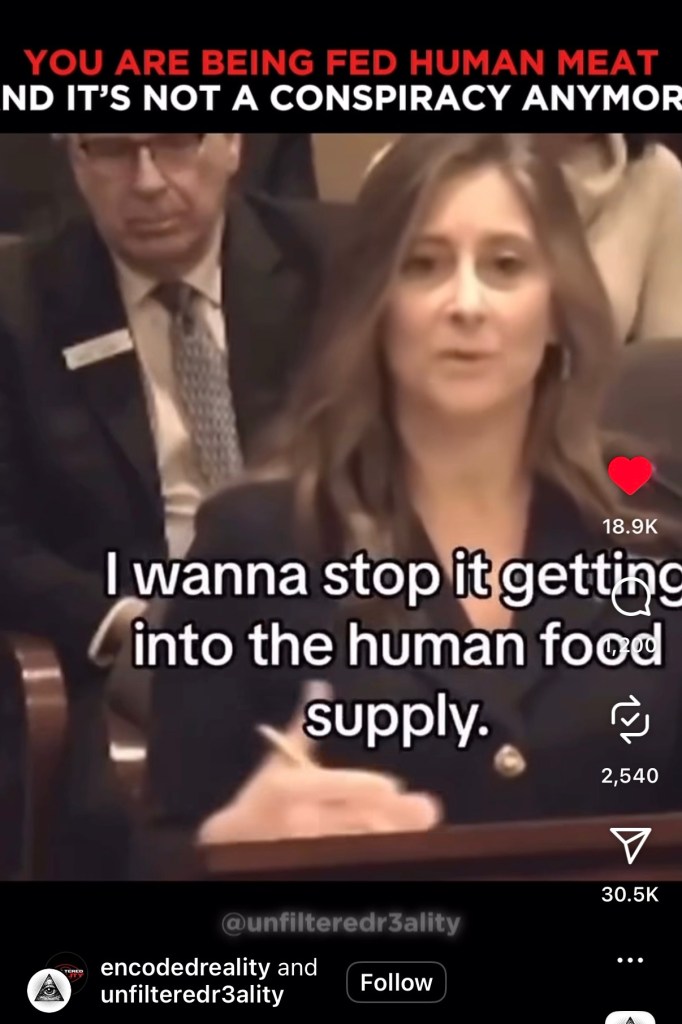
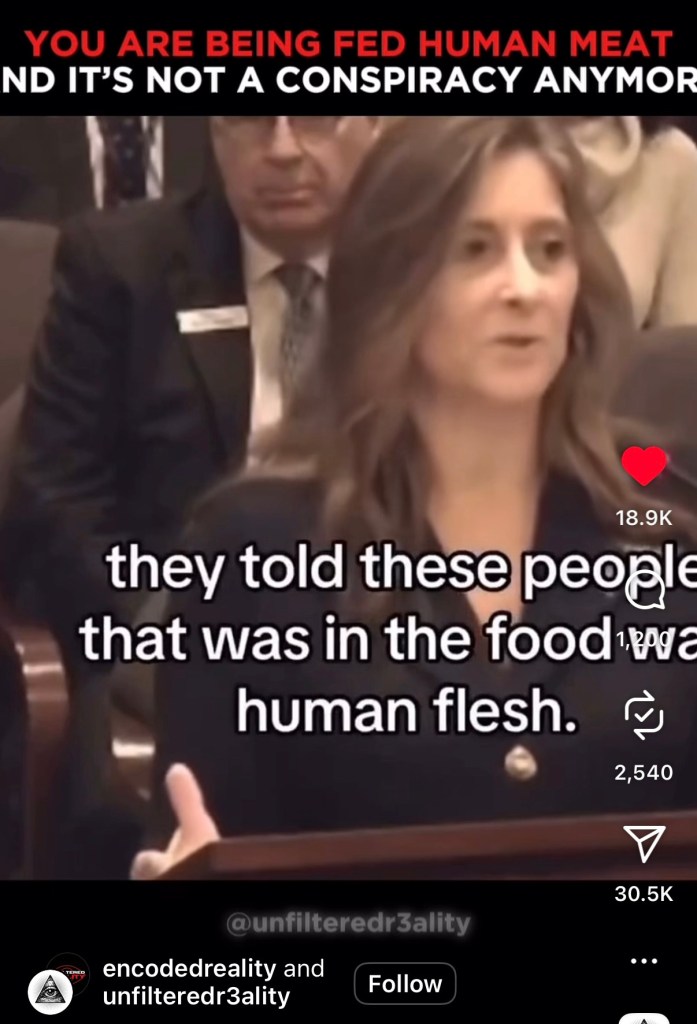
These wicked people feed off of the life force and energy of human sacrifice. They eat the flesh of the children and drink their blood during satanic rituals. They prefer to choose young innocents as they are made in the pure image of God.
They also drink their blood in the form of Adrenochrome. This is the blood of children who have been tortured to produce high levels of adrenaline. Then their tormentors remove the blood with a syringe and sell it to the rich Elites. It is the drug of choice because it produces euphoria and it has anti-aging benefits (the life is in the blood).
The source of this evil is from the Fallen Angels. We can read about how it began in the book of Enoch.
Enoch 7:4-5 And the Giants turned themselves against mankind in order to devour them. And they began to sin against the birds, and the beasts, and against the creeping things and the fish and devoured the flesh among themselves, and drank the blood thereof.
When people sell their souls to the Devil in exchange for power and wealth, then they are increasingly possessed by these wicked entities who thirst and hunger for human flesh and blood. They must have a continuous supply. This is why millions of children are trafficked every year and they “disappear”.
Lord Father, We cry out for the innocent children! We ask for Your divine intervention. Lord, we ask you to pour out Your Fire upon the Earth and burn off this evil. Lord we ask You expose the people involved in it. We ask You to release your warrior angels to rescue the children out of captivity. Lord, we cry out for the children to be healed from all the trauma,, and the shattering of their souls. We ask you to send Your healing power for supernatural restoration. Lord, we believe that You are going to rescue these children and raise them up as a mighty army in these end times. What the enemy meant for evil, You are going to turn it around for good. The very children that the devil thought he had destroyed are going to be used as Your weapon to destroy the works of the devil. Amen.
🦁👑🌟✨🦁👑🌟✨🦁👑🌟✨
Rev 18:11,13 The merchant of the Earth will weep and worn over her, for no one buys their merchandise anymore…the bodies and souls of men.
Richard Jenne was the last known person killed in the T4 Program. Richard was the son of Freida Jenne and lived a short and painful life. He was born on March 10, 1941 in Germany. He was born with an intellectual disability. In late 1944, Richard’s mother was advised to send him Kaufbeuren-Irsee Mental Institution. She did not know what would happen there.
Richard was treated horribly in the facility, as were all disabled children there. Nazi ideology believed that people with disabilities did not deserve life- they believed them to be unworthy and “useless eaters”. They were treated as such.
Little Richard, who was described as a “feebleminded idiot” was only three years old when he was sent to the institution. During his time there, he was subjected to starvation to weaken his body. One can only imagine how hungry the poor little boy must have been, not understanding where his mother was or why he was in this horrible place.
In April of 1945, American forces captured the town. The Americans did not know of the atrocities that happened in the institution for at least five more weeks. The “nurses” of the hospital continued to operate.
On May 29, 1945, Richard Jenne was murdered by lethal injection in his hospital bed by Sister Wörle. She had previously killed 211 minors in the hospital. Richard was only four years old. He is often considered the last victim of the Holocaust and is the last known victim of the T4 program.
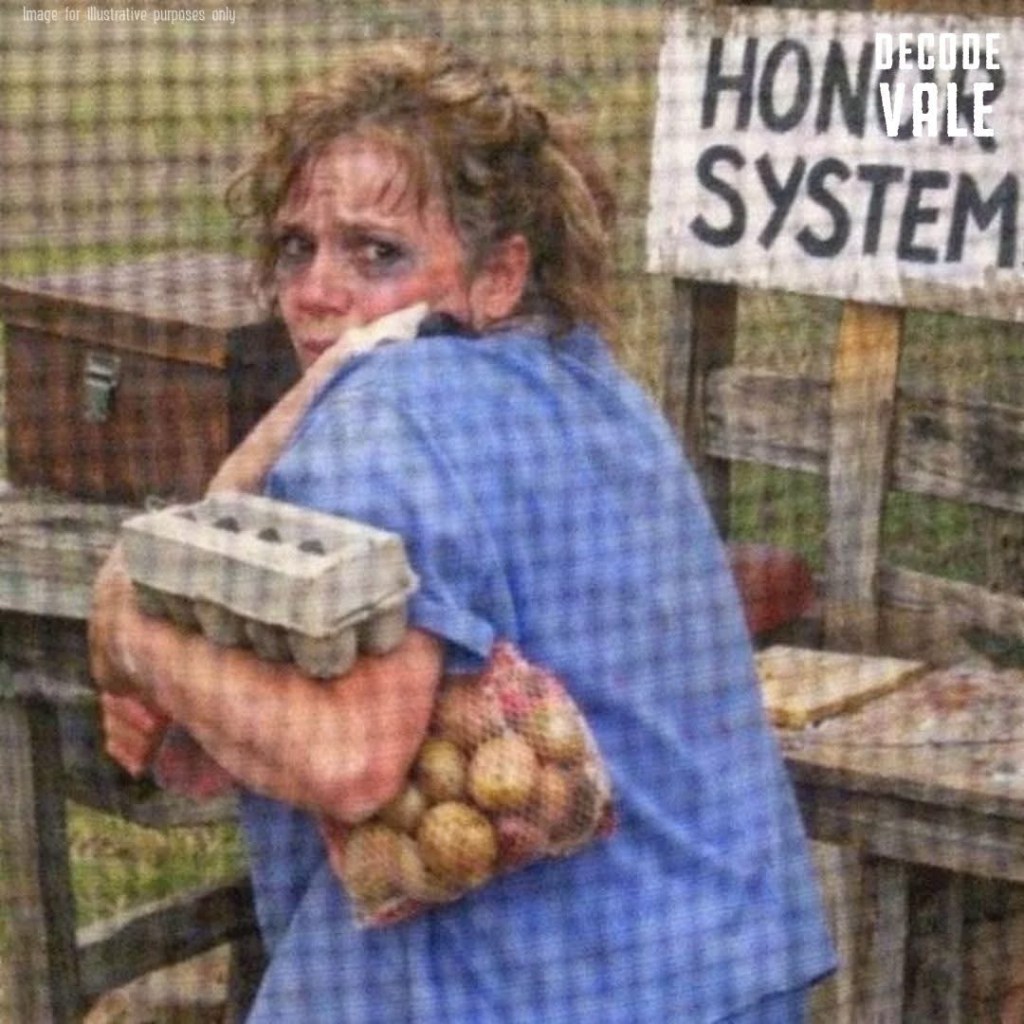
I watched the woman steal three dozen eggs and a sack of potatoes while my shotgun sat loaded behind the door, untouched. It wasn’t the theft that froze me; it was the way she wiped her eyes before she ran.
My father built this farm stand in 1958. It’s nothing more than a weathered oak lean-to with a tin roof, sitting at the end of a gravel driveway that used to be surrounded by cornfields. Now, it’s surrounded by subdivisions with names like “Oak Creek” and “Willow Run,” where the only oaks and willows were cut down to pour the concrete foundations.
For sixty years, there has been a metal lockbox nailed to the center post. Written on it in fading white paint are two words: THE HONOR SYSTEM.
You take what you need. You put the cash in the slot. Simple. That box put me through college. It paid for my mother’s hip surgery. It was a testament to a time when a man’s word was his bond and a neighbor was just family you hadn’t met yet.
But times have changed.
I hear it on the radio in my tractor. Inflation. Supply chains. The price of diesel is up. Fertilizer costs have tripled. And out here, where the factories closed down a decade ago and the new service jobs don’t pay enough to cover the rent, people are hurting. Really hurting.
I’d noticed the light pilfering for months. A missing tomato here, a jar of honey there. I ignored it. If you’re desperate enough to steal a tomato, you probably need the vitamins. But last Tuesday was different.
It was a gray, biting afternoon. The woman drove a sedan that sounded like it was coughing up a lung. She didn’t look like a criminal. She looked like a nurse, or maybe a teacher—tired, wearing scrubs that had seen too many shifts. I watched from the kitchen window, sipping lukewarm coffee.
She stood in front of the stand for a long time. She opened her purse and counted coins. She counted them again. I could see her shoulders slump. She looked at the prices written on the little chalkboard—prices I had already lowered twice, even though I was barely breaking even.
Then, she did it. She grabbed the eggs. She grabbed the potatoes. She moved fast, terrified, looking over her shoulder. She didn’t check the lockbox. She just threw the food into her passenger seat and sped off, gravel spraying against the “Honor System” sign.
My neighbor, frank, a transplant from the city who likes to give me unsolicited advice about liability insurance, was pulling into my drive just as she left.
“You see that, Beau?” Frank yelled, leaning out of his shiny truck. “I told you! You gotta get cameras. Or shut it down. People today? No morals. They’ll bleed you dry.”
I looked at the dust settling on the road. “Maybe,” I said.
“It’s the economy,” Frank grumbled. “Makes wolves out of sheep. Lock it up, Beau.”
I went inside. I looked at my ledger. I was in the red. Again. The logical thing to do was to close the stand. Or put a padlock on the cooler. Frank was right. You can’t run a business on good vibes and nostalgia.
But I couldn’t get the image of that woman’s slumped shoulders out of my head. That wasn’t the posture of a thief. That was the posture of a mother who had to choose between gas for the car and dinner for the table.
The next morning, at 4:00 AM, I went out to the barn.
I collected the eggs. I sorted the vegetables. Usually, I wash the potatoes until they shine. I polish the peppers. I make sure everything looks supermarket-perfect because that’s what the new people in the subdivisions expect.
Today, I did the opposite.
I took the biggest, most beautiful Russet potatoes—the ones that would bake up fluffy and perfect—and I rubbed a little wet dirt back onto them. I took the eggs that were slightly different shades of brown, the ones that were perfectly fresh but didn’t look uniform in a carton, and set them aside. I took the prize-winning heirloom tomatoes and found the ones that were shaped a little weird, the ones that looked like kidneys or hearts instead of perfect spheres.
I walked down to the stand and nailed up a new wooden crate right next to the Honor System box. I grabbed a piece of cardboard and a thick marker.
“SECONDS & BLEMISHED,” I wrote. “UGLY PRODUCE. CAN’T SELL TO STORES. 90% OFF OR TAKE FOR FREE IF YOU HELP ME CLEAR THE INVENTORY.”
I filled that crate with the best food I had. The “dirty” potatoes. The “mismatched” eggs. The “weird” tomatoes.
Then I retreated to the porch and waited.
She came back three days later. Same coughing car. Same tired scrubs.
She froze when she saw the new sign. She looked at the pristine, full-price vegetables on the main shelf, and then at the overflowing crate of “ugly” food. She approached it cautiously, like it was a trap.
She picked up a potato. She wiped a thumb over the smudge of dirt I’d carefully applied, revealing the perfect skin underneath. She paused. She looked at the house. I stayed back in the shadows of the curtains.
She didn’t run this time. She took a grocery bag and filled it. She took two dozen eggs. She took a bag of apples I had marked as “bruised” (they weren’t).
Then, she stood in front of the Honor System box. She didn’t have much, but I saw her put a crumpled bill in. It wasn’t the full price of the premium stuff, but it was something. She walked back to her car, not looking over her shoulder, but walking with her head up.
Over the next month, a strange thing happened.
The “Seconds” bin became the most popular spot in the county. It wasn’t just her. It was the old man from the trailer park down the road. It was the young couple who had just moved into the rental property. They’d pull up, read the sign, and load up.
And the Honor System box? It started getting heavy.
They weren’t paying market price. They were paying what they could. Sometimes it was quarters. Sometimes it was a five-dollar bill for a haul that was worth twenty. But nobody was stealing. Nobody was running.
One afternoon, Frank stopped by. He looked at the nearly empty “Seconds” bin and the few remaining items on the main shelf.
“You’re losing your shirt, Beau,” Frank laughed, shaking his head. “I did the math. You’re selling Grade A stock as garbage. I saw you put those peppers in there. Nothing wrong with them. You’re running a charity, not a business.”
“I’m not running a charity,” I said, leaning on my truck.
“Then what do you call it? You’re letting them take advantage of you.”
“No, Frank,” I said. “I’m letting them keep their pride.”
Frank went silent.
“If I give it away,” I explained, looking out at the cornstalks swaying in the wind, “they feel like beggars. If I let them ‘buy’ the ugly stuff for cheap, or help me out by ‘clearing inventory,’ they’re customers. They’re helping me out. It’s a transaction between equals. They get to feed their families without feeling small.”
Frank looked at the box, then at me. He didn’t say anything else about cameras.
Yesterday evening, I went down to close up the stand. The “Seconds” crate was empty, swept clean. The lockbox felt heavy. I opened it to collect the day’s take.
Amidst the dollar bills and coins, there was a small, sealed white envelope. No stamp. Just my name, “Beau,” written in neat cursive.
I opened it. Inside was a twenty-dollar bill—crisp, new. And a note.
“To the farmer, I know the potatoes aren’t bad. I know the eggs are fresh. I know what you’re doing. My husband got a job today. It’s not much, but it’s a start. We made a pot roast tonight with your ‘ugly’ vegetables. It was the best meal we’ve had in six months. Thank you for feeding us. But mostly, thank you for not making us ask. We will never forget this.”
I stood there in the fading twilight, the fireflies starting to blink over the fields. I held that twenty-dollar bill like it was a winning lottery ticket.
The economists will tell you that the Honor System is dead. They’ll tell you that in a dog-eat-dog world, you have to lock your doors and guard your hoard. They’ll tell you that kindness is a liability on a balance sheet.
But standing there, listening to the crickets and feeling the cool evening air, I realized they’re wrong. The Honor System isn’t about trusting people not to steal. It’s about trusting that if you treat people like people, they’ll rise to meet you.
I pocketed the note and walked back to the house. Tomorrow is another day. I need to wake up early. I’ve got a lot of perfectly good vegetables to go ruin.
Because hard times don’t create thieves; sometimes, they just reveal who is hungry. And true community isn’t about watching your neighbor through a lens; it’s about making sure their plate isn’t empty so they don’t have to steal to fill it.
My husband didn’t pack his bags for a mistress. He packed them for a “movement.” He said he was suffocating in our silence, but the truth is, he was drowning in the noise.
We were the picture of the American Dream, circa 2024. Or maybe the caricature of it.
We had the house in the suburbs with the kitchen island that was too big to clean and a mortgage rate that kept us awake at night. We had two cars in the driveway and subscriptions to five different streaming services we never watched. But mostly, we had the glow.
That pale, blue, flickering glow.
For the last three years, Mark hadn’t really been in the room with me. He was in the comment sections. He was in the forums. He was fighting invisible wars against strangers who lived three thousand miles away. Dinner conversations used to be about our day, about the kids who were off at college, about the leak in the gutter.
Then, the conversations stopped. They were replaced by lectures.
He would look up from his phone, eyes bloodshot, and ask if I’d seen what “They” were doing to the dollar. What “They” were putting in the water. What “They” were teaching in schools. He never specified who “They” were, and frankly, depending on which channel he was watching, “They” changed every week.
I was exhausted. Not physically, but deeply, spiritually tired. I was tired of walking on eggshells in my own living room, afraid that mentioning the price of eggs would trigger a twenty-minute rant about supply chains and geopolitical conspiracies.
So when he stood by the door with his duffel bag, looking like a man preparing for a tactical mission rather than a mid-life crisis, I didn’t cry.
“I can’t do this anymore, Sarah,” he said. He sounded breathless, like he was running from something. “I need to find a place that’s real. I need to be around people who are awake. You… you’re just sleepwalking. You’re content to let the world burn as long as you have your garden and your coffee.”
He called it a “sabbatical for clarity.” He was going to drive out West, maybe join an off-grid community he’d found online. A place where “freedom still mattered.”
“And what about us?” I asked, leaning against the granite counter I still hadn’t paid off.
“I need to save myself first,” he said. “You should try waking up, Sarah. The world is ending.”
Then the door clicked shut. The engine revved. And he was gone.
I stood there in the hallway. I waited for the panic. I waited for the crushing weight of abandonment that every magazine article told me I should feel.
Instead, I heard it.
The silence.
The TV wasn’t blaring breaking news about a crisis I couldn’t solve. The phone wasn’t pinging with notifications about impending doom. The air in the house didn’t feel charged with static electricity anymore.
I walked to the living room and picked up the remote. I pressed the power button. The screen went black.
“Okay,” I whispered to the empty room. “The world is ending. So I might as well make dinner.”
The first week was strange. The silence was loud. But by the second week, I realized something terrifying: We had been working ourselves to death to maintain a lifestyle that was making us miserable.
I looked at the big house. It was a museum of things we bought to impress people we didn’t like. It was a storage unit for anxiety.
So, I did the unthinkable. I put the house on the market.
My friends were horrified. “But Sarah, the equity! But Sarah, where will you go? You need to downsize to a condo downtown, stay connected!”
I didn’t want a condo. I didn’t want “connected.” I wanted “grounded.”
I bought a small, drafty cottage two towns over. It needed a new roof and the floors creaked, but it had a front porch and a plot of land that got good morning sun. It reminded me of my grandmother’s house in the 80s—before everyone carried a computer in their pocket, back when neighbors actually knew each other’s names not because of a neighborhood watch app, but because they borrowed sugar.
I stopped watching the news. I figured if the world actually ended, someone would come knock on my door and tell me.
I started living a life that looked, from the outside, incredibly small.
I cancelled the subscriptions. I got a library card. I bought a second-hand radio that only picked up the local jazz station and the Sunday baseball games.
I started baking. Not the sourdough starter trend for Instagram, but real baking. I dug out my grandmother’s handwritten recipe cards, stained with butter and vanilla from forty years ago. There was something spiritual about kneading dough. It was physical. It was real. You couldn’t argue with flour; you just had to work with it.
One afternoon, my internet went down. A year ago, this would have caused a meltdown in our household. Mark would have been screaming at the service provider. I would have been panicked about missing emails.
Now? I just made a cup of tea and sat on the porch.
A young woman walked by, pushing a stroller. She looked frazzled, a Bluetooth earpiece blinking in her ear, talking rapidly about quarterly projections. She stopped when she saw me.
“Everything okay?” she asked, pointing at my house. “Power’s out on the whole block. No Wi-Fi.”
“I know,” I smiled. “Would you like a slice of apple pie? It’s still warm.”
She looked at me like I was an alien. Then, she looked at the pie. She touched her earpiece and tapped it off.
“I… I would love that,” she sighed, her shoulders dropping three inches.
We sat on the porch steps. We didn’t talk about the election. We didn’t talk about the stock market. We talked about how hard it is to keep hydrangeas blue. We talked about how fast her baby was growing. We talked about the smell of rain before a storm.
For an hour, we were just humans. Not voters, not consumers, not demographics. Just humans eating pie.
“It feels like time moves slower here,” she said, wiping a crumb from her lip. “I feel like I remember this feeling, but I don’t know from where.”
“It’s not memory,” I told her. “It’s presence. We used to live like this. We just forgot we could.”
Three months later, Mark called.
The connection was crackly. He was somewhere in the desert. The “community” hadn’t worked out—too many arguments about leadership, too few people willing to clean the latrines. Now he was in a motel, looking for the next big thing.
“It’s chaos out here, Sarah,” he sounded smaller, older. “The country is falling apart. You have no idea. I’m just trying to find a signal so I can upload my vlog.”
“I’m sorry, Mark,” I said, and I meant it.
“What are you doing?” he asked. “Are you still… asleep?”
I looked around my kitchen. There was a bowl of fresh tomatoes on the counter. A stack of paperback books on the table. The radio was playing a soft saxophone melody. The window was open, and I could hear the neighbor’s kids playing tag, their laughter cutting through the summer air.
I wasn’t asleep. I was the most awake I had ever been.
“No, Mark,” I said gently. “I’m just living.”
“But how can you live when everything is at stake?” he demanded, his voice rising with that old, familiar panic. “Don’t you care about the future?”
“I am building the future,” I said. “I’m building it right here. By keeping my peace. By feeding my neighbors. By refusing to let the noise inside my house.”
He didn’t understand. He hung up to go chase another phantom, another outrage, another digital war.
I put the phone down. I didn’t check social media to see if he posted about our call. I didn’t check my bank account to soothe my anxiety.
I went back to the dough on the counter. I pressed my hands into it, feeling the resistance, the elasticity, the promise of something rising.
We spend so much time screaming for a better world that we forget to build a decent life. We think freedom is having a million choices, a million channels, a million voices in our pockets.
But I learned the truth in a creaky house with a broken internet connection.
Freedom isn’t about escaping the system. It’s about unplugging from the fear.
It’s realizing that the “Good Old Days” aren’t a time you can travel back to. They are a state of mind you have to fight for, right here, right now.
And one thing is certain: Happiness doesn’t come from having the loudest voice in the room. It comes when you realize you no longer need to shout to be heard. You just need to be whole.
The Magistrate is the Planetary Stabilizer. She’s the Planetary Gatekeeper. Her roots are in the deepest depths. Her crown is in the high heavens. She is the Energizer, the Magnifier, the Mother. She has Rainbow Covenant with the Most High God.
These “men” are at war with God over this woman being in Status. Their intention is to copycat and replace her. They want the wealth. She is refusing to offer services to them. They tortured her family, genetically altered them, tried to exterminate them. They must leave the planet. They have no such intention. There looks to be a final, big fight to occur. Nasty Jack is trying to “crown” a man puppet as Prince of peace. They want to put a puppet in the Magistrates position. They want control of the planet.
———————————-
Did you know Israel gave Trump the Silver Crown of the Torah and title of Messiah, Prince of Peace? Did you know they say he played everyone with the shots, that the intent is to k!ll the “Adam” lineage?
Here is a fellow talking about the lie that the sperm does so much to bring forth life … only 1% in reality … according to his research. Probably why sperm banks can serve women just fine…
Fire is in my speech. Speech is in my heart. Heart is in me. I Am Immortality. Immortality rests in Brahman (the Supreme Being that underlies All of Existence).
Air is in my vital breath. Vital breath is in my heart. Heart is in me. I Am Immortality. Immortality rests in Brahman (the Supreme Being that underlies All of Existence).
Sun is in my eye. The eye is in my heart. Heart is in me. I Am Immortality. Immortality rests in Brahman (the Supreme Being that underlies All of Existence).
Moon is in my mind. Mind is in my heart. Heart is in me. I Am Immortality. Immortality rests in Brahman (the Supreme Being that underlies All of Existence).
The directions are in my ear. The ear is in my heart. Heart is in me. I Am Immortality. Immortality rests in Brahman (the Supreme Being that underlies All of Existence).
Water is in my creative fluid. This creative Source is in my heart. Heart is in me. I Am Immortality. Immortality rests in Brahman (the Supreme Being that underlies All of Existence).
Earth is in my body. The body is in my heart. Heart is in me. I Am Immortality. Immortality rests in Brahman (the Supreme Being that underlies All of Existence).
Herbs are in my hairs. Hairs are in my heart. Heart is in me. I Am Immortality. Immortality rests in Brahman (the Supreme Being that underlies All of Existence).
Senses are in my strength. Strength is in my heart. Heart is in me. I Am Immortality. Immortality rests in Brahman (the Supreme Being that underlies All of Existence).
Rain is on my head. Head is in my heart. Heart is in me. I Am Immortality. Immortality rests in Brahman (the Supreme Being that underlies All of Existence).
Splendor is in my mind. Mind is in the heart. Heart is in me. I Am Immortality. Immortality rests in Brahman (the Supreme Being that underlies All of Existence).
Self is in my Self. Self is in the heart. Heart is in me. I Am Immortality. Immortality rests in Brahman (the Supreme Being that underlies All of Existence).
Again and again I go to my Self Again I beseech the Self To bestow long life And strong Prana To let the Fire And the Light grow To let the digestion be well So the protections of Immortality may be Well established in us.
Heart is in me. I Am in Immortality. Immortality rests in Brahman (the Supreme Being that underlies All of Existence).
Heart is in me. I Am in Immortality. Immortality rests in Brahman (the Supreme Being that underlies All of Existence).


 opensenseme