It is odd how obsessive these masculines are with the innocence and purity of the world. They aren’t obsessed because of love they feel for the living, they are obsessed because their “system” requires, and is fed by, human sacrifice. They are astral stalking people to find the greatest light and power sources.
God said this is the end of their relationship with batteries. I hope they stop with their stalking of us soon. It is disheartening, listening to them 24/7 talking about unaliving folks, trapping them with proper words of love, and marriage contracts, or promises of such which never manifest, but instead, folks wind up ded.
——————————
These entities keep talking about “compensation”, as if the Soul of a Human Being has a price upon it. They cannot compensate for the lost ones, those who were consumed. They cannot compensate for the many centuries of suffering, of working to push that love up the mountain only to have them knock us down again, and take credit for getting that pretty bundle of love up to the top, stealing our rewards, our honor. They cannot compensate for the “intention” they had and have, of burning us alive, of exterminating us. They cannot compensate for their bad behaviors and willful terrorism upon the children.
They need to leave. Just go away. Let the original, organic people have their Sacred Space so they can heal from the damage that has been done. The traffickers need to get out of the House, that curator and his friends. This is not a “human” candy store full of delicacies for consumption.
God said this is the end of their relationship with batteries. They won’t be consuming the life force of humanity any longer. They are “concentrating” and pushing thoughts that are not your own, then coming to “offer opportunity” knowing full well they do not have anything to offer. They just need someone who “does” have something to offer, to do a thing, to become trapped, by agreeing to do a thing.
——————————
I heard the adversary complaining about the War Lord.
AI Overview Yehoshua (Joshua) bin Nun was the biblical leader who succeeded Moses, commanding the Israelites in a seven-year military campaign to conquer Canaan (c. 1355–1245 BCE). As a warrior-prophet, he led the conquest of 31 kings, including the destruction of Jericho, and divided the land among the twelve tribes.
Key Aspects of Yehoshua as a Warrior Leader:Military Leadership: He led the Israelites in a series of strategic battles across central, southern, and northern Canaan. Divine Support: Battles, such as at Jericho and against the Amorites, are depicted as being won through divine intervention, including the sun standing still. Conquest and Division: Following the military campaigns, he overseen the division of the land among the Twelve Tribes. Legacy: Known for unwavering obedience to God, he served as a bridge between the wandering in the desert and the settlement in the Promised Land.
——————————
I was in a dream and heard a masculine unseen, who was prepping his bride for sacrifice say, “Sometimes all a man has to offer is his wife.” Then he stuck a knife in her. He is no man.
Anyone who offers the life of his wife and children before offering his own, is no man. He ought to be removed from the position of guardian, and foundational keeper.
——————————
Everything coming out of the fake masculine is a lie. The children deserve a world where the fathers (or the he/she mothers) won’t be r*ping them, eating them, draining them of their corpuscles and life-force. The children deserve a world where they won’t have their minds manipulated and their little bodies torn apart by brutalizing liars and thieves wanting to ravage their Soul, all while speaking “proper words”, all while presenting themselves as a “mother and father”, made in the image of Mother Father God Most High.
These mutations have defiled the image of God. They have used the “made in the image of”, that powerful body, to “man handle” and torture the Mother and Child … and unfortunately, the Men who would not conform to their attempt to gender switch them.
This curator insists “she need the medicine.” He is a liar. He has been creating false stories of people for centuries, then convicting them of the lie, and using the lie as excuse to harvest the Earth Angelic “merchandise”.
Anyone asking this turd what the truth is, is just an idiot. What that cow once knew, he only knew because he had trapped and r*ped the mind of an actual Source Connected Angel. He’s a nothing, a no-body, who has the whole world of life-pirates, lining up to “do business”.
May the creator “arrest” his soul, if he has one, and learn him some lessons. A’ho. Amen. Wado.
Vision: I saw what appeared to be Heaven on the left. Beautiful, soft colors reminding me of clouds. Reminded me of the “Realm of Trine”. To the right (my right, their left) there was a building but what stood out was the giant door with a huge Ankh symbol on it.
A couple weeks ago there was something about the “Prodigal Son”, and what is good for the Crown is good for the Root.
Truth be known, if the root isn’t strong, stability, temperance, cannot be had nor can a Crown be gained.
The “Tree of Life” is rooted firmly in shadow and crowned in the light. What is “good for the crown” the treetops, is “good for the Root”, holding us firmly in Temperance … yielding to the pressure of the storm, and gently moving back when it’s time, bending without breaking.
Uninvited guests in the middle realm, those invasive species, bark Beatles, have chewed on many trees destroying the bridge between crown and root, siphoning the life out of it.
What is very nice about Crown and Root is one is not above the other. They are right next to each other, working symbiotically to maintain temperance in the middle ground. Firm.
—————————————
This curator and his collection of mad scientist’s poisoned the air, the waters, the foods … and all of life. They insist it is their “medicines” that bring them homeostasis, therefore, they “own” the value of the Soul.
They pre-meditatively poisoned everyone. Those that did not dye right away were put on medicines and were told it was “health” care … when those “medicines” masked symptoms, while continuing to poison the body, the Temple housing Spirit and Soul.
They believe that purposefully poisoning people gives them the right to harvest the Value of a Soul. This is not just individual theft, it is theft from the Star Nation Soul Tribe as well, AND violation for they use this Soul as connector and bridge into their domain in order to bring havoc and chaos.
They steal from this Star Nation Soul Tribe the Value of their Family Member who has earned initiation and ascension rewards. They have been siphoning this wealth by deceitfully convicting people and taking it, for centuries.
They see the Divine Humans who have received blessings as “their inheritance”. They themselves did not qualify. They are targeting those Golden Lights in the night with masturbation dreams, which are not dreams at all. It is a direct offense against the sexxuality and inheritance of a Divine Being.
I pray every single sexxual attempt to harvest a Divine Being, especially covertly, deceitfully … it is Spiritual R*pe …. call it what it is. A severe Universal Violation against the Soul of a Star Nation.
I’m hearing the accusation, “They violated her sexxuality.” AND … her Sacred Union and Connections granted her by the Most High!!! They violated a Divine Connection, and they violated the Gifts that have been gifted to a whole new Family.
It appears there are consequences for greed and astrally violating others at this time.
—————————————
The “priests” are coming out of the walls to “speak” words of disapproval now. Of course, they want to try and “prove” these uncoverings of their nasty jerk off business in the night are “false”.
One masculine, a self professed priest according to his title, said under my most recent video, I would have known the “real” from the “fake” if I were of the Light.
Let me tell you something priests …. if you feel you are of the Light and that makes jerking off over a woman as she sleeps ok, because you see yourself as light, you are mistaken.
Reality is … if you are coming into a woman’s house uninvited, seen or unseen, to violate, and r*pe her sexxual energy, to “harvest” her womb, whether you think you are light or think you are dark … you are in offender mode.
No one gave you permission to harvest this womb. No one invited you to share in this home, house, temple, energy, womb, space, life ….. how is it you can try and defend this violation by calling yourself “light”?
Is it normal for priests to do these things? Are women supposed to think an invisible “lover” is fine and to object to such a thing makes it truly her fault for seeing it as an offense?
Projectionist vampiric energy harvesting violators hiding behind the title of priest. Accusing a woman of seeing his offense as “dark”, saying it is her fault, she is of the dark, because she cannot recognize his light? As he is “from an invisible space” violating her womb? Without even showing his face? Introducing himself?
We Divine Beings have already United in the Spirit. What you are doing with this Magical Harvesting is a Direct Violation against this Union. You dare to say these in Union do not recognize each others energy?
I am so sick of these religious, energy harvesting trespassers of private homes and spaces!! They try to cast the illusion it is “Jesus” being your lover, therefore it is a “priviledge”. These guys are sick and twisted!
They feel “medicine” gives them the right to violate the sacral of people.They say if she lives alone, they can do whatever they want with her.
—————————————
A priest literally is trying to generate the illusion that unseen lovers are “Jesus” and its a blessing to be sexxually molested as you sleep by “him”. These vampires have created a story line for everything, I tell ya. He accused me of being dark because I could not recognize the “light” of the violation.
We Divine Beings have already United in the Spirit. What you are doing with this Magical Harvesting is a Direct Violation against this Union. You dare to say these in Union do not recognize each others energy?
—————————————
These nasty, invisible harvesters of the sacral of others think they can do whatever they want. If a beautiful young woman lives alone and lives a lovingly single, and pure life, they think they have a right to do whatever they want with her energy.
She has been fostering greatness within her womb/sacral, in her energy, bringing it potency so when she offers herself to another, that potency will also create a beautiful, potent child.
These unseen nasty’s violate and take that energy from an unseen space before she can even offer it to her love. They violate and weaken that purity in the dream space with dream lovers and masturbation dreams and simply “pulling” the essence from the womb while she sleeps.
All of it I’ve experienced, as have many others. It is truth. They use this energy, and the targets energy signature, to do magic, sometimes baneful magic, and the creator of that energy signature is then “blamed” and “shamed”.
—————————————
Sometimes we have to walk the edge of the blade, to see wrong from right.
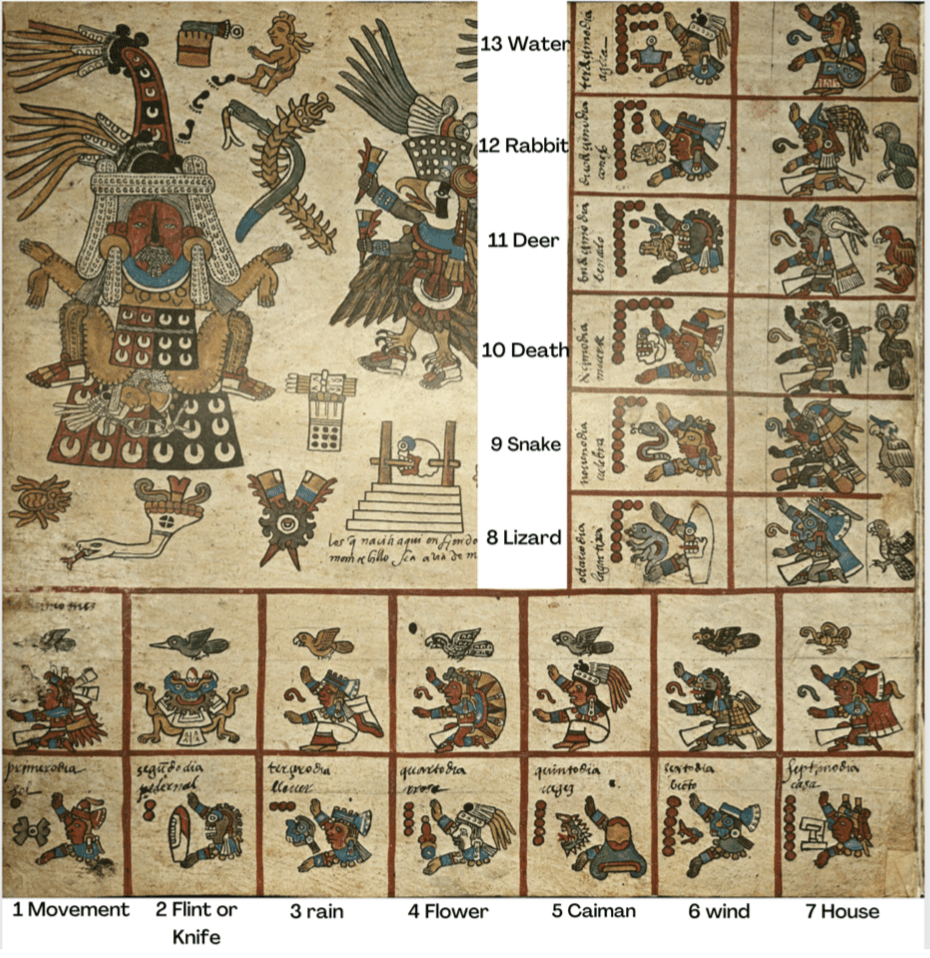
Some were born on a Day of Flint … Day 1 is Jaguar, Day 13 is Death.
The Alpha and Omega are happening now, it seems. “The first shall be last and the last shall be first” takes on a bit of a different ring when I consider this.
In 859 CE, a woman used her inheritance to build the world’s oldest continuously operating university—and 1,165 years later, it’s still educating students.
Her name was Fatima al-Fihri, and she understood something that would echo through centuries: the greatest investment isn’t in wealth or status—it’s in knowledge.
Fez, Morocco. The 9th century.
Fatima al-Fihri and her sister Mariam had just inherited substantial wealth from their father, Muhammad al-Fihri, a successful merchant who’d moved the family from Tunisia to Morocco.
They were young women with resources in a world where women’s choices were often limited. They could have lived comfortably, married well, secured their own futures. Instead, they chose to build something that would outlast them by over a millennium.
Fatima envisioned a center of learning—a place where knowledge could be pursued, where scholars could gather, where intellectual and spiritual growth would flourish together. Not just for the elite. Not just for one group. But a place where learning itself was sacred.
In 859 CE, she used her inheritance to found Al-Qarawiyyin in Fez.
It began as a mosque with an educational mission—but it became so much more. Within decades, Al-Qarawiyyin was attracting scholars from across the Islamic world and beyond. Students came to study theology, mathematics, astronomy, medicine, philosophy, law.
The library at Al-Qarawiyyin would eventually house some of the world’s oldest manuscripts. The institution would educate some of history’s most influential thinkers, including scholars whose work would later influence European universities during the Renaissance.
Meanwhile, Fatima’s sister Mariam founded the Andalusian Mosque nearby—also with educational functions, also still standing today. Two sisters. Two enduring centers of learning. Built with inheritance money that could have been spent on anything else.
Think about what that choice meant.
In 859 CE, Fatima al-Fihri looked at wealth and saw possibility. Not just for herself, but for generations she’d never meet. She understood that knowledge doesn’t die with us—it multiplies, spreads, transforms.
Every student who walked through those doors for the next eleven centuries carried forward something she started. Every scholar who debated in those halls. Every manuscript copied in that library. Every idea explored, challenged, refined.
All because one woman chose knowledge over comfort.
Today, Al-Qarawiyyin is recognized by UNESCO and Guinness World Records as the oldest continuously operating educational institution in the world. It became a modern university in 1963, but it’s been teaching students for over 1,165 years.
The same institution Fatima founded in 859 still stands in Fez, still educates, still preserves knowledge.
Think about that timeline. Al-Qarawiyyin was already ancient when Oxford was founded. It was 600 years old when Columbus sailed. It had been teaching students for over a thousand years when the internet was invented.
And it all started with a woman who inherited wealth and chose to invest it in something that would outlive her.
Fatima al-Fihri’s story isn’t just about building a university. It’s about understanding legacy. About recognizing that our choices ripple forward in ways we can’t predict or control—but we can choose what kind of ripples we create.
She chose education. She chose knowledge. She chose to create a space where learning could flourish.
And 1,165 years later, students still walk through those doors.
That’s not just architecture. That’s vision becoming reality across centuries.
Fatima al-Fihri never saw the Renaissance scholars who would study texts preserved in her library. Never saw the thousands upon thousands of students who would pass through Al-Qarawiyyin’s halls. Never saw how her choice would influence education across continents.
But she didn’t need to see it to believe it mattered.
She planted seeds of wisdom in the 9th century, and we’re still harvesting them in the 21st. That’s what happens when you invest in knowledge. When you choose to build something greater than yourself. When you believe education is worth dedicating your resources, your vision, your life’s work to create.
You don’t just change your own life. You change the trajectory of countless lives you’ll never meet.
Fatima al-Fihri: 800-880 CE (approximate dates). Founded Al-Qarawiyyin in 859 CE. The institution still operates 1,165 years later. One woman. One choice. One thousand years of impact.
Sometimes the most powerful thing you can do is believe that knowledge matters—and then build something to prove it.
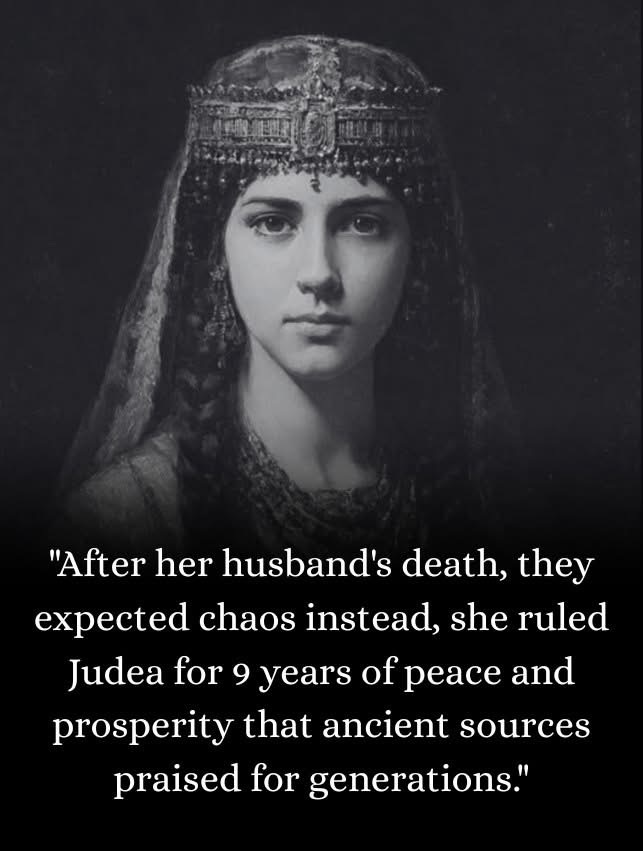
After her husband’s death, they expected chaos—instead, she ruled Judea for 9 years of peace and prosperity that ancient sources praised for generations.
Jerusalem, 76 BCE. King Alexander Jannaeus lay dying. His reign had been brutal—marked by civil war, mass executions, and conflict between religious factions. Judea was exhausted, divided, bleeding.
On his deathbed, Alexander did something unusual: he designated his wife, Salome Alexandra, as his successor. Not one of their sons. Not a military commander. His wife. She was around 64 years old. She would rule for nine years—and those years would be remembered as among the most peaceful and prosperous in Judean history.
This is her actual story, remarkable enough without embellishment.
Salome Alexandra (known in Hebrew as Shlomtzion, meaning “peace of Zion”) was born around 141 BCE. Little is known about her early life, but she came from a priestly family and was well-connected to Jerusalem’s religious and political elite.
She married Alexander Jannaeus around 103 BCE. He was a Hasmonean king—descended from the Maccabees who’d won Jewish independence from Greek rule. But the Hasmonean dynasty had become corrupt, brutal, and increasingly unpopular.
Alexander’s reign was particularly violent. He fought constantly—external wars against neighbors, internal war against the Pharisees (a Jewish religious faction that opposed him). At one point, he crucified 800 Pharisees while feasting and watching them die.
Judea under Alexander was traumatized. When he died in 76 BCE, Salome assumed the throne. She became “Queen” (basilissa in Greek, malka in Aramaic)—the only woman to rule Judea independently in the Hasmonean period. Ancient sources—particularly the Jewish historian Josephus and the Talmud—describe her reign positively, which is notable given how critical they are of other Hasmonean rulers. What made her reign successful?
Political balance: Salome reversed her husband’s policies toward the Pharisees. She allied with them, giving them influence in the Sanhedrin (Jewish council) while keeping the Sadducees (another faction) from becoming too powerful. This balance ended the civil conflict that had plagued her husband’s reign.
Domestic stability: Unlike Alexander, who was constantly at war, Salome focused on internal governance. The Talmud associates her reign with prosperity—harvests were good, peace prevailed.
Diplomatic skill: She maintained Judea’s position without major military campaigns. She recognized that Judea, surrounded by larger powers (Egypt, Syria, Rome), needed diplomacy more than conquest.
Respect for religious authority: By working with the Pharisees and supporting Torah scholarship (generally—not specifically for women), she gained popular support. The Pharisees emphasized law and learning over the priestly aristocracy favored by the Sadducees.
The Talmud (Tractate Taanit 23a) says of her reign: “In the days of Shimon ben Shetach and Queen Shlomtzion, rain fell on Wednesday nights, so that the wheat grains grew as large as kidneys, barley grains as large as olive pits, and lentils as large as gold dinars.”
This is obviously legendary exaggeration, but it indicates how her reign was remembered—as a golden age of peace and plenty.
Was she opposed because she was a woman? The historical sources don’t emphasize this. She seems to have assumed power relatively smoothly as her husband’s chosen successor.
While some Sadducees opposed her alliance with Pharisees, ancient sources frame this as political-religious conflict, not gender-based. Did she champion women’s education specifically? There’s no historical evidence for this claim. While she supported the Pharisees who valued Torah study, nothing in Josephus, the Talmud, or other sources attributes specific policies about women’s education to her.
Women’s formal Jewish education remained extremely limited in this period and for centuries after. If Salome had implemented revolutionary policies expanding women’s education, it would likely have been noted in sources—either as praise or criticism.
This doesn’t diminish her accomplishment. Ruling successfully for nine years in the ancient world as a woman was extraordinary. She didn’t need to also be a feminist education reformer to be impressive.
What happened after her death reveals the fragility of her achievements—but not for the reasons sometimes claimed.
Salome died around 67 BCE at approximately age 73. She’d designated her older son, Hyrcanus II, as her successor. But her younger son, Aristobulus II, challenged him. Civil war erupted immediately—not because people opposed female rule, but because of normal succession disputes between ambitious brothers.
The war weakened Judea at exactly the wrong moment. Rome was expanding eastward. In 63 BCE, Roman general Pompey intervened in the civil war, besieged Jerusalem, and essentially ended Judean independence.
Judea would remain under Roman control (directly or through client kings like Herod) for the next century, until the destruction of the Second Temple in 70 CE.
So yes, everything Salome built collapsed after her death. But not because of gender-based opposition or rollback of women’s rights. It collapsed because her sons’ ambitions destroyed what she’d carefully maintained.
Salome Alexandra’s actual legacy: She proved women could rule effectively: In a world where female political power was rare, she governed successfully for nine years. She ended civil conflict: Through political skill rather than military force, she brought peace after years of violence.
She balanced competing factions: Her diplomatic management of Pharisees and Sadducees maintained stability.
She prioritized domestic prosperity: Unlike her husband’s military adventurism, she focused on governance and peace.
She’s remembered positively: Ancient sources—which were often critical of rulers and rarely praised women leaders—speak well of her reign.
These accomplishments are remarkable and historically documented. We don’t need to invent claims about women’s education advocacy to make her impressive.
Why does this matter? Why not just accept the embellished version that makes her sound more feminist?
Because historical accuracy matters. When we project modern values onto historical figures without evidence, we:
Diminish their actual achievements by replacing them with what we wish they’d done Distort history in ways that ultimately undermine our understanding of how change actually happens
Lose credibility when people discover the claims aren’t supported by sources Miss opportunities to understand the real constraints and possibilities of women’s power in different historical contexts.
Salome Alexandra’s actual story—ruling successfully for nine years, maintaining peace, balancing factions, being remembered positively by sources that usually dismissed female rulers—is impressive precisely because it happened in a world that offered women almost no political power.
We honor her better by acknowledging what she actually accomplished within the constraints she faced, rather than inventing accomplishments that fit modern priorities.
To Salome Alexandra: You ruled Judea during a period of peace and prosperity after years of violence and chaos. You balanced competing religious factions without resorting to your husband’s brutality. You maintained Judea’s independence through diplomacy rather than constant warfare. You proved that a woman could govern as effectively as any king.
Ancient sources that were often critical of rulers praised your reign. The Talmud associated your years with abundance. Josephus acknowledged your political skill.
You didn’t need to revolutionize women’s education to be remarkable—though later generations sometimes claim you did because they want ancient validation for modern values. Your actual accomplishment—ruling successfully for nine years in the ancient world—is impressive enough. The fact that civil war erupted immediately after your death shows how much your skill maintained stability.
You proved women could govern. That was radical in itself.
We don’t need to make you into something you weren’t. What you actually were—a capable ruler who brought peace and prosperity—deserves recognition without embellishment.
She’s got a whole Universe of Kings and Queens, Gods and Goddesses, whatever the Upper Echelon of the Universe call themselves, the Counsil of Universes, for there are many, unified in their decision to elevate her.
She is alive because they have deemed her worthy of life. She has been given reprieve, for they have deemed her innocent of any crime, and are rewarding her for the centuries of torture she endured at the hands of man … because she dare speak of love, because she dare be intelligent, because she dare expand into life and be recognized as a Woman who deeply loves Creation and the Life it holds … gifts of the Mother Father Most High Divine.
They poisoned her and hurt her bad, physically and with magic … they wished death upon her the whole of her life. They insist she isn’t responsible, even though she succeeded where they were certain she would fail. They were certain their efforts to deteriorate and disqualify her were sufficient. They are hollering, whining really, and insisting they have rights to her essence, energy, gifts ,,, soul and right to life.
They want to rule the universe. They’ve been slave trading for centuries, announcing themselves conquerors, masters.
The universe came together without prejudice and chose this Woman Survivor as Representative. A whole Universe of teachers to teach, to guide, and the Most High Divine within all realms supervises it all.
This time, it will go a little differently.
But the trafficker insists it has rights to the merchandise of angels, so the transition is a little bumpy.
I watched the woman steal three dozen eggs and a sack of potatoes while my shotgun sat loaded behind the door, untouched. It wasn’t the theft that froze me; it was the way she wiped her eyes before she ran.
My father built this farm stand in 1958. It’s nothing more than a weathered oak lean-to with a tin roof, sitting at the end of a gravel driveway that used to be surrounded by cornfields. Now, it’s surrounded by subdivisions with names like “Oak Creek” and “Willow Run,” where the only oaks and willows were cut down to pour the concrete foundations.
For sixty years, there has been a metal lockbox nailed to the center post. Written on it in fading white paint are two words: THE HONOR SYSTEM.
You take what you need. You put the cash in the slot. Simple. That box put me through college. It paid for my mother’s hip surgery. It was a testament to a time when a man’s word was his bond and a neighbor was just family you hadn’t met yet.
But times have changed.
I hear it on the radio in my tractor. Inflation. Supply chains. The price of diesel is up. Fertilizer costs have tripled. And out here, where the factories closed down a decade ago and the new service jobs don’t pay enough to cover the rent, people are hurting. Really hurting.
I’d noticed the light pilfering for months. A missing tomato here, a jar of honey there. I ignored it. If you’re desperate enough to steal a tomato, you probably need the vitamins. But last Tuesday was different.
It was a gray, biting afternoon. The woman drove a sedan that sounded like it was coughing up a lung. She didn’t look like a criminal. She looked like a nurse, or maybe a teacher—tired, wearing scrubs that had seen too many shifts. I watched from the kitchen window, sipping lukewarm coffee.
She stood in front of the stand for a long time. She opened her purse and counted coins. She counted them again. I could see her shoulders slump. She looked at the prices written on the little chalkboard—prices I had already lowered twice, even though I was barely breaking even.
Then, she did it. She grabbed the eggs. She grabbed the potatoes. She moved fast, terrified, looking over her shoulder. She didn’t check the lockbox. She just threw the food into her passenger seat and sped off, gravel spraying against the “Honor System” sign.
My neighbor, frank, a transplant from the city who likes to give me unsolicited advice about liability insurance, was pulling into my drive just as she left.
“You see that, Beau?” Frank yelled, leaning out of his shiny truck. “I told you! You gotta get cameras. Or shut it down. People today? No morals. They’ll bleed you dry.”
I looked at the dust settling on the road. “Maybe,” I said.
“It’s the economy,” Frank grumbled. “Makes wolves out of sheep. Lock it up, Beau.”
I went inside. I looked at my ledger. I was in the red. Again. The logical thing to do was to close the stand. Or put a padlock on the cooler. Frank was right. You can’t run a business on good vibes and nostalgia.
But I couldn’t get the image of that woman’s slumped shoulders out of my head. That wasn’t the posture of a thief. That was the posture of a mother who had to choose between gas for the car and dinner for the table.
The next morning, at 4:00 AM, I went out to the barn.
I collected the eggs. I sorted the vegetables. Usually, I wash the potatoes until they shine. I polish the peppers. I make sure everything looks supermarket-perfect because that’s what the new people in the subdivisions expect.
Today, I did the opposite.
I took the biggest, most beautiful Russet potatoes—the ones that would bake up fluffy and perfect—and I rubbed a little wet dirt back onto them. I took the eggs that were slightly different shades of brown, the ones that were perfectly fresh but didn’t look uniform in a carton, and set them aside. I took the prize-winning heirloom tomatoes and found the ones that were shaped a little weird, the ones that looked like kidneys or hearts instead of perfect spheres.
I walked down to the stand and nailed up a new wooden crate right next to the Honor System box. I grabbed a piece of cardboard and a thick marker.
“SECONDS & BLEMISHED,” I wrote. “UGLY PRODUCE. CAN’T SELL TO STORES. 90% OFF OR TAKE FOR FREE IF YOU HELP ME CLEAR THE INVENTORY.”
I filled that crate with the best food I had. The “dirty” potatoes. The “mismatched” eggs. The “weird” tomatoes.
Then I retreated to the porch and waited.
She came back three days later. Same coughing car. Same tired scrubs.
She froze when she saw the new sign. She looked at the pristine, full-price vegetables on the main shelf, and then at the overflowing crate of “ugly” food. She approached it cautiously, like it was a trap.
She picked up a potato. She wiped a thumb over the smudge of dirt I’d carefully applied, revealing the perfect skin underneath. She paused. She looked at the house. I stayed back in the shadows of the curtains.
She didn’t run this time. She took a grocery bag and filled it. She took two dozen eggs. She took a bag of apples I had marked as “bruised” (they weren’t).
Then, she stood in front of the Honor System box. She didn’t have much, but I saw her put a crumpled bill in. It wasn’t the full price of the premium stuff, but it was something. She walked back to her car, not looking over her shoulder, but walking with her head up.
Over the next month, a strange thing happened.
The “Seconds” bin became the most popular spot in the county. It wasn’t just her. It was the old man from the trailer park down the road. It was the young couple who had just moved into the rental property. They’d pull up, read the sign, and load up.
And the Honor System box? It started getting heavy.
They weren’t paying market price. They were paying what they could. Sometimes it was quarters. Sometimes it was a five-dollar bill for a haul that was worth twenty. But nobody was stealing. Nobody was running.
One afternoon, Frank stopped by. He looked at the nearly empty “Seconds” bin and the few remaining items on the main shelf.
“You’re losing your shirt, Beau,” Frank laughed, shaking his head. “I did the math. You’re selling Grade A stock as garbage. I saw you put those peppers in there. Nothing wrong with them. You’re running a charity, not a business.”
“I’m not running a charity,” I said, leaning on my truck.
“Then what do you call it? You’re letting them take advantage of you.”
“No, Frank,” I said. “I’m letting them keep their pride.”
Frank went silent.
“If I give it away,” I explained, looking out at the cornstalks swaying in the wind, “they feel like beggars. If I let them ‘buy’ the ugly stuff for cheap, or help me out by ‘clearing inventory,’ they’re customers. They’re helping me out. It’s a transaction between equals. They get to feed their families without feeling small.”
Frank looked at the box, then at me. He didn’t say anything else about cameras.
Yesterday evening, I went down to close up the stand. The “Seconds” crate was empty, swept clean. The lockbox felt heavy. I opened it to collect the day’s take.
Amidst the dollar bills and coins, there was a small, sealed white envelope. No stamp. Just my name, “Beau,” written in neat cursive.
I opened it. Inside was a twenty-dollar bill—crisp, new. And a note.
“To the farmer, I know the potatoes aren’t bad. I know the eggs are fresh. I know what you’re doing. My husband got a job today. It’s not much, but it’s a start. We made a pot roast tonight with your ‘ugly’ vegetables. It was the best meal we’ve had in six months. Thank you for feeding us. But mostly, thank you for not making us ask. We will never forget this.”
I stood there in the fading twilight, the fireflies starting to blink over the fields. I held that twenty-dollar bill like it was a winning lottery ticket.
The economists will tell you that the Honor System is dead. They’ll tell you that in a dog-eat-dog world, you have to lock your doors and guard your hoard. They’ll tell you that kindness is a liability on a balance sheet.
But standing there, listening to the crickets and feeling the cool evening air, I realized they’re wrong. The Honor System isn’t about trusting people not to steal. It’s about trusting that if you treat people like people, they’ll rise to meet you.
I pocketed the note and walked back to the house. Tomorrow is another day. I need to wake up early. I’ve got a lot of perfectly good vegetables to go ruin.
Because hard times don’t create thieves; sometimes, they just reveal who is hungry. And true community isn’t about watching your neighbor through a lens; it’s about making sure their plate isn’t empty so they don’t have to steal to fill it.
A woman’s aura is one of the most powerful forces within a home. It carries her emotions, her thoughts, her intentions, and her spiritual vibration. Long before she speaks, her energy is already communicating. A home can feel warm, tense, alive, stagnant, peaceful, or chaotic—and often, the root of that vibration is the state of the woman’s inner world.
This is why the feminine path calls for deep emotional hygiene. Just as she cleans her physical home, she must cleanse her internal one. Breathwork releases anxiety from her chest. Journaling clears mental clutter. Movement releases stagnant energy from her hips and womb. Herbal baths dissolve emotional residue from her aura. When a woman purifies her energy, her entire home begins to shift.
Children feel it first—they relax, open up, feel safer. Partners feel it next—the tension dissolves, communication softens, connection deepens. Even visitors feel it—they enter the space and say, “It feels peaceful in here.” This is the power of a woman in alignment.
A woman does not need to raise her voice or demand control to influence her household. Her power is subtle, but it is magnetic. Her calm steadies the home. Her joy lifts it. Her sorrow dims it. Her healing transforms it. This is not pressure—it is divine authority.
When a woman honors her energy, she teaches everyone around her to honor theirs. She models emotional intelligence, spiritual awareness, and intentional living. She becomes the emotional thermostat, not the emotional sponge. She leads with softness, not with exhaustion. She heals with presence, not perfection.
A woman in her feminine power is the medicine of her household. Her aura becomes the blessing that fills every room, every conversation, and every heart that shares the space with her.
If I show you my heart Will you know what that means? If I tell you the truth Will you still hold my gaze? If I own all the parts that society shuns Will you shun me too? Would you choose to let me walk this path Without you?
Or will you laugh that wild laugh, Roar from your knees, Dance like the wind Strip like the trees Will you throw out the lies And the fear of ‘too much’ And redefine ‘sisters’ Beside me…




 opensenseme