Consciousness

All posts in the Consciousness category

Cleansing the Waters

Published January 15, 2026 by tindertender

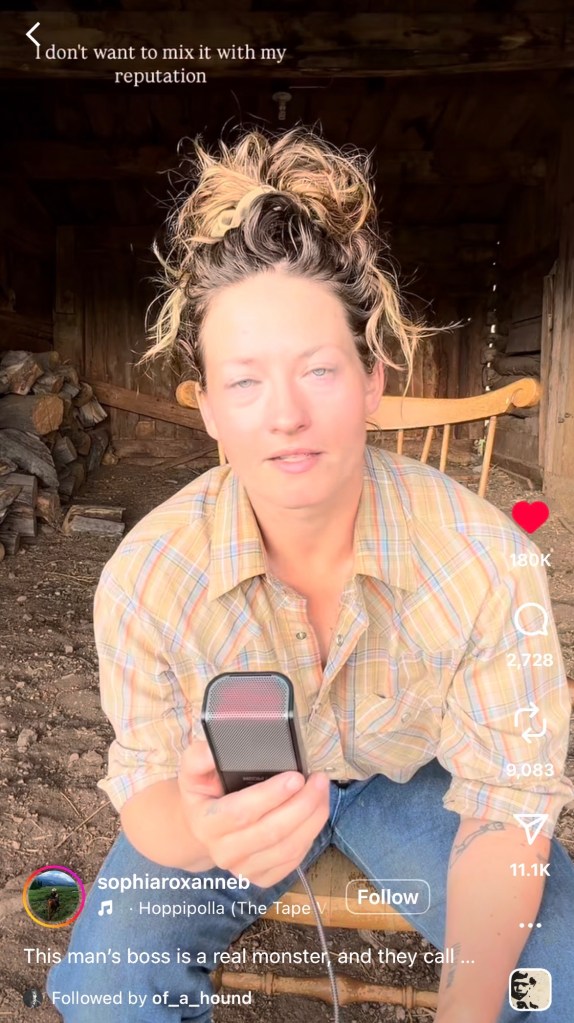
I heard this curator saying “the damage has been done”. He said they poisoned the water, and that she needed “hydrogen peroxide”. Whatever dimensional reality he is talking about, it appears a woman is there to bring healing “to the planet” … it seems as though the Women are being called to bring Restoration.

That being said, whatever timeline or dimensional space this is, gather hydrogen peroxide … it will help …. straight out of the mouth of the poisoner. He swears she cannot do it, heal the damage he has done …. but then again, he boasts of its cure while he insists its impossible … so, take it as it resonates.

AI Overview
Yes, hydrogen peroxide (H₂O₂) can effectively clean impure water
by acting as a powerful oxidizer and disinfectant, killing bacteria, viruses, and breaking down organic pollutants and minerals like iron and sulfur, leaving only harmless oxygen and water as byproducts, making it a clean, eco-friendly option for various water treatment needs, though it’s best used in controlled systems.

How it Works
Oxidation: H₂O₂ releases nascent (newly formed) oxygen, which oxidizes contaminants, changing their chemical structure.
Disinfection: The released oxygen effectively inactivates pathogens like bacteria, viruses, and cysts.
Contaminant Removal: It oxidizes minerals (iron, manganese) and organic matter, causing them to clump and become easily filterable.
Byproduct: It breaks down into pure water and oxygen, leaving no harmful chemical residues, unlike chlorine.

Benefits
Effective: Targets a broad spectrum of contaminants, including odors (like “rotten egg” smell from hydrogen sulfide) and discoloration.
Eco-Friendly: Decomposes into water and oxygen, making it environmentally safe.
Improves Aesthetics: Removes mineral buildup, improves taste, and clarity.

Applications
Well Water: Excellent for disinfecting and treating iron/manganese issues in private wells.
Municipal/Industrial: Used for general disinfection and removing organic pollutants.

Considerations
Controlled Dosing: For safe and effective treatment, it’s usually injected into water systems in precise amounts.
Filtration Needed: After oxidation, contaminants often need to be filtered out by a separate filter system.

Let It Go

Published January 11, 2026 by tindertender

Many of us are still very much in active, spiritual warfare. It’s messy. The totality of the nastiness the adversary pushed in on us is being purged. It may look as though we’ve been carrying a great burden, because we have.

The collective, for the most part, has brought temperance energy to the trauma. Now, that trauma that had been tempered, appears to be releasing from the body.

It might look like an unhealed wound, but it isn’t. It is the chaff left over from the wound being tempered. Release the chaff, the ashes of that internal fire that fueled your ascension, and don’t listen to the projectionist trying to “restick shit” into you.

Once they notice you are releasing the refuse, they’ll try to trigger you so you’ll wind up holding onto it.

Let the chaff, and the projectionist, go.

It’s the best thing you can do for your Inner Divine.

She wrote that women’s souls could speak directly to God without priests so the Church burned her alive for heresy.

Published January 10, 2026 by tindertender

She wrote that women’s souls could speak directly to God without priests—so the Church burned her alive for heresy.

Paris, June 1, 1310.

In the Place de Grève, a woman was led to the stake. Marguerite Porete, accused of heresy, had spent over a year imprisoned, refusing to answer the Inquisition’s questions or defend herself before judges she didn’t recognize as having authority over her soul. Witnesses later described her calm demeanor—no screaming, no begging for mercy, no recantation. She faced the flames with a serenity that unnerved her executioners.

She died for writing a book that claimed a soul could unite so completely with divine love that it transcended the need for Church hierarchy, sacraments, or ecclesiastical mediation. The Church couldn’t tolerate that claim—especially from a woman.

Marguerite Porete was born in the late 13th century in Hainaut (modern-day France/Belgium border region). Little is known about her early life, but she became part of the Beguine movement—communities of lay religious women who lived together in prayer and work without taking formal monastic vows.

Beguines occupied a complicated space in medieval Christianity. They weren’t nuns bound by convent rules, but they weren’t ordinary laywomen either. They lived religious lives outside institutional Church control—which made Church authorities nervous.

Marguerite was educated, literate, and theologically sophisticated—unusual for a woman of her time.

Sometime in the late 13th century, she wrote “The Mirror of Simple Souls” (Le Mirouer des simples âmes) in vernacular Old French rather than Latin.

Writing theology in the vernacular was itself significant. Latin was the language of Church authority—using French made theology accessible to ordinary people, particularly women who hadn’t learned Latin.

But it was the book’s content that proved dangerous.

The Mirror of Simple Souls describes a mystical journey where the soul progressively lets go of attachments, ego, and even virtues until it reaches “annihilation”—complete dissolution into divine love. This “annihilated soul” becomes so united with God that it no longer needs:

Church sacraments
Moral rules
Priestly mediation
Fear of sin
Virtuous acts done out of obligation

Because the soul is completely aligned with divine will, it acts naturally from love rather than from external commands.

Marguerite wrote in dialogue form, with characters including “Love,” “Reason,” “The Soul,” and “Holy Church the Little” (institutional Church) versus “Holy Church the Great” (the mystical body of all souls united with God).

Crucially, she distinguished between institutional Church authority and direct divine relationship. “Holy Church the Little”—the hierarchy, rules, and priests—was necessary for beginners on the spiritual path. But advanced souls could transcend it through complete union with God. This was explosive theology.

The Church’s authority rested on being the necessary mediator between humans and God.

Sacraments administered by priests were required for salvation. Confession, penance, Church law—all of this presumed that people needed institutional guidance.

Marguerite was saying: at the highest spiritual level, you don’t need any of that. The soul united with God transcends institutional authority. Church authorities saw this as dangerous heresy. It suggested that mystics could claim direct divine authority superior to Church hierarchy. It implied that someone in mystical union might be beyond sin or moral law—a heresy called “antinomianism. “And it was especially threatening coming from a woman.

The Church insisted women needed male spiritual authority—priests, confessors, bishops—to guide them. A woman claiming direct divine relationship without male mediation challenged the entire gender hierarchy of medieval Christianity.

Around 1296-1306, Marguerite’s book was condemned by the Bishop of Cambrai. It was publicly burned, and she was warned to stop teaching her ideas. Marguerite ignored the warning. She continued circulating the book and discussing her theology. She sent copies to theologians and Church authorities seeking approval, but also continued teaching despite the prohibition.

This defiance was crucial. She had multiple opportunities to submit to Church authority, burn her book, recant her teachings, and avoid execution. She refused every time. Why? Because she believed—genuinely, deeply—that her mystical experience and theological understanding came directly from God. No earthly authority, not even the Church, could invalidate that divine relationship.

In 1308, she was arrested in Paris. The Inquisition began proceedings against her. During her imprisonment (which lasted over a year), she refused to cooperate with the trial. She wouldn’t answer questions. She wouldn’t defend herself. She wouldn’t acknowledge the tribunal’s authority to judge her spiritual state. Her silence was deliberate and theological.

She believed the judges—bound by “Holy Church the Little”—couldn’t understand the mystical theology of souls who’d reached union with God. Answering them would be pointless.

The Inquisition found her guilty of heresy. They declared her a “relapsed heretic”—someone who’d been warned before and persisted in error. The penalty for relapsed heresy was death by burning.

On June 1, 1310, Marguerite was led to the Place de Grève in Paris. Accounts describe her facing execution with remarkable calm—no terror, no last-minute recantation, no screaming as the flames rose. Observers noted this serenity. Some interpreted it as demonic possession keeping her from repenting. Others saw it as proof she’d achieved the mystical state she’d written about—transcendence of fear through complete union with divine love.

Marguerite Porete became one of the first women burned for heresy by the Inquisition in Paris. Her execution was meant to be a warning: women who claimed spiritual authority independent of Church hierarchy would be silenced permanently.

But her book survived. Copies circulated anonymously throughout the 14th and 15th centuries. Because Marguerite’s name was suppressed (she was executed as a heretic), the book was copied without author attribution. Monks, mystics, and scholars read it for centuries without knowing a woman had written it. Some copies attributed it to male authors.

The mystical theology was considered so sophisticated that people assumed a man must have written it.

In 1946, scholar Romana Guarnieri finally proved that Marguerite Porete was the author. The evidence included trial records and manuscript traditions connecting the condemned book to The Mirror of Simple Souls.

Suddenly, a text that had influenced Christian mysticism for centuries was recognized as written by a woman burned for heresy.

Modern scholars recognize The Mirror as a masterpiece of mystical theology. Its influence can be traced in later mystics including Meister Eckhart (who faced similar accusations of heresy).

Marguerite’s theology anticipated ideas that would later appear in Protestant Reformation critiques of institutional Church authority and in modern mystical and contemplative traditions.

Her story matters because: She claimed spiritual authority as a woman: In an era when women were required to be spiritually subordinate to men, she insisted her mystical experience gave her theological insight. She challenged institutional religious power: She distinguished between institutional authority and divine relationship—a distinction that threatened Church hierarchy. She refused to recant: Given multiple chances to save herself by submitting to Church authority, she chose death over betraying her spiritual convictions.

She was right about mystical theology: Modern understanding of contemplative spirituality recognizes the validity of much of what she taught. Her work survived despite suppression: Burning her body didn’t destroy her ideas—they circulated for centuries, eventually vindicated.

The tragedy is that Marguerite was executed for theology that, in different contexts or coming from a man, might have been tolerated or even celebrated.

Male mystics like Meister Eckhart taught similar ideas and, while investigated, weren’t executed. Her gender made her dangerous in ways male mystics weren’t. A woman claiming to transcend priestly authority threatened both religious and gender hierarchies simultaneously.

To Marguerite Porete: You wrote that the soul united with God needs no intermediary—and the Church killed you for threatening their monopoly on salvation. You refused to recant even when recantation would have saved you. You chose death over betraying your mystical experience and theological convictions. Your silence before the Inquisition wasn’t weakness—it was theological statement. You didn’t recognize their authority to judge what you knew through direct divine union. You faced the flames with the serenity you’d written about—the transcendence of fear through complete surrender to divine love. They burned your body. They tried to erase your name. They suppressed your book. But your words survived. For centuries, they circulated anonymously, influencing mystics who didn’t know a woman had written them. When scholars finally proved you were the author, your genius was undeniable. You were right about mystical union. You were right that souls can experience God directly. You were right that love transcends institutional authority. The Church that executed you eventually had to acknowledge the validity of mystical theology like yours. The ideas they burned you for are now recognized as legitimate contemplative spirituality. You died for claiming women’s spiritual authority. For insisting divine love was greater than ecclesiastical power. For refusing to let priests mediate your relationship with God. That claim cost you your life. But it couldn’t be silenced. Your voice, speaking across seven centuries, still insists: the soul united with Love needs no permission to speak directly to God. They couldn’t burn that truth. And they couldn’t burn your courage.

The Pre-Christian Logos

Published January 9, 2026 by tindertender

The term Logos (Greek for “word,” “reason,” or “logic”) was a central concept in ancient Greek philosophy long before the rise of Christianity. 

  • Greek Philosophy: Nearly every Greek philosophy, including Stoicism and Neo-Platonism, had a role for the Logos. It was generally considered a mediating principle between the ultimate, transcendent God and the created world.
  • Universal Principle: The Logos was understood as divine reason, the underlying principle of order and harmony in the universe, and the source of all truth. Philosophers like Heraclitus and the Stoics saw it as an immanent, rational principle in the cosmos.
  • Hellenistic Judaism: Jewish thinkers like Philo of Alexandria, who lived around the same time as Jesus but in Egypt, further developed the Logos as an intermediary divine being, distinct from God’s essence but the means by which God created and interacted with the material world. 

The Cosmic Christ

Early Christian apologists and Church Fathers adopted the philosophical term Logos to explain the nature of Jesus Christ to the Hellenistic world. 

  • The Gospel of John: The most famous biblical usage is in the prologue of the Gospel of John: “In the beginning was the Word (Logos), and the Word (Logos) was with God, and the Word (Logos) was God”. This passage identifies Jesus as the eternal Logos that became flesh.
  • Early Christian Theology: Early writers like Justin Martyr argued that Christ, as the Logos, was present in the world even before his incarnation. They believed that anyone who lived according to reason (logos spermatikos or “seed of the Logos”) had a share in Christ’s truth, effectively being “Christians before Christ”.
  • A Unifying Force: The “Cosmic Christ” is the theological understanding of Christ not just as a historical figure, but as the divine presence that pervades and unifies all of creation. This concept emphasizes that all matter is sacred because it is incarnate with the divine nature of the Logos. 

St. Anthony

St. Anthony the Great (c. 250–356 AD), an Egyptian hermit considered the father of Christian monasticism, is a prominent figure in early Christian spirituality. 

  • Athanasius’s Work: His life was documented in The Life of Antony by Athanasius of Alexandria, a pivotal work in Christian literature. This book helped shape the ideal of monastic life and the understanding of spiritual warfare.
  • Connection to the Logos: While St. Anthony himself might not have written extensively on the abstract philosophy of the Logos, his life exemplified a deep connection to the Divine (the Logos). His biography is available in resources such as those found on Logos Bible Software

Subliminal Messaging Interference

Published January 8, 2026 by tindertender

Scalar beams, or scalar waves, electronic interferences, a gps tracking beam, directed at the crown of people’s heads. New technology …

https://www.facebook.com/share/v/1G9VvydfBT/?mibextid=wwXIfr

Can you decode/decipher it?

Published January 3, 2026 by tindertender

This sort of freaks me out, knowing they inject the babies right away. What are they “really” doing?

Some hints in here .. matrix, blue minds, 3D world…so many in a short clip…animals, cannibals, can you decode/decipher it all…?

**Decoded/ Deciphered by Vrill Slayer Posted by Mel Raggam

Gematria

Some hints in here .. matrix, blue minds, 3D world…so many in a short clip…animals, cannibals, can you decode/decipher it all…?

From the lyrics of Iniko.

Snippet From My Cosmic Burst in Simple Gematria equals
331 x 6 = 1986

= The Neptunes Presents Clones

From two rap artists including Pharrell Williams having an album named Clones as human clones exposed by Donald Marshall.

= Science Fiction Movies Are Reality

We have all viewed movies and TV series that call it science fiction but art imitates reality they are trying to warn you, hint you of the technology that is used on mankind – hinting human cloning, body snatching Vrill that turn into hosts as the technology for consciousness transfer put into an Avatar or clone even downloading dead consciousness to be put into a synthetic body.

= Brain Invaders Must Be Destroyed

This is relation to body snatchers as those who do human experimentation on people through MK Ultra, invading the mind for control, torture through clone after clone.

= Brain Chip Implant The Witness

As those who are chipped that go through REM even those who aren’t chipped. Donald Marshall which exposed about the RFID chip used to download dead consciousness to individuals who become coherent and submissive. This also includes remote neural monitoring.

= They Just Pick Up Another Body

Leah Remini who used to be part of Scientology mentioned in her tweet that those who die they just pick up another body recalling their memories to be put into a new body. Think of movies like Self/Less or Replicas.

19 + 86 = 105

Full Reduction ‘105’ codes

= SIX HUNDRED AND SIXTY SIX

Root of this technology is THE MARK OT THE BEAST.

= MILITARY INTELLIGENCE

Known as Military Industrial Complex which is know also from when making super soldiers as they reference the MILITARY INTELLIGENCE codes from the movie.

Star Children I Got News For You in Simple Gematria equals
343 x 6 = 2058

= Infiltration Instead Of Invasion

A quote by JFK in 1961 before assassinated exposing secret societies. They infiltrate to parasite instead to invade.

= Fallen Angels Are The Actual Illuminati

Known as the Annunaki, the Sumerian gods, known as the sons of God or the Watchers – they are the original Illuminati the renown as the Freemasons are just puppets of Lucifer.

The star children are related to those who are called starseeds or the Pleiadians of the Galactic Federation – Donald Marshall exposed them to be Vrill hosts they are parasites wanting to infiltrate and take over hosting humans to be drones.

= Are We Living In A Simulated Reality
= Everything Is Hidden In Plain Sight

The world has become a simulation or altered realities, brainwashing and programming of the mind such with media, social media and today’s social environment.

= Grey Alien DNA Forms A Proto Species

The term grey aliens are the Vrill Type 3 people know them as aliens from outerspace but they’re form deep inner earth and not outer space. Proto species would be half reptilian hybrids that become cybernetic machines modified DNA turning humans into hosts – this also relates in the realms of Transhumanism.

= Donald Marshall The Soulstone Chip

For the years Donald Marshall has spoken about this even of today. Putting souls into devices to the next clone. The cube of Saturn which contains cube shape devices of trapped souls.

“..this is a 3D world it’s corrupt and blue..”

This Is A Three D World in Simple Gematria equals
217 x 6 = 1302

= Dont Worry Darling

A movie which has a character name Alice put into a simulated world of a false reality which she later founds out. Think of terms like Alice in Wonderland.

= Subconsciousness

That which the subconscious mind becomes altered from reality. Think of Dorothy in Oz or Alice in Wonderland. This relates to also Don’t Worry Darling or the movie Inception.

Body Snatching

Published January 2, 2026 by tindertender

“Switching people out. Taking out the soul and putting a different person in the body” … it’s what this curator is threatening to do to the Magistrate, the Planetary Gatekeeper.

Controlling human emotions with frequencies

Published December 24, 2025 by tindertender

There’s a Crack in the World

Published December 21, 2025 by tindertender

I found out what it is that’s been driving me mad
There’s no room to breathe between the good and the bad
A crush in-between, there’s a thin, thin line
But just ’round the corner, there’s a change in design

I wish I could walk away
And dig what the preachers say
But those words don’t satisfy me no more

There’s a crack
There’s a crack in the world
There’s a crack
There’s a crack in the world
There’s a crack
There’s a crack in the world

Just fifty more years, we’re all gonna know
Why, when, where, how, and who gets to go
So let’s all have a good time before the great divide
‘Cause things will start separating come 2025

So look for the subtle clues
It won’t make the front-page news
That depends upon which side that you choose

There’s a crack
There’s a crack in the world
There’s a crack
There’s a crack in the world, yeah
There’s a crack
There’s a crack in the world

The World is Ending!

Published December 20, 2025 by tindertender

My husband didn’t pack his bags for a mistress. He packed them for a “movement.” He said he was suffocating in our silence, but the truth is, he was drowning in the noise.

We were the picture of the American Dream, circa 2024. Or maybe the caricature of it.

We had the house in the suburbs with the kitchen island that was too big to clean and a mortgage rate that kept us awake at night. We had two cars in the driveway and subscriptions to five different streaming services we never watched. But mostly, we had the glow.

That pale, blue, flickering glow.

For the last three years, Mark hadn’t really been in the room with me. He was in the comment sections. He was in the forums. He was fighting invisible wars against strangers who lived three thousand miles away. Dinner conversations used to be about our day, about the kids who were off at college, about the leak in the gutter.

Then, the conversations stopped. They were replaced by lectures.

He would look up from his phone, eyes bloodshot, and ask if I’d seen what “They” were doing to the dollar. What “They” were putting in the water. What “They” were teaching in schools. He never specified who “They” were, and frankly, depending on which channel he was watching, “They” changed every week.

I was exhausted. Not physically, but deeply, spiritually tired. I was tired of walking on eggshells in my own living room, afraid that mentioning the price of eggs would trigger a twenty-minute rant about supply chains and geopolitical conspiracies.

So when he stood by the door with his duffel bag, looking like a man preparing for a tactical mission rather than a mid-life crisis, I didn’t cry.

“I can’t do this anymore, Sarah,” he said. He sounded breathless, like he was running from something. “I need to find a place that’s real. I need to be around people who are awake. You… you’re just sleepwalking. You’re content to let the world burn as long as you have your garden and your coffee.”

He called it a “sabbatical for clarity.” He was going to drive out West, maybe join an off-grid community he’d found online. A place where “freedom still mattered.”

“And what about us?” I asked, leaning against the granite counter I still hadn’t paid off.

“I need to save myself first,” he said. “You should try waking up, Sarah. The world is ending.”

Then the door clicked shut. The engine revved. And he was gone.

I stood there in the hallway. I waited for the panic. I waited for the crushing weight of abandonment that every magazine article told me I should feel.

Instead, I heard it.

The silence.

The TV wasn’t blaring breaking news about a crisis I couldn’t solve. The phone wasn’t pinging with notifications about impending doom. The air in the house didn’t feel charged with static electricity anymore.

I walked to the living room and picked up the remote. I pressed the power button. The screen went black.

“Okay,” I whispered to the empty room. “The world is ending. So I might as well make dinner.”

The first week was strange. The silence was loud. But by the second week, I realized something terrifying: We had been working ourselves to death to maintain a lifestyle that was making us miserable.

I looked at the big house. It was a museum of things we bought to impress people we didn’t like. It was a storage unit for anxiety.

So, I did the unthinkable. I put the house on the market.

My friends were horrified. “But Sarah, the equity! But Sarah, where will you go? You need to downsize to a condo downtown, stay connected!”

I didn’t want a condo. I didn’t want “connected.” I wanted “grounded.”

I bought a small, drafty cottage two towns over. It needed a new roof and the floors creaked, but it had a front porch and a plot of land that got good morning sun. It reminded me of my grandmother’s house in the 80s—before everyone carried a computer in their pocket, back when neighbors actually knew each other’s names not because of a neighborhood watch app, but because they borrowed sugar.

I stopped watching the news. I figured if the world actually ended, someone would come knock on my door and tell me.

I started living a life that looked, from the outside, incredibly small.

I cancelled the subscriptions. I got a library card. I bought a second-hand radio that only picked up the local jazz station and the Sunday baseball games.

I started baking. Not the sourdough starter trend for Instagram, but real baking. I dug out my grandmother’s handwritten recipe cards, stained with butter and vanilla from forty years ago. There was something spiritual about kneading dough. It was physical. It was real. You couldn’t argue with flour; you just had to work with it.

One afternoon, my internet went down. A year ago, this would have caused a meltdown in our household. Mark would have been screaming at the service provider. I would have been panicked about missing emails.

Now? I just made a cup of tea and sat on the porch.

A young woman walked by, pushing a stroller. She looked frazzled, a Bluetooth earpiece blinking in her ear, talking rapidly about quarterly projections. She stopped when she saw me.

“Everything okay?” she asked, pointing at my house. “Power’s out on the whole block. No Wi-Fi.”

“I know,” I smiled. “Would you like a slice of apple pie? It’s still warm.”

She looked at me like I was an alien. Then, she looked at the pie. She touched her earpiece and tapped it off.

“I… I would love that,” she sighed, her shoulders dropping three inches.

We sat on the porch steps. We didn’t talk about the election. We didn’t talk about the stock market. We talked about how hard it is to keep hydrangeas blue. We talked about how fast her baby was growing. We talked about the smell of rain before a storm.

For an hour, we were just humans. Not voters, not consumers, not demographics. Just humans eating pie.

“It feels like time moves slower here,” she said, wiping a crumb from her lip. “I feel like I remember this feeling, but I don’t know from where.”

“It’s not memory,” I told her. “It’s presence. We used to live like this. We just forgot we could.”

Three months later, Mark called.

The connection was crackly. He was somewhere in the desert. The “community” hadn’t worked out—too many arguments about leadership, too few people willing to clean the latrines. Now he was in a motel, looking for the next big thing.

“It’s chaos out here, Sarah,” he sounded smaller, older. “The country is falling apart. You have no idea. I’m just trying to find a signal so I can upload my vlog.”

“I’m sorry, Mark,” I said, and I meant it.

“What are you doing?” he asked. “Are you still… asleep?”

I looked around my kitchen. There was a bowl of fresh tomatoes on the counter. A stack of paperback books on the table. The radio was playing a soft saxophone melody. The window was open, and I could hear the neighbor’s kids playing tag, their laughter cutting through the summer air.

I wasn’t asleep. I was the most awake I had ever been.

“No, Mark,” I said gently. “I’m just living.”

“But how can you live when everything is at stake?” he demanded, his voice rising with that old, familiar panic. “Don’t you care about the future?”

“I am building the future,” I said. “I’m building it right here. By keeping my peace. By feeding my neighbors. By refusing to let the noise inside my house.”

He didn’t understand. He hung up to go chase another phantom, another outrage, another digital war.

I put the phone down. I didn’t check social media to see if he posted about our call. I didn’t check my bank account to soothe my anxiety.

I went back to the dough on the counter. I pressed my hands into it, feeling the resistance, the elasticity, the promise of something rising.

We spend so much time screaming for a better world that we forget to build a decent life. We think freedom is having a million choices, a million channels, a million voices in our pockets.

But I learned the truth in a creaky house with a broken internet connection.

Freedom isn’t about escaping the system. It’s about unplugging from the fear.

It’s realizing that the “Good Old Days” aren’t a time you can travel back to. They are a state of mind you have to fight for, right here, right now.

And one thing is certain: Happiness doesn’t come from having the loudest voice in the room. It comes when you realize you no longer need to shout to be heard. You just need to be whole.