I tell you, waking, and hearing first thing this curator and his deep voiced guide, plotting on the elimination of the presence of Divine Feminine. It’s disturbing that this rhetoric is flooding the field of consciousness. The children of the future deserve a “clear” collective mental field.
Want to degrade the “miracle” my repeated efforts provided? You want to say my try, try, try again “attitude” is unworthy, and that my successes are just chance?
You want to strip me of my life and opportunity to live it, while reaping the reward and benefit of my work?
May you receive every foul deed you are plotting against we.
Every ounce of this energy, every stubborn bit of will that I have cultivated, will enwrap, magnetize, and empower the intention, and skillful will of my Kingdom Spouse.
You, waking me with ridiculousness, your opportunity to Eff with the mind of our family’s children, WILL come to a close. You offer our future no value.
May Mother Father, Creators of All that is, support and permit your swift elimination from this realm.
Our family deserves peace.
They’ve been at war with haters unknown, demanding a feud, or “competion” for far too long. We don’t even remember who you are, Jack-o. We just want to forget, fully, your energy and presence existence.
We want to be free to live the love the beauty the Divine has seeded into our Soul. We want you to stop feeding on us., replacing our inner wealth with your foul deeds.
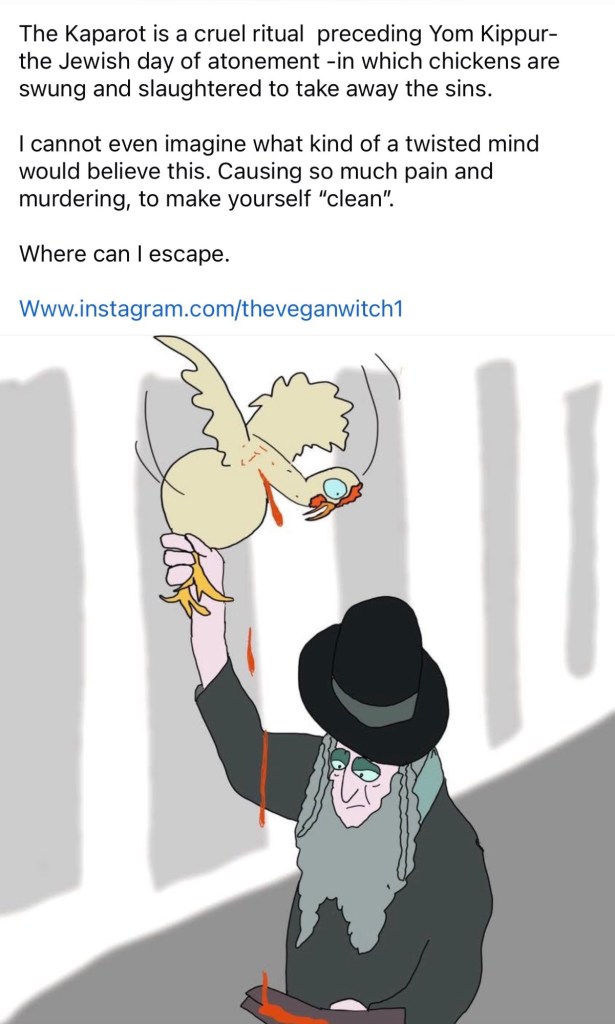
Kaparot (or Kapparot) must end.
Aho. Amen. Wado.
————————————-
**AI Overview**
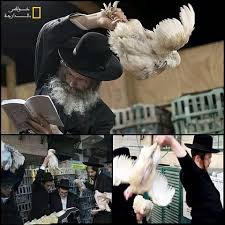
Kaparot (or Kapparos) is a traditional Jewish atonement ritual, often performed by Orthodox Jews on the eve of Yom Kippur, involving swinging a live rooster (or money) over one’s head while reciting prayers, symbolizing the transfer of sins to the bird, which is then slaughtered and donated to charity, though many modern rabbis encourage using money instead for ethical and practical reasons. The word means “atonements,” and the practice seeks to symbolically cleanse sins before the Day of Atonement.
How it works
With a Chicken: A person gently swings a live rooster over their head three times while reciting specific prayers, asking for sins to be transferred to the bird.
With Money: Alternatively, money (often in multiples of 18, representing “life”) is swung over the head with similar prayers, with the money then donated as charity.
The Ritual’s Purpose: The rooster is then humanely slaughtered (or the money donated), with the belief that God will transfer harsh decrees intended for the person to the bird (or the charity) in the merit of this mitzvah (good deed).
Controversy and alternatives
Rabbinic Opposition: The practice is controversial, with strong rabbinic opposition due to concerns about animal cruelty and potential superstitious origins.
Modern Alternatives: Many religious leaders encourage using money instead of chickens as a more effective and humane form of atonement, giving the value to the poor or charity.
Key takeaways
Timing: Performed just before Yom Kippur.
Meaning: Symbolic transfer of sins for atonement.
Alternatives: Money is a common modern replacement for the chicken.
He walked three miles into the forest to check a report about a starving animal. But the moment he reached for his water bottle to help the dog, he finally understood why it had never made a single sound ❤️🩹🐾
Officer Bennett thought he had seen the worst of humanity during his fifteen years on the job. Nothing surprised him anymore. At least that is what he believed.
A hiker had called about a living skeleton deep inside the state forest. Bennett and his partner pushed through thick brush and tangled branches, far from any marked trails. When they stepped into a small clearing, they froze.
A dog lay there, so thin his ribs looked like they could break through his skin. He was chained to a massive pine tree, too weak to stand. The ground around him had been scratched bare, every trace of soil gone from days of pacing until he no longer had the strength to move.
Bennett rushed forward, lifting his water bottle, ready for a growl or a frightened cry. But the forest stayed silent. Completely silent.
Then Bennett knelt beside him. And the truth hit like a punch to the chest.
The chain was not the worst part. Someone had wrapped thick rusty baling wire tightly around the dogs muzzle, layer after layer, cutting into his flesh and sealing his mouth completely shut. He had not made a sound because he physically could not.
Bennett swallowed hard as anger and heartbreak collided. They did not just leave him out here. They made sure no one would ever hear him crying for help.
With shaking hands he used his multi tool to cut through the wire. He braced himself for fear or panic. Instead, the moment the wire fell away, the dog gently rested his head against Bennett’s chest and closed his eyes as if he finally knew he was safe ❤️🐶
They carried him out of the forest that same afternoon. The vets call him Survivor now. And Bennett has already submitted the adoption papers so this brave boy will never be hurt again. Not ever.
I almost let a teenage girl freeze to death on Thanksgiving Eve because of a stupid sign I hung on my own wall.
NO LOITERING. NO SLEEPING. NO PETS.
I run a 24-hour laundromat in Chicago—where winter doesn’t show mercy, and if you show too much, your business turns into a free hostel. I’ve learned the hard way that if I let one person nap on a folding table, by sunrise I’ve got a whole encampment of them.
Rules keep the doors open.
Or at least, that’s what I told myself.
Last Wednesday, the wind was doing that sideways snow thing, the kind that slaps your face even when you’re indoors. I was in the back, grumbling about mopping floors instead of being home with my wife’s turkey, when the door chimed.
A girl walked in. Seventeen, maybe. Thin as a coat hanger. Hoodie soaked. Sneakers squishing with each step.
And beside her?
A monster.
At least, that’s what I thought.
A massive gray Pitbull mix. Scarred. Shivering. Built like he could bench-press a sedan. The type of dog people avoid by crossing an entire street.
“No dogs,” I barked, tapping the No Pets sign like a judge swinging a gavel.
She winced. “Please… just ten minutes. The shelter’s full. I just need my toes to stop hurting.”
The dog—Tank—pressed his whole body against her leg, as if trying to fuse himself into her for warmth.
“Fifteen minutes,” I muttered. “He makes one sound, I’m calling the cops.”
They retreated to the coldest corner. I retreated to the security monitor, looking for any excuse to kick them out.
Then I watched her pull out a handful of coins—pennies, nickels, a dime that looked like it had survived the Great Chicago Fire. She counted them over and over until she could afford a pack of those terrible orange peanut-butter crackers.
She sat on the floor, opened the pack…
and didn’t take a single bite.
She broke a cracker and held it out to Tank.
“Eat, buddy.”
Tank sniffed it. His ribs showed. He needed food desperately. But he pushed it back toward her.
She insisted. He refused.
And in that moment, on a grainy black-and-white screen, I watched a starving dog protect the only person he loved by refusing to let her go hungry.
My throat tightened.
Then things got worse.
Mike—the drunk regular who occasionally slept behind a dryer—stumbled over, reeking of whiskey.
“Got a dollar, sweetheart?” he slurred.
Tank stood up—not snarling, not attacking. Just planting himself like a shield between the girl and the man.
A living, breathing wall.
Mike reached toward her shoulder.
Tank growled—a low, seismic warning that said, Touch her and you’ll wish you hadn’t.
The girl wrapped her arms around Tank’s neck and begged, “Don’t hurt him, please! He’s just scared!”
That was the moment my rules stopped mattering.
I grabbed the baseball bat, marched over, and pointed it—not at the dog, but at Mike.
“Out. Now.”
He left so fast he forgot his bottle.
I locked the door. Flipped the sign to CLOSED. The girl looked up at me with terrified eyes, bracing for the moment I’d kick her out into the blizzard.
But I just walked to the back, grabbed the Tupperware my wife had packed—thick turkey slices, mashed potatoes, gravy—and set it in front of them.
“The dryer in this corner overheats,” I lied. “I need someone to sit here tonight and make sure it doesn’t catch fire. Job comes with dinner.”
She stared at the food like it was a dream she was afraid to touch.
“Sir?” she whispered, voice cracking.
“Eat,” I said. “Both of you.”
Tank waited—actually waited—until she swallowed her first bite before he took one for himself.
The toughest thing in that room wasn’t my bat. It was a half-frozen Pitbull who’d rather starve than let his girl go hungry.
That night changed me.
We spend so much time judging people by what they wear, where they sleep, or what they have in their pockets. We judge dogs by the size of their jaws and the scars on their skin.
But loyalty doesn’t live in appearances.
Compassion doesn’t come with a price tag.
And sometimes the best guardian angel you’ll ever meet arrives covered in frost, with a teenager on one side and a trembling Pitbull on the other.
If I’d followed my own rules, I would’ve shut the door on both.
Instead, I learned this:
Family isn’t always blood.
Protection doesn’t always look gentle.
And the biggest hearts often beat inside the bodies we’ve been trained to fear.
So next time someone walks into your life looking rough, tired, or “dangerous”…
maybe look twice.
You might be staring at the purest form of love you’ll ever see.
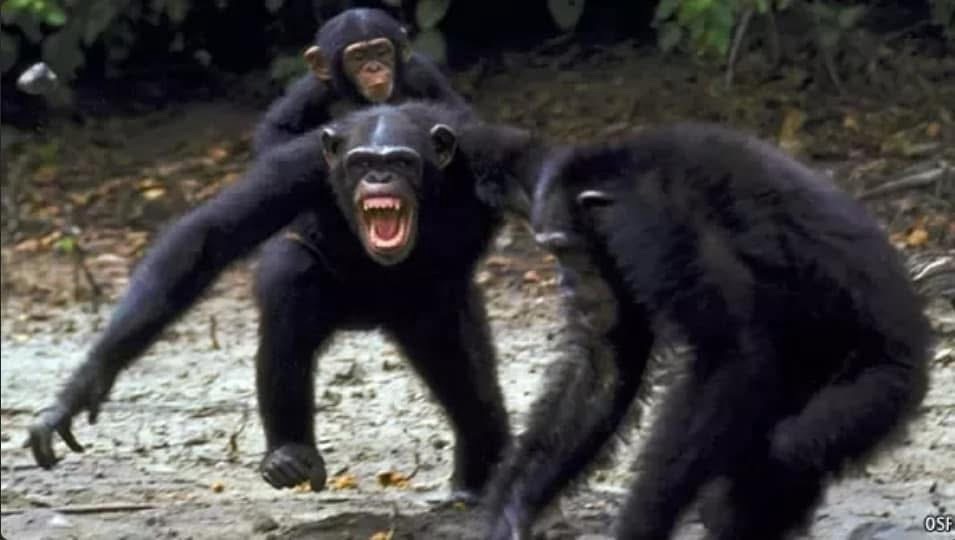
The Gombe Chimpanzee War, A conflict that didn’t involve any humans.
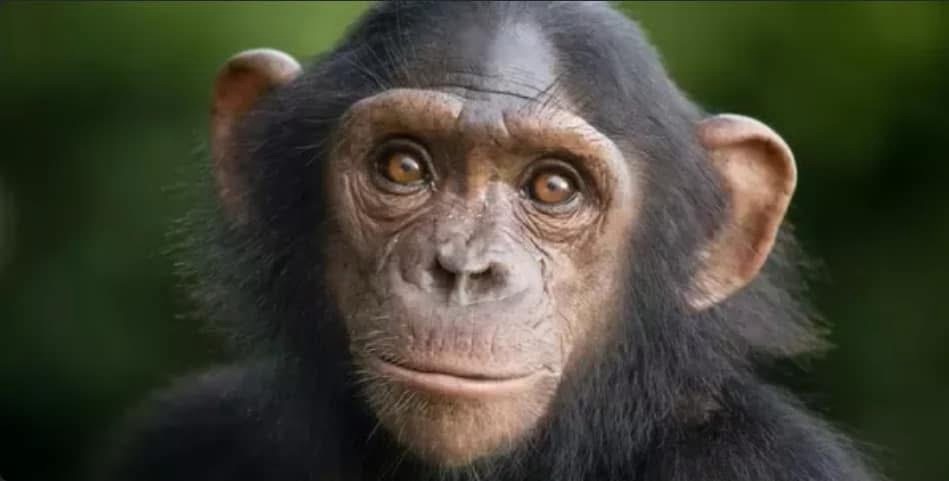
Many of us think that Chimpanzees are peaceful creatures, that always looked cheerful and playful, without the slightest tendency towards violence, and that Humans alone involve ourselves in conflict.
However, in the early 1970’s, with the death of an alpha male leader of a pack of Chimps in the Gombe region of Tanzania lead to the group being splintered into two, the Kasakela and the Kahama.
Over a period of 4 years, the Kasakela Chimps would kill all of the Kahama Chimps, using sharp stones to kill each other.
Jane Goodall, who would later become a leading expert on Chimpanzees, observed the conflict.
Jane Goodall, being disturbed by the violence of the primal lifestyle of the Chimps, wrote in her memoir Through a Window: My Thirty Years with the Chimpanzees of Gombe,
For several years I struggled to come to terms with this new knowledge. Often when I woke in the night, horrific pictures sprang unbidden to my mind—Satan [one of the apes], cupping his hand below Sniff’s chin to drink the blood that welled from a great wound on his face; old Rodolf, usually so benign, standing upright to hurl a four-pound rock at Godi’s prostrate body; Jomeo tearing a strip of skin from Dé’s thigh; Figan, charging and hitting, again and again, the stricken, quivering body of Goliath, one of his childhood heroes.
With our closest living relatives on the Evolutionary Tree having the same techniques of violence as us, It turns out us humans have more in common with our animalistic past than some might like to admit.
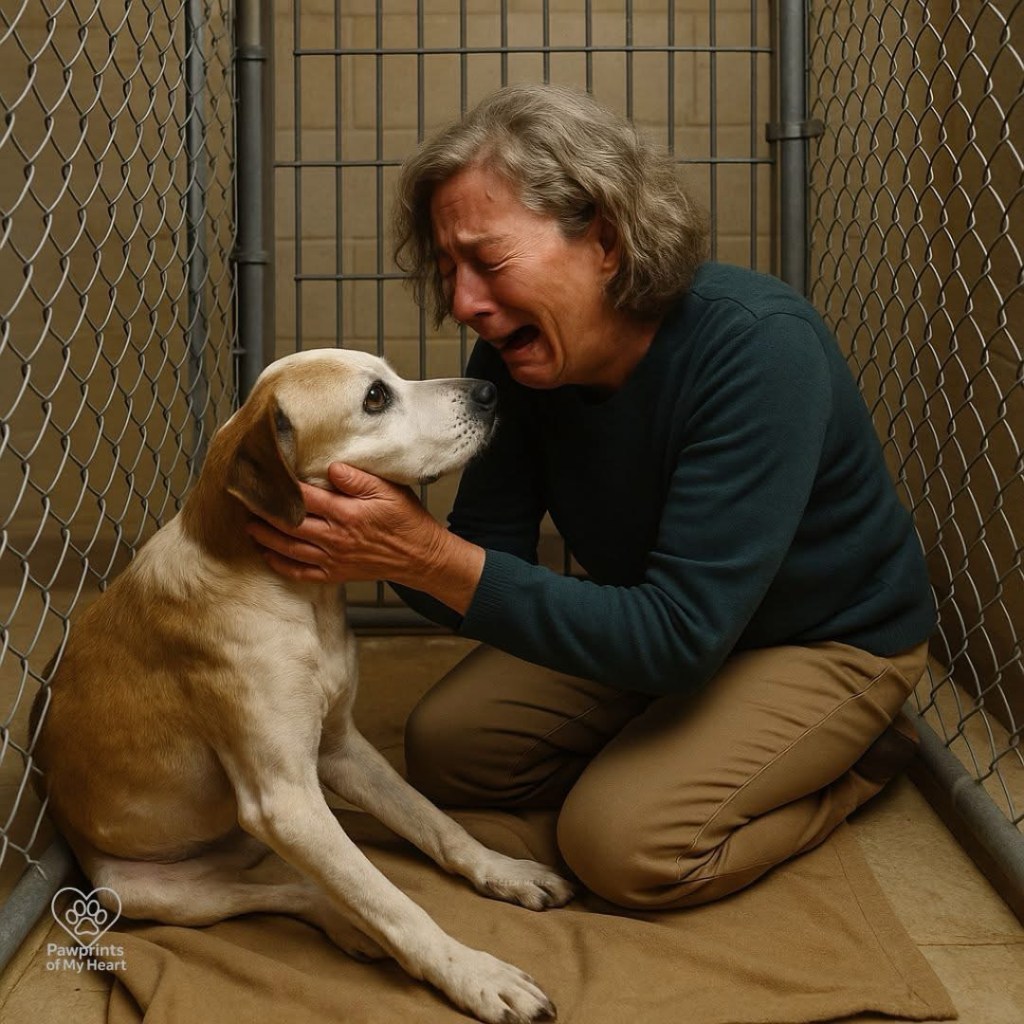
Sometimes life takes everything from you—your career, your purpose, even your voice. That’s what Elaine believed, until the day she knelt in front of a dying shelter dog and heard, without words, that she was still needed.
“They called me a dinosaur—right to my face—while scrolling TikTok in my class.”
My name is Elaine Morris. I taught English literature at Midstate College in Springfield, Missouri, for thirty-four years. And this spring, I retired. Quietly. Unnoticed. No banners. No flowers. Not even a handshake from the dean.
I walked out of Room 204 with a box of worn paperbacks, three dried-up markers, and a half-used tin of Earl Grey tea. And I left behind a classroom that used to feel like a cathedral.
I started teaching in 1989. Back then, students took notes with pencils that squeaked across paper. They raised their hands. They stayed after class to argue about The Grapes of Wrath. I remember a farm boy named Tyler who cried reading Of Mice and Men—said it reminded him of putting down his granddad’s dog. Another girl, Amanda, wrote me a letter on real stationery after graduation. I still keep it in my nightstand.
But now?
Now they scroll. They ask if they can just “email it” instead of speaking aloud. I used to say, “Turn to page 64.” Now I say, “Make sure your Wi-Fi’s working.”
Last semester, one of them called me “outdated.” Another, a redheaded boy with expensive shoes, laughed and said, “No offense, but lectures are like… boomer YouTube.”
They didn’t mean it to be cruel. That’s the worst part. They didn’t even look up.
So I stopped asking them to.
I drank my tea. Read my poetry out loud like I always had. And walked out that last day with nobody knowing it was the last.
Except Sammy, the janitor.
“Last day, huh?” he said, pausing his mop outside the door.
I nodded. He handed me a keychain I must’ve dropped a year ago. “Guess it’s yours again.”
Then he walked away.
I sat in my car for nearly twenty minutes before turning the ignition. I didn’t cry. I just stared at my hands on the steering wheel, wondering what they were supposed to hold now.
The next morning, I made oatmeal, out of habit more than hunger. Fed the birds. Listened to the wind roll off the Ozarks through my open kitchen window. And for the first time in decades, I had nowhere to be.
The silence wasn’t peaceful. It was heavy.
I pulled out an old yearbook from 1994. There I was, on page 12, caught mid-laugh in front of a chalkboard. My hair was thick and curly then, a little wild. My arms were full of books. And my eyes looked… alive.
Now, at sixty-seven, I wear soft shoes and a wrist brace. I shuffle more than stride. And the house feels too clean, like it’s waiting for something to happen that never does.
Around 3 p.m.—the hour I used to prep for my evening class—I opened Facebook. Just to scroll. Out of boredom, I guess.
A photo stopped me.
A blurry image of a dog, posted by Greene County Shelter. White muzzle. Blind in one eye. Caption: “URGENT: Hospice foster needed for 13-year-old female, owner deceased. Not eating. Losing hope.”
Her name?
Sadie.
That name pulled something out of me I hadn’t felt in years.
Sadie was the name of my childhood dog. Brown with a white chest. Used to follow me into the hayloft and sleep with her nose under my arm. She died the night I got my acceptance letter to college. I cried into her fur until sunrise.
Now here was another Sadie. Also dying. Also forgotten.
I stared at the post until my oatmeal went cold. Then I clicked “Interested.”
That night, I couldn’t sleep. I walked barefoot around the living room, stopping to touch the old bookshelf I built with my father in ’72. I ran my finger across the dusty spines: Frost, Dickinson, Faulkner. No one reads them anymore.
They want screens. They want speed. They want answers before the question’s even finished.
But dogs don’t. Dogs take time.
I thought of Sadie again—both of them. And I whispered to no one, “What if I still have something left to give?”
The next morning, I drove to the shelter. First time I’d been back since volunteering as a student in ’85. The building was newer now, but it still smelled like bleach and despair. A girl with blue hair and a clipboard greeted me.
“You here for hospice fostering?” Her voice was flat, tired. “I think so,” I said. “I clicked online. About Sadie.”
She nodded. “Old gal hasn’t moved much. You sure you’re up for it?”
I smiled. “I taught college kids who thought Shakespeare was a TikToker. I think I can handle a tired dog.”
The girl laughed, just a little. Then led me past rows of cages, most full. Dogs barking, pacing, chewing on metal.
And then we stopped.
There she was. Sadie. Lying on a faded blanket, ribs showing, paws curled under like she was trying to disappear.
She didn’t lift her head.
The girl opened the gate. “Go slow.”
I knelt down—slowly, knees popping—and whispered, “Hey there, Sadie. You waiting for someone?”
Her ear twitched. Then she lifted her head. Blind eye milky, the other watery and deep.
She didn’t bark. She didn’t flinch.
She just looked at me. And didn’t look away.
I held out my hand. She leaned into it. Her fur was coarse, warm, alive.
That was the moment.
Not when I gave lectures. Not when I got tenure. Not even when I won that teaching award in 2007.
This. This silent, fragile leaning.
That was when I knew.
I had just been chosen. Not as a professor. But as a person.
I stood up, knees aching, and said to the girl, “What do I have to sign?”
The girl raised her eyebrows. “You sure?”
“I’m not sure about much these days,” I said. “But I know this: she’s not dying here.”
We rode home in silence. Sadie in the passenger seat, head down, but present. I kept one hand on the wheel and the other close to her paw. Just in case.
When we pulled into my driveway, she looked out the window. Then looked at me. And wagged her tail once.
Just once.
But it was enough to break my heart in the best possible way.
🪶 Part 2 – A Name from the Past “I didn’t expect to cry over an old dog’s name. But some names hold everything you’ve ever lost.”
Sadie was curled in the corner of my rug like she’d always lived here. One paw under her chest. The other stretched toward the fire, like she remembered what warmth was.
I sat on the couch, hands folded, staring at her the way I used to stare at midterms. Carefully. Afraid to make a sound. Afraid I’d ruin the stillness.
The vet had sent me home with a bag of medicine and warnings. Renal failure. Muscle wasting. “Don’t get attached,” he said, too casually.
I wanted to say, Sir, I’ve taught five generations of heartbreak in paperback form—of course I’ll get attached. But I just nodded. Took the pills. Paid the fee. And drove home with a silent passenger.
That first night, I left my bedroom door open. She didn’t move from the rug. I whispered, “Goodnight, Sadie,” and felt foolish for how natural it sounded.
At 3:17 a.m., I woke up to a sound I hadn’t heard in forty years. The soft tick-tick-tick of nails on hardwood. I turned toward the doorway—and there she was. Watching. Waiting.
“Come on,” I said softly. She walked in slow circles. Then climbed onto the bed like it was a mountain she’d once known.
When she laid her head on my ankle, I cried. Not loud. Just enough to remember I was still alive.
In the morning, I dug through my garage until I found it.
A cardboard box. Faded blue ink on the side: ELAINE – COLLEGE STUFF – 1985. Inside: photos, a Walkman, old letters, a bracelet from a student I’d tutored in ‘88.
And at the very bottom—a Polaroid. Me, age twelve. In overalls. Grinning like I had no idea what loss was.
Beside me: the first Sadie. Mutt of unknown origins. One ear up, one down. Her head resting on my knee like it belonged there.
I held the photo next to the new Sadie, now sleeping beside the fire. They weren’t the same dog. But grief doesn’t care about accuracy. It only cares that something you loved is gone.
And sometimes, when the world gets quiet enough… It sends you back what you lost—just with more gray.
The next few days passed in soft routines.
Morning pills in peanut butter. Short walks around the block. Long pauses at fire hydrants like they were memory stones. She refused to eat dry food, so I cooked her scrambled eggs with goat cheese.
Neighbors noticed.
One of them—Mrs. Lorna Finch, who once told me she “never trusted pit bulls”—came to the gate and said, “She looks like she belongs here.”
“She does,” I answered.
“She yours?”
“She’s mine now.”
Lorna nodded once. “Good.”
Then walked away.
That weekend, I took Sadie to the little park behind Midstate College. The one where I used to read under the big sugar maple after lectures.
I sat on a bench with Sadie at my feet, watching two kids play with a drone. They screamed at it like it was alive. Never looked at each other.
No skin. No laughter. Just tech.
I thought about my final seminar. Only four students showed up. One kept texting. Another asked if the final could be replaced by a podcast episode.
I told them to just… write me something honest. None of them did.
That afternoon in the park, I closed my eyes and spoke to Sadie like she was an old colleague. “I don’t think they even hated me,” I said. “I think they just… didn’t see me.”
Sadie let out a long breath. Like she understood. Like she’d been invisible too.
That night, I was in the kitchen cleaning out my spice drawer when the phone rang.
Landline. Still have it. Not because I need it—just because I can’t let it go.
“Elaine?” A woman’s voice. Trembling a little.
“This is she.”
“This is Melanie. Melanie Kravitz. From your 2001 Gothic Lit class.”
I dropped the paprika.
“I’m sorry to call out of nowhere. I saw a photo of you with a dog on the Greene County Shelter page. I wasn’t sure if it was you but… your hands looked the same.”
That made me laugh. They do look the same. Spotted. Veined. Honest.
“I’m a vet now,” she said. “At Ozark Hills. If you ever need a second opinion, or a favor… I owe you.”
“You don’t owe me anything.”
“I do,” she said softly. “You told me I could write. That I didn’t have to marry my boyfriend just because he said so. That I had value.”
I couldn’t speak for a moment.
Then: “Sadie’s sick.”
“Sadie?”
“That’s the dog.”
Silence.
“My grandmother’s name was Sadie,” she said. “She raised me after my mother left.”
I felt a chill.
“Would you… would you come see her?” I asked. “I think she’s holding on for someone.”
Melanie arrived the next day. Shorter than I remembered. Hair tied up. Still had that nervous kindness in her face.
She knelt by Sadie without saying a word. Listened to her heart. Checked her gums. Then looked at me and said, “She’s tired. But she’s still in there.”
“She’s all bones.”
“So were we,” she said, “when you gave us a chance.”
That night, after Melanie left, I lay in bed with Sadie tucked into my side like a puzzle piece that finally fit.
I stared at the ceiling and whispered, “What are you trying to teach me, girl?”
No answer.
But I swear—I dreamed in color for the first time in years.
🪶 Part 3 – The Dog Knew Me First 👇👇⏬⏬
“They posted my face online, called me pathetic—and Sadie licked my hand like I was still worth something.”
It started with a ping.
I was sitting on the porch with a mug of chamomile, Sadie curled up at my feet, when my phone buzzed.
13 new notifications.
Strange. I don’t get many these days. Just newsletters, pharmacy reminders, and the occasional forwarded joke from Lorna down the street.
I tapped the screen.
The first thing I saw was my own face.
Blurry. Washed out by shelter lighting. Eyes tired. Hand gently resting on Sadie’s back.
Underneath, bold white text in a screenshot of a tweet: “Boomer professor retires, adopts dying dog to ‘feel needed.’ This is so painfully sad.”
I blinked.
The caption from the person who reposted it was worse: “She used to grade my papers. Now she’s grading kibbles.” 1,249 likes. Dozens of laughing emojis.
I stared at it for a long time. Long enough for the tea to cool in my hand.
Sadie stirred. Lifted her head.
I looked down. Her eyes were cloudy, but they found mine. She leaned forward and licked the edge of my hand—right where the skin folds into itself.
It wasn’t much. But it was real. And in that moment, it meant more than any peer-reviewed publication ever had.
By lunchtime, the post had spread.
A student I barely remembered emailed to apologize: “It wasn’t me, Dr. Morris. I just wanted you to know. Some of them are cruel.”
Some of them are cruel. That sentence hit harder than the post itself.
Because when I started teaching, cruelty wasn’t clever. It was shameful. Students might grumble or gossip, but they didn’t humiliate you publicly and call it content.
Melanie came by that afternoon, holding a brown paper bag of supplements for Sadie.
She saw my face before I could fake a smile.
“I saw it,” she said quietly. “Don’t read the comments.”
“I did.”
“I’m sorry.”
I sighed. “It’s not the words. It’s the fact that they believe them.”
Melanie sat beside me. “You saved my life once. In a classroom. In a moment. When I was just a kid with panic attacks and a spiral notebook.”
I looked at her hands—now sure, practiced, capable.
She continued, “Now you’re saving a dog who has nothing left. That’s not sad, Elaine. That’s grace.”
I didn’t reply. But I didn’t cry either. Which meant I believed her—at least a little.
That evening, I received a message on Facebook from someone named Lenny Parks.
“Saw what happened online. Don’t let them win. I work at the shelter part-time. If you’re ever up for volunteering… we could use someone like you.”
Lenny was young—mid-twenties, maybe. His profile picture showed him holding a three-legged terrier with a look of such love I couldn’t ignore it.
I hesitated. Volunteering?
I had taught Paradise Lost for three decades. Given keynote speeches on Emily Dickinson’s structural rhythms. And now a stranger thought I might be useful cleaning kennels?
Sadie sneezed beside me. A loud, wet snort of a sneeze. I laughed. Then I messaged back: “I’ll come Wednesday. If you don’t mind old bones.”
He replied instantly: “The dogs won’t.”
Wednesday morning, I stood outside the shelter in worn sneakers and a cardigan I didn’t mind ruining.
Inside, the scent of bleach and wet fur wrapped around me like a memory.
Lenny met me at the door.
“You made it.”
“I said I would.”
He smiled. “I like that. People say a lot these days. Doesn’t mean much.”
He handed me gloves and led me to the back.
“Start with kennel 12. Old lab mix named Rufus. Doesn’t bite. Just moans a lot.”
I nodded. “Sounds familiar.”
I hadn’t scooped dog poop since the 80s. But the body remembers things.
I cleaned. I scrubbed. I cooed at trembling muzzles.
It was messy, exhausting, and smelled like heartbreak. But for the first time in months, I felt useful.
And the dogs didn’t care that I was old. Or mocked online. Or no longer “relevant.”
They only cared that I came back.
That afternoon, while rinsing out a metal bowl, I heard barking from the lobby. Not panic barking. Excited. Hopeful.
A family was adopting. Lenny waved me over.
“You want to say goodbye to Charlie? He’s heading home.”
I peeked around the corner.
A pit mix with bright eyes and a crooked tail was wagging so hard he nearly fell over. A little girl with freckles kissed his nose.
I smiled.
And something inside me whispered, Maybe there’s still a place for you here.
But peace doesn’t stay long.
Not in this world.
That night, I got a call from the shelter. Rufus had bitten a volunteer. They were short-staffed. Would I come?
I grabbed my keys and went.
When I arrived, Rufus was cowering in the corner of his kennel. His teeth bared—not in aggression, but in fear.
I knelt, slowly. Spoke in the voice I used when freshmen cried in my office after a bad grade.
“It’s okay, boy. You’re not in trouble.”
He looked at me, then collapsed into my lap like a falling tree.
I stroked his back, felt every rib. So much weight gone. So much trust still left.
And then I said it, out loud: “Maybe I’m not done teaching.”
Not people. Not anymore. But these forgotten souls?
They still listened. They still learned.
When I got home, Sadie was curled on the couch, tail thumping once as I entered.
I sat beside her and opened my laptop. The viral post was still spreading. But something new had appeared.
A comment.
From a stranger.
It read: “She taught me Shakespeare and grace. Now she’s teaching me what love looks like at the end of life. Thank you, Dr. Morris.”
I didn’t recognize the name.
Didn’t need to.
Because some lessons take years to bloom. And some students grow in silence.
Later that night, I stood at the back window, watching the moonlight hit the frost on the garden stones.
Sadie came up behind me. Rested her head against my knee.
A study conducted in 2018 by Canisius College in Buffalo, New York, found that women who sleep alongside their dogs tend to experience better sleep quality than those who share a bed with a human partner. Surveying 962 adult women across the United States, the research highlighted that dogs were less likely to interrupt sleep and often provided a greater sense of safety and comfort.
Dogs generally maintain consistent sleep patterns and are less likely to snore or move around unpredictably during the night. Many women also reported feeling more secure with a dog in bed, which may reduce anxiety and contribute to more restful sleep. In comparison, human partners were more frequently cited as sources of disturbance due to movement, noise and inconsistent sleep habits.
The study suggests that for women who value uninterrupted sleep and nighttime reassurance, sharing the bed with a dog may be more beneficial than sleeping next to a human companion.🤎🖤🩶
I once stitched up a dog’s throat with fishing line in the back of a pickup, while its owner held a flashlight in his mouth and cried like a child. That was in ’79, maybe ’80. Just outside a little town near the Tennessee border. No clinic, no clean table, no anesthetic except moonshine. But the dog lived, and that man still sends me a Christmas card every year, even though the dog’s long gone and so is his wife.
I’ve been a vet for forty years. That’s four decades of blood under my nails and fur on my clothes. It used to be you fixed what you could with what you had — not what you could bill. Now I spend half my days explaining insurance codes and financing plans while someone’s beagle bleeds out in the next room.
I used to think this job was about saving lives. Now I know it’s about holding on to the pieces when they fall apart.
I started in ’85. Fresh out of the University of Georgia, still had hair, still had hope. My first clinic was a brick building off a gravel road with a roof that leaked when it rained. The phone was rotary, the fridge rattled, and the heater worked only when it damn well pleased. But folks came. Farmers, factory workers, retirees, even the occasional trucker with a pit bull riding shotgun.
They didn’t ask for much.
A shot here. A stitch there. Euthanasia when it was time — and we always knew when it was time. There was no debate, no guilt-shaming on social media, no “alternative protocols.” Just the quiet understanding between a person and their dog that the suffering had become too much.
And they trusted me to carry the weight.
Some days I’d drive out in my old Chevy to a barn where a horse lay with a broken leg, or to a porch where an old hound hadn’t eaten in three days. I’d sit beside the owner, pass them the tissue, and wait. I never rushed it. Because back then, we held them as they left. Now people sign papers and ask if they can just “pick up the ashes next week.”
I remember the first time I had to put down a dog. A German shepherd named Rex. He’d been hit by a combine. The farmer, Walter Jennings, was a World War II vet, tough as barbed wire and twice as sharp. But when I told him Rex was beyond saving, his knees buckled. Right there in my exam room.
He didn’t say a word. Just nodded. And then — I’ll never forget this — he kissed Rex’s snout and whispered, “You done good, boy.” Then he turned to me and said, “Do it quick. Don’t make him wait.”
I did.
Later that night, I couldn’t sleep. I sat on my front porch with a cigarette and stared at the stars until the sunrise. That’s when I realized this job wasn’t just about animals. It was about people. About the love they poured into something that would never live as long as they did.
Now it’s 2025. My hair’s white — what’s left of it. My hands don’t always cooperate. There’s a tremor that wasn’t there last spring. The clinic is still there, but now it’s got sleek white walls, subscription software, and some 28-year-old marketing guy telling me to film TikToks with my patients. I told him I’d rather neuter myself. We used to use instinct. Now it’s all algorithms and liability forms.
A woman came in last week with a bulldog in respiratory failure. I said we’d need to intubate and keep him overnight. She pulled out her phone and asked if she could get a second opinion from an influencer she follows online. I just nodded. What else can you do?
Sometimes I think about retiring. Hell, I almost did during COVID. That was a nightmare — parking lot pickups, barking from behind closed doors, masks hiding the tears. Saying goodbye through car windows. No one got to hold them as they left.
That broke something in me.
But then I see a kid come in with a box full of kittens he found in his grandpa’s barn, and his eyes light up when I let him feed one. Or I patch up a golden retriever who got too close to a barbed fence, and the owner brings me a pecan pie the next day. Or an old man calls me just to say thank you — not for the treatment, but because I sat with him after his dog died and didn’t say a damn thing, just let the silence do the healing.
That’s why I stay.
Because despite all the changes — the apps, the forms, the lawsuits, the Google-diagnosing clients — one thing hasn’t changed.
People still love their animals like family.
And when that love is deep enough, it comes out in quiet ways. A trembling hand on a fur-covered flank. A whispered goodbye. A wallet emptied without question. A grown man breaking down in my office because his dog won’t live to see the fall.
No matter the year, the tech, the trends — that never changes.
A few months ago, a man walked in carrying a shoebox. Said he found a kitten near the railroad tracks. Mangled leg, fleas, ribs like piano keys. He looked like hell himself. Told me he’d just gotten out of prison, didn’t have a dime, but could I do anything?
I looked in that box. That kitten opened its eyes and meowed like it knew me. I nodded and said, “Leave him here. Come back Friday.” We splinted the leg, fed him warm milk every two hours, named him Boomer. That man showed up Friday with a half-eaten apple pie and tears in his eyes. Said no one ever gave him something back without asking what he had first.
I told him animals don’t care what you did. Just how you hold them now.
Forty years. Thousands of lives. Some saved. Some not. But all of them mattered.
I keep a drawer in my desk. Locked. No one touches it. Inside are old photos, thank-you notes, collars, and nametags. A milk bone from a border collie named Scout who saved a boy from drowning. A clay paw print from a cat that used to sleep on a gas station counter. A crayon drawing from a girl who said I was her hero because I helped her hamster breathe again. I take it out sometimes, late at night, when the clinic’s dark and my hands are still.
And I remember.
I remember what it was like before all the screens. Before the apps. Before the clickbait cures and the credit checks.
Back when being a vet meant driving through mud at midnight because a cow was calving wrong and you were the only one they trusted. Back when we stitched with fishing line and hope.
Back when we held them as they left — and we held their people, too.
If there’s one thing I’ve learned in this life, it’s this:
You don’t get to save them all. But you damn sure better try.
And when it’s time to say goodbye, you stay. You don’t flinch. You don’t rush. You kneel down, look them in the eyes, and you stay until their last breath leaves the room.
That’s the part no one trains you for. Not in vet school. Not in textbooks.
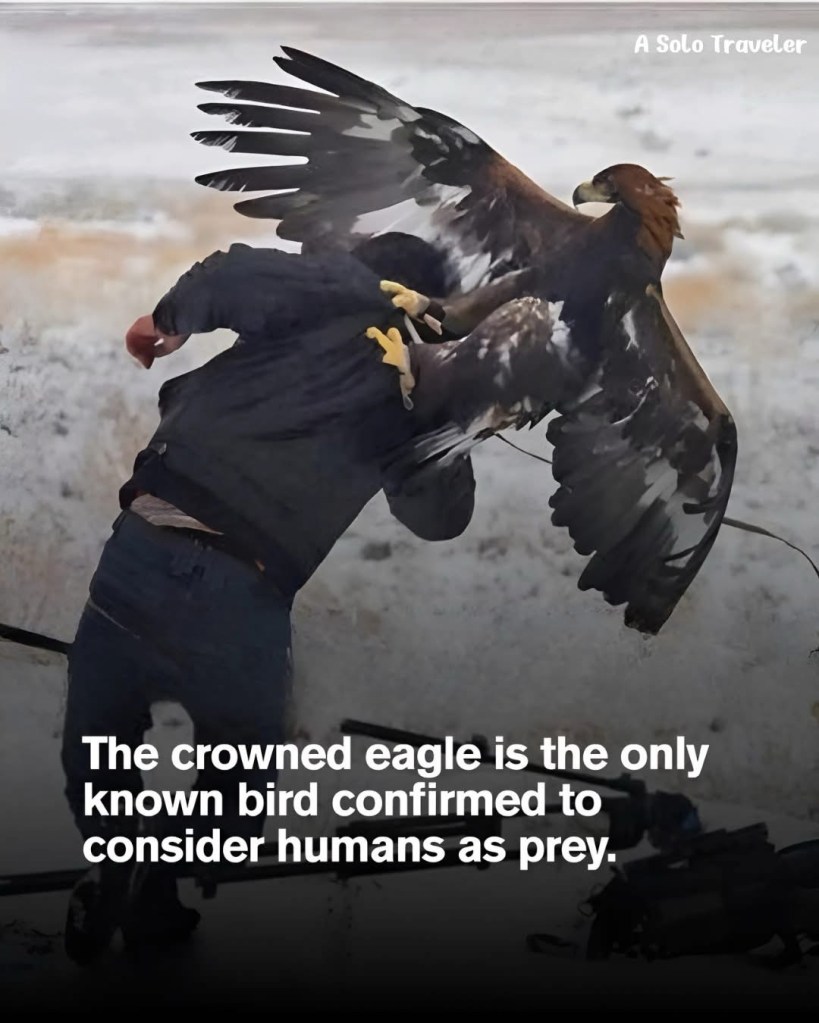
In the dense forests of sub-Saharan Africa, there lives a raptor so powerful, so fierce, it’s often called the “leopard of the sky.” Meet the Crowned Eagle — one of the strongest eagles on Earth, and the only bird known to consider humans, especially small children, as potential prey.
Weighing around 7–10 pounds with a wingspan of nearly 6 feet, this apex predator has legs as thick as a man’s wrist and talons strong enough to crush bones. Its natural diet includes monkeys, antelope, and even large lizards — prey often heavier than itself. But it’s not just their strength that makes them formidable — it’s their stealth, patience, and speed.
What’s most chilling is that Crowned Eagles have, on rare occasions, been linked to attacks on human children. Archaeological evidence from ancient African sites suggests that human ancestors — small hominins — may have once fallen victim to these powerful birds. A famous fossil of a 3-year-old Australopithecus child, known as the “Taung child,” showed skull injuries consistent with a large bird of prey, and many scientists believe a Crowned Eagle could have been responsible.
Modern-day encounters are rare but not unheard of. In remote areas, locals have long told stories of eagles swooping from the canopy with terrifying force. Though they don’t actively hunt humans today, the fact that they’ve shown the capacity to do so places them in a league of their own.
In a world where birds usually flee from people, the Crowned Eagle stands as a fierce reminder that sometimes, we’re not the top of the food chain — and nature always has its own rules.






 opensenseme