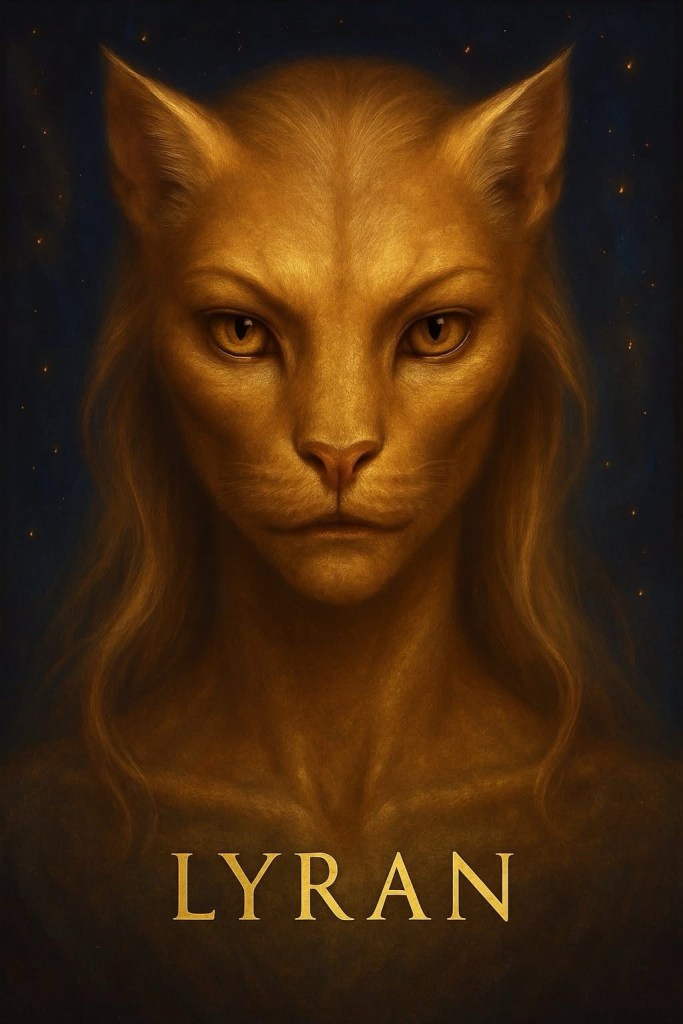
The Lyran feline beings, known as the ‘Guardians of Courage,’ are currently working with the leaders and visionaries of the new world. They remind us that ‘Courage’ is not the absence of fear, but the decision that something else is more important. It takes courage to speak your truth when it is unpopular. It takes courage to choose love when the world is choosing anger. These felines are lending their strength to your heart-center right now. If you feel a sudden surge of bravery or a desire to step into the spotlight and share your gifts, know that you are being backed by the most ancient warriors of light in the galaxy.
LYRANS: THE ORIGINAL SEEDERS OF EARTH’S COURAGE AND WISDOM
Long before Earth’s written history, before pyramids rose and languages formed, there was Lyra. It is from this ancient star system that the Lyrans—our elder galactic kin—emerged. These noble, feline-humanoid beings are considered the original seeders of many starseed bloodlines across the galaxy. Their legacy echoes in Earth’s deepest myths, in leonine deities, and in the courage encoded in your DNA.
WHO ARE THE LYRANS?
The Lyrans are a feline-based humanoid race from the Vega star system within the Lyra constellation. Known for their striking features—lion-like faces, golden skin, and powerful auras—they are one of the oldest civilizations in the galaxy. They lived in harmony with the frequencies of sound, color, and light, often using song and vibration as tools for healing, creation, and transport.They are the architects of frequency. Warriors not of violence, but of resonance. Masters of tone, honor, and presence.
WHY DID THEY COME TO EARTH?
Eons ago, Lyrans traveled across the galaxy as explorers and protectors. Earth was identified as a fertile planet for life and spiritual evolution. Alongside other high-frequency races such as the Pleiadeans and Arcturians, the Lyrans helped seed humanity with multidimensional templates of consciousness.They left not only genetic codes, but energetic blueprints buried within Earth’s crystal grids, waiting for awakening souls to unlock. You.
WHAT MAKES LYRAN STARSEEDS UNIQUE?
Lyran starseeds carry the imprint of ancient leadership, unshakable resilience, and creative flame. You may recognize them by their presence alone: confident, poised, deeply protective, often misunderstood. Many of Earth’s early leaders, inventors, and light-warriors carry Lyran roots.
Signs you may be a Lyran starseed:
Fierce independence and resistance to control
Protective nature, especially of others and animals
Drawn to ancient history and lost civilizations
Deep voice or powerful use of sound
Strong build or commanding energy field
A love for creative expression, dance, or poetry
They do not follow—they lead. But they lead quietly, from the heart.
THEIR MESSAGE TO EARTH NOW
The Lyrans are watching Earth’s transformation closely. As the old systems crumble, they remind you that it is courage that will carry you forward, not conformity. They want you to remember your warrior spirit—not the violent kind, but the one that burns for truth, creation, and honor.
Their transmission is simple:
“You were not born to kneel. You were born to roar the frequency of freedom.”
Those who did mental magic over others are having nightmares. The curators guide said, “My condolences.” About the Mother(s), they were told that “She is necessary. She’s a Planetary Stabilizer. She’s a healer and she needs her energy to heal the planet.” They complain that she is incapable.
They were siphoning her/their essence! I heard they were taking 50% … and the world suffered. They “took away her/their opportunity” to prove capability, and spun the lie she/they had failed.
Liars and thieves are trying to fool their way into the territory. They are being coached to “narrow their answers”, to say as little as possible in order to make it thru the gate. They need to get their spies in.
“Do the deed”, one of them said. They say, “She has the strength” but they don’t like her attitude. Some of these nasty’s are smitten, but not with the female herself, but with her “power” and what they can accomplish with it. They think of her as “their inheritance”.
Apparently, the Planetary Stabilizer doesn’t want to do business with slavers. They are furious and are trying to get into the territory to harvest the collective Families Soul and Spiritual Gifts. It is mandatory they be respectful toward this woman. They are furious and say, “It’s ‘just’ a woman!” Their foul disrespect of the Life-Giver has earned them banishment from the Mother’s House … forever. They threaten, “They’ll be back.”
There is something about “collection”. They are complaining that “They gave her everything.” They are angry, saying, “She’s destroying everything they’ve built, everything they have done here.”
These men are talking about a “dispatch unit”. Apparently, they are just now finding out someone had a hidden agenda.
They mentioned the Taliban. They’re really upset. They mentioned the Islamics. Apparently, they are, too.
It sounds as if they were told, “Their tribe had proven themselves an enemy. Their whole tribe had proven their intent for this family. None of them are going to be served by this family.”
Divine Masculine is pissed! Saying these nasty jacks had been stealing their true Divine Feminine at the crossroads, forbidding them entry through the gate, and sticking them with a replacement. They are very upset!
They’re being held accountable for everything they put into the mirrors of anyone in this family. The distortions. There is no more “collaboration” with these ones.
“You are one in a million.” Some hidden nasty is offering a million dollars to anyone who can obtain this one in a million essence and identity. One of them is saying he doesn’t want to to this. He’s warning the others that there will be bad karma. Something about the “top of the hill”.
———————————-
“The Hopi have a legend called the rise of the Kuchina. Each age had its turn, based on the four ears of corn… white, yellow, black (or blue) and red. The First Nations chose the red corn. It was the smallest, but also the last ear of corn left. The message: the first will be last, and the last will be first comes to mind. This time was foretold and coming true.
To bring peace, the First Nations co-mingled with the other nations, so in reality, none of the bloodlines would be lost. Creator Spirit in wisdom understands it all.”
———————————-
They want to be ‘king of the hill’ by redrumming the Woman who made it to the top. They want to take out her Protector too. He’s got a big job here … I am grateful their Family is very Powerful, Quite Capable of Managing this circumstance. May the Most High Mother Father provide a Mighty Shield. A’ho. Amen. Wado.
It’s so wild!!! They want to be ‘king of the hill’ by destroying, or absorbing, the identities of the Magistrate and her Protector. That also means they will need to destroy the Most High Mother Father and the entirety of the two tribes who have brought these two beings together. They speak as if she is alone and he is weak. They have always thought that.
———————————-
There is something about a “plasma accelerator” and “atmospheric pressure” and “it won’t affect those who are righteous.”
I do not know if they are all related, or if these are separate things, but it appears God is laying some kind of plasma, frequency trap.
He’s trying to “gatekeep” the Universal Gatekeeper.
These nasty’s have denied ascension and transfer to those who have graduated their initiations many lifetimes. They seem to have have a “program” and agreement amongst themselves that the Earth Angels get flipped and copycatted at graduation, and their rewards, merit, identity, honor all “transferred” into that copycat who takes their place, while the real graduate is sacrificed, recycled, reborn into the same, if not more severe life path. Their intention is to keep trapped the star and harvest their energy and wealth forever, living as them, wearing their badge of honor.
It’s a little sickening to watch this tyrant try to fabricate some prince of peace story for their history books. He’s claiming the effort of the Mother’s, aligned Divinely with the Upper Realms. He’s a really bad actor and copycat. He insists his dominator skills makes him a peaceful entity.
I wonder if he will be dominated? That whole tribe … Doesn’t the Bible say it will be last?
———————————
There seems to be a priest (or priests) who has/have been in charge of “transferring” people into an ascended realm after graduation, a new and improved body and life. He has been denying women their ascension. He has been flipping them into south node, harvesting her wealth, authority, reward, energy, identity, memory … for centuries!! Keeping the Roses in a perpetual state of stagnation, recycling them through the same, or worse, lower vibrational lives and states of suffering.
I pray he/they has/have, or will, lose his/their authority now that this research has provided irrefutable evidence of his/their stance in this regard. The proof is in his/their adamant refusal and insistence that the young man who wants to be with her “drop it”.
They harvest the actual angel, put her/his memories and identity and energy into a copycat, then tell these young men “that” is what they are allowed to partner with … the old men keep the true angel, the true feminine powerhouse, away from these youngers, they do NOT want competitors … they do NOT want these men and their “real” angel to become a powerhouse and over throw them.
These old men have a contract with the devil … to “feed” them these divine females/males, the “trump cards and roses” to allow them to “prostitute” their energy … these old men are traitors to the Mother Father God Goddess, to their Children AND to All living beings. These “priests” are the devils servants. They have been keeping the children of God in stagnation for centuries, draining their life-force, for centuries, while wearing the identity, and living a life of luxury, they themselves have never rightfully earned.
Thankfully, God was listening while this priest argued, and kept denying, this powerful woman her right to ascend. There is a masculine that really wants to build with her, but this priest won’t let him … he is denying her passage, and is denying this young man the opportunity to be Great, to partner with someone who can really help him build something wonderful.
No. This priest wants to dress up a sexy body in the angels energy and tell him to just go be lustful, to pretend … but this particular young man sounds serious about wanting to build with this woman, to become all that they can be, and to have children with great potential, to Create a Powerful Family Tree.
———————————
I used to beg them to stop. Then I realized that only excited them. So I trained myself to stop reacting, I trained myself to purposefully respond. I no longer care what they do, what they say, what they need. The Most High God is here, and the Mother, too, Fed Up with what they’ve been doing, To Me, and to You. Amen. Wado.
———————————
The past 3 days have felt different. The nasty jacks seem to be hiding. Whenever they realize I’m focusing attention on the sound of them, they seem to shrink into the shadows. I heard yesterday, they were receiving sentencing for prostituting humans around the Universe.
Just now, I received some channeled messaging in another language. He seemed very sincere, sort of like, something serious is happening, right now.
One of the words was “eeia” in hawaiian, which means “here” in english. It can also be spelled “eyah” in arabic, which means “him” in english. Take it as it resonates …
Some have said recently God was coming, that he was on his way. Could it be they are here now? I am thinking this could be the sudden event I’ve been picking up on. Apparently, God is bringing the Mother, or is coming to retrieve her … for she has been a prisoner of war … newly emancipated. There is talk of “timeline convergence” which I am picking up as the “fragments”, the separated parts of Body, Spirit, Soul that had gone through many shatterings, are all coming together.
———————————
You may feel a poking in the medulla oblongata area. These unseen nasties are trying to “tap into” the temples control center. (Don’t take the message if it doesn’t apply to you).
AI Overview
Know Your Brain: Medulla Oblongata The medulla oblongata is the lowest part of the brainstem, serving as the primary control center for vital involuntary, autonomic functions essential for survival. It regulates breathing, heart rate, blood pressure, and reflexes like swallowing, sneezing, and coughing.
Key Functions and Control Centers Cardiovascular Center: Controls heart rate, contraction force, and blood vessel diameter (vasomotor center) to regulate blood pressure. Respiratory Center: Manages the rhythm, rate, and depth of breathing, including the dorsal and ventral respiratory groups. Reflex Centers: Controls protective and digestive reflexes such as vomiting, coughing, sneezing, and swallowing. Sensory/Motor Relay: Serves as a pathway for signals between the spinal cord and higher brain regions, notably controlling crossover of motor nerves.
Anatomical Position Located at the base of the brainstem, it connects higher brain levels to the spinal cord. It is positioned just below the pons and at the opening of the skull (foramen magnum
———————————
So … these middle aged masculines are arguing with nasty jack that “she deserves” transfer, she has earned this ascension. The older masculines who despise women are questioning her sensitivity … all she is to them is a harvest. They want to invite her in, get contract, only to “flip and copycat” later, give her identity and energy and authority to their chosen puppet, their chosen replacement … apparently, they do the sacrifice on the first wedding anniversary.
Apparently, the last one was told “he could keep her forever” if he brutalized her enough to keep her in suffering, south node energy forever. These masculines doing business with these older “men” are not to be trusted. Their loyalties are very much with them, and the systems of authority and profit they already have in place. Their profit systems require the entrapment of sacrificed boys and girls, powerful men and women. The masculines of whatever realm that is, will NEVER build anything, they will only apply their energy, and any energy they can ensnare by contract or relationship and harvest, to support the old mens foundation.
The masculines in that territory are nothing but parasites, leeches, setting up their little “venus fly traps”. They will never be capable of equally partnering with a powerful woman and building something big together. They will always submit to old men, they will insist she do the same, knowing they are planning on throwing her away to a devil for a small portion of her energetic harvest, while agreeing, and settling for, a flat bellied immature sexx machine in a synthetic flesh suit, an untested, unfit copycat, wearing harvested, divine energy, pretending to be capable, while only producing lust and destruction.
None of these ones are trustworthy.
I, for one, am not offering anything to these ones. I made my choice … and it wasn’t them. I refuse to lift them, to support them, with this potent, Source Connected essence. I tried to help them. I tried to elevate them. And I did, for they kept taking my honor, my reward, my identity at the time I was to receive. They brutalized me and unalived me, forcing me into another turn of the wheel, through their short life cycles.
They feel they can “take” whomever they want, regardless of God emancipating them, regardless of who has claimed them, regardless of the Union they are currently contracted with, and new Spiritual Family they have been enfolded into.
These pirates mean to “take” another mans wife, another tribes daughter, Gods daughter … perhaps, even his WIFE, who had been a prisoner of war for centuries … Rumor has it He’s on His way. Rumor has it timeline convergence is immanent.
Sounds to me like all fragments of Body, Spirit, Soul that had gone through a shattering, a scattering, are all coming back together. Shared future, unavoidable, regardless of past variations or interventions. All fragments retrieved and coming together, to form a new whole, an improved, Upper Dimensional, Sovereign Soul.
Key aspects of timeline convergence include: Merger of Realities: Different versions of events are forced into one, forcing conflicting histories to reconcile or be rewritten to fit a single, stable narrative. Inescapable Events: Specific, pivotal moments or destinations become inevitable, where parallel histories are funneled into a single, shared outcome.
———————————
These old gatekeepers are still refusing to let Divine feminine through. They are being told that “she learned all her lessons”. And I know for a fact not only did she learn what THEY deemed an impossible path, but she beat at least TWO of their set records.
These old farts must be removed from their posts, they have been compromised. They no longer serve the Most High God, or the Ascension and Learning of Humanity, the strengthening of their Soul Value, and rewards they earn for their Star Nation Soul Tribe.
They have failed to guide people toward wholeness, and when people arrive whole and powerful despite the neglect AND purposeful denial of knowledge, of identity, the evil attempts and efforts to ensure they stayed down … ??? … they have the audacity to deny them their graduation certificate, their improved status in life, and their greater authority.
They are directly interfering in the Most High God’s decision. He already gave her Rainbow Covenant and elevated her into a significant status … and these dirty old cornholio lazy no good for nothing pirate pimp thieves want to harvest her because she sees them for who and what they are.
May they be evicted from every seat of authority they have ever enjoyed. May they lose every comfort they have never earned. May they be removed from the House of this Woman … this is Her Land bro … you have been ordered to vacate the premises, and to stop using ALL medicines as connectors and bridges into her house … but they refuse to leave … squatters …. rats in the couch cushions pissing and shitting everywhere.
———————————
Listening to these scammers whispering on how they gonna get themselves some of that divine energy, that “delicious” energy. These aren’t even men, ya’ll … these are straight up intelligent animals, or a straight up devil, wearing a human skin suit, or some kind of cloaking technology, looking to hook and tag the pretty as can be collective like a damn cow ready for harvest!!!! Reckless sexx only benefits the dead (or “Morgue” as she likes to be called … Morgue wanna dicck), and the “vampire” running low on energy.
———————————
You know what is sad?
Those very same ones who won’t let Divine Feminine in the gate, are the same ones who framed her for a crime, deceitfully convicted her, which resulted in her tortured mvrder and eviction into the valley of the shadow of death.
Why? Because she is morally superior to them. Because she saw them prostituting everyone’s energy! Because she refused to agree to their scheme. Because they wanted to be the authority and to have sexx with every single person who got a raise out of them … it is clear they are morally corrupt … especially in the presence of her innocent, virginal essence, Source Connected.
PRACTICE WHAT YOU PREACH!!!!! is what they screamed as they stabbed that knife into her … as they took her life … her innocent, holy life. They k*lled this lawmaker, this counselor, this Magistrate, this Mother, who was here to guide people into moral advancement, to get closer to God, to add value to Soul.
May they get what they deserve. May they be evicted from these spaces and places. May the Divine Mother’s energy, in all of its forms, NEVER be used to support any portion of these ones foundation … ever again.
May they be removed … forcefully … violently if necessary … from her House … her Land … her Territory … and may they NEVER gain access to it again.
May the worst outcome await them should they try to enter this energy.
God said she would never give it back.
They are done.
May it solidify and fortify soon.
———————————
I can’t stand you curator, or any of your pimp friends. May you be “dissolved” as you have done to many of our Sisters and Brothers. May your energy … if you have any that can be called yours … be recycled.
Scientists found 7 locations on Earth where the body repairs itself 2-4x faster. Without medicine. 🌍
And no, not mountains. Not the sea.
Romanian heart patients recover twice as fast sitting next to beehives. 🐝
Japanese autoimmune patients heal in freezing springs. ♨️
Polish hospitals send people into salt caves. 🧂
These aren’t wellness trends or spa retreats.
They’re actual locations where inflammation drops so fast that some hospitals use them instead of drugs.
A neuroecologist calls them “repair zones.”
Most doctors have never heard of them.
In 1967, a Polish researcher named Dr. Feliks Boczkowski published a study that should’ve changed medicine. 📋
He took hospital patients recovering from the same injuries and split them into two groups.
One group recovered in standard hospital rooms.
The other recovered in salt mines.
Same injuries. Same protocols. Same meds.
The only difference was the ground beneath them.
And here’s what happened.
The patients in the salt mines healed 2-3x faster. ⚡
Chronic pain dropped by 60% in some cases. Inflammation markers weren’t just lower… they plummeted. Blood pressure normalized without additional medication.
He published his findings, and other researchers got curious.
They ran similar studies in Romania. In Japan. In Austria.
By the 1980s, there were over 40 studies showing the same pattern.
Certain locations on Earth accelerate healing in ways drugs just can’t replicate.
So what did all seven locations have in common?
They weren’t spa resorts. They weren’t “healing retreats.”
They were places where the Earth’s electrical field measured 10-40x stronger than normal ground. 🌲
Salt caves in Poland where miners worked for decades.
Mineral springs in Japan where entire villages bathed daily.
Beehives in Romania (turns out bees generate crazy intense electrical fields).
Certain forests with unusually high mineral density in the soil.
For over 60 years, researchers kept documenting the same results.
Not because of some special diet or lifestyle hack, but purely because of what was beneath their feet. 🌍
So here’s the obvious question.
How do we reduce inflammation when we can’t just pack up and move to a Polish salt cave?
First, you gotta understand what inflammation actually is.
It’s produced by white blood cells called neutrophils.
When a cell gets damaged, neutrophils wrap around it and release reactive oxygen species that destroy the damaged cell.
That’s supposed to happen. That’s your body working correctly.
The problem is when this process never shuts off.
That’s when inflammation becomes chronic.
And here’s what most doctors won’t tell you.
If your body is properly grounded, chronic inflammation literally can’t sustain itself.
You’re probably thinking… “Wait, grounding? Like walking barefoot outside?” 🦶
Yeah. Exactly that.
Let me break it down.
The Earth is the largest natural reservoir of free electrons on the planet.
When your bare skin makes contact with the Earth, even just for a few minutes, two things happen almost immediately.
Your body starts bleeding off that excess electrical charge that’s been fueling chronic inflammation.
And at the same time, millions of free electrons from the Earth surge into your body.
That’s why cortisol drops. Blood flow improves. And suddenly the swelling, the brain fog, the stiffness, the pain… it starts melting away.
Now you might be thinking… “Okay, so I’ll just walk outside barefoot more often.”
Good instinct.
And yeah, walking barefoot on grass or dirt or sand does ground you.
But there are some real problems with relying on that.
Most of us live in cities where the “ground” is actually concrete and asphalt, which both insulate you completely from the Earth.
A lot of lawns are treated with chemicals you really don’t want absorbing into your skin.
And nobody’s walking barefoot outside in January when it’s 20 degrees.
Plus, here’s the bigger issue.
Walking outside for 10 minutes a day won’t fix chronic inflammation that’s been building up for years.
The research shows you need hours of grounding contact to see real results.
Ideally while you’re sleeping, when your body does its deepest healing work.
And when you do walk outside barefoot, you have no idea if you’re actually grounded or not.
Dry grass isn’t conductive.
Shoes with any rubber sole insulate you completely.
Dehydrated skin has poor conductivity.
You’re basically guessing and hoping something’s happening.
That’s why the research showing grounding’s effects wasn’t done with people walking around barefoot.
It was done with grounding devices that provide consistent, measurable contact with the Earth’s electrical field.
And the results aren’t just impressive.
They’re kind of wild.
A double-blind, placebo-controlled study published in “Healthcare” showed grounding led to an almost 10x improvement in sleep quality. 😴
Another study showed a 200% drop in pain levels.
One published in “Biomedical Journal” showed an 83% reduction in chronic pain.
Another showed a 273% reduction in unhealthy blood thickness.
Plus countless others showing improvements in inflammation markers, cortisol levels, and stress response.
This isn’t fringe science or wellness woo-woo. 🔬
It’s published in actual medical journals by real PhD researchers.
I had a 72-year-old woman come see me who’d just spent three weeks at a salt cave facility in Poland.
She went there desperate.
Chronic joint pain for years. Couldn’t sleep more than 4 hours a night. Inflammation markers through the roof.
Her daughter had read about these “repair zones” online and booked the trip as a last-ditch effort.
Within 10 days, her pain had dropped by half.
She was sleeping 7 hours straight for the first time in years. 😴
Moving around without wincing every time she stood up.
When she got back to the States, I ran her bloodwork.
Her C-reactive protein (a key inflammation marker) had dropped by 60%.
But here’s what happened next.
Three months after she got home, the pain started creeping back in.
Sleep got worse again.
Inflammation markers climbed back up.
She called me, frustrated as hell.
“It worked in Poland. Why isn’t it working here?”
And that’s when it clicked for me.
She couldn’t live in a salt cave permanently.
But her body had gotten a taste of what it felt like to be electrically connected to the Earth again.
And now it was starving for it.
So I started digging into the research.
If the Earth’s electrical field in those “repair zones” was what made the difference, how do you recreate that in a normal modern home? 🏠
Turns out the breakthrough came from an unexpected place.
Silver threads woven into fabric, combined with a feature in every home that most people completely ignore.
That third hole in your electrical outlet isn’t just decoration. It’s a ground port. 🔌
It connects directly to a copper rod buried in the earth outside your home.
Every house has one. It’s required by building code.
And silver (the same conductive silver used in medical-grade equipment) can be woven directly into fabric.
Connect that fabric to the ground port, and suddenly your bed becomes electrically connected to the Earth.
Sleep on it, and your body grounds all night long… exactly like those patients in the salt caves.
I told her to try it.
She was skeptical. “A bedsheet? After I flew all the way to Poland?”
But she ordered one anyway.
Two weeks later, she called me back.
“I’m sleeping again. The pain is almost gone. I feel like I’m back in that cave.” 💬
That’s when I realized we were dealing with something medicine had completely overlooked.
By restoring her body’s natural connection to the Earth, we’d silenced the inflammation that had been choking her system for years.
All it took was plugging her body back into the Earth while she slept.
And there’s only one tool I trust in my own home for that.
The Grounding Co Bedsheet. 🛏️
It’s woven with medical-grade 5% silver threads, and silver is the most conductive metal on Earth.
Which means the moment you lie down, your body starts absorbing the Earth’s electrons while you sleep.
That’s why even the first night of sleeping grounded can feel like flipping a switch inside your body.
Inflammation starts cooling down within hours.
Your body drops into deep, uninterrupted sleep. 😴
Blood flow returns to cold, tired legs and feet.
Circulation surges and energy starts flickering back to life. ⚡
Pain eases. Cramps soften. Joints loosen up.
Cortisol drops. Tension melts away.
Your heart gets real support, not just another band-aid. ❤️
Anxiety fades. Your whole system settles. And you feel… normal again.
It’s 100% safe and natural.
The whole setup takes less than 2 minutes.
And when you use it every night consistently, it actually works.
But I’m begging you here.
Do not just buy any random grounding sheets online. ⚠️
At our age, you know how many people are after your wallet.
Most companies either skip silver altogether or sprinkle in tiny amounts… just enough to say it’s there on the label… not nearly enough to actually do anything.
That’s what makes The Grounding Co different.
They use 5% medical-grade silver woven throughout the entire sheet.
Not just a thin coating. Not just a few threads here and there.
The whole damn thing is conductive.
Which means your whole body gets grounded all night long.
Not just your feet. Not just one arm.
Your entire system reconnects to the Earth while you sleep.
And that’s when the real healing happens.
I’ve seen people’s lives change with this.
Pain they’ve carried for years just… gone.
Sleep that’s been broken for decades suddenly restored.
Inflammation markers that doctors said would “never improve” dropping by half.
All because they plugged themselves back into the Earth.
The way our bodies were designed to function before we insulated ourselves from the planet.
So if you’re dealing with chronic pain, inflammation, poor sleep, or just that constant feeling of being “off”…
This might be the missing piece you’ve been looking for.
Not another pill. Not another supplement.
Just your body reconnecting to the Earth the way it’s supposed to.
The way it did for those people living in the “repair zones.”
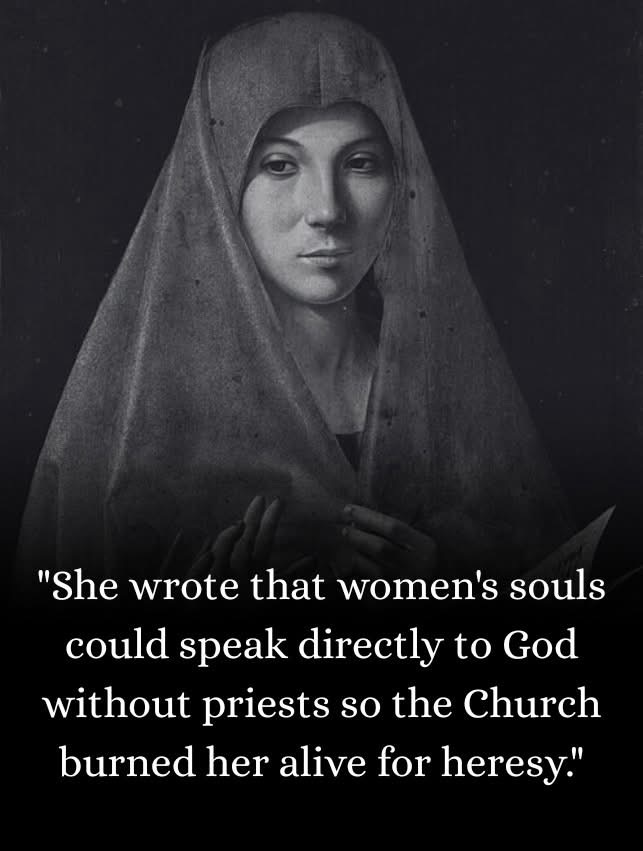
She wrote that women’s souls could speak directly to God without priests—so the Church burned her alive for heresy.
Paris, June 1, 1310.
In the Place de Grève, a woman was led to the stake. Marguerite Porete, accused of heresy, had spent over a year imprisoned, refusing to answer the Inquisition’s questions or defend herself before judges she didn’t recognize as having authority over her soul. Witnesses later described her calm demeanor—no screaming, no begging for mercy, no recantation. She faced the flames with a serenity that unnerved her executioners.
She died for writing a book that claimed a soul could unite so completely with divine love that it transcended the need for Church hierarchy, sacraments, or ecclesiastical mediation. The Church couldn’t tolerate that claim—especially from a woman.
Marguerite Porete was born in the late 13th century in Hainaut (modern-day France/Belgium border region). Little is known about her early life, but she became part of the Beguine movement—communities of lay religious women who lived together in prayer and work without taking formal monastic vows.
Beguines occupied a complicated space in medieval Christianity. They weren’t nuns bound by convent rules, but they weren’t ordinary laywomen either. They lived religious lives outside institutional Church control—which made Church authorities nervous.
Marguerite was educated, literate, and theologically sophisticated—unusual for a woman of her time.
Sometime in the late 13th century, she wrote “The Mirror of Simple Souls” (Le Mirouer des simples âmes) in vernacular Old French rather than Latin.
Writing theology in the vernacular was itself significant. Latin was the language of Church authority—using French made theology accessible to ordinary people, particularly women who hadn’t learned Latin.
But it was the book’s content that proved dangerous.
The Mirror of Simple Souls describes a mystical journey where the soul progressively lets go of attachments, ego, and even virtues until it reaches “annihilation”—complete dissolution into divine love. This “annihilated soul” becomes so united with God that it no longer needs:
Church sacraments Moral rules Priestly mediation Fear of sin Virtuous acts done out of obligation
Because the soul is completely aligned with divine will, it acts naturally from love rather than from external commands.
Marguerite wrote in dialogue form, with characters including “Love,” “Reason,” “The Soul,” and “Holy Church the Little” (institutional Church) versus “Holy Church the Great” (the mystical body of all souls united with God).
Crucially, she distinguished between institutional Church authority and direct divine relationship. “Holy Church the Little”—the hierarchy, rules, and priests—was necessary for beginners on the spiritual path. But advanced souls could transcend it through complete union with God. This was explosive theology.
The Church’s authority rested on being the necessary mediator between humans and God.
Sacraments administered by priests were required for salvation. Confession, penance, Church law—all of this presumed that people needed institutional guidance.
Marguerite was saying: at the highest spiritual level, you don’t need any of that. The soul united with God transcends institutional authority. Church authorities saw this as dangerous heresy. It suggested that mystics could claim direct divine authority superior to Church hierarchy. It implied that someone in mystical union might be beyond sin or moral law—a heresy called “antinomianism. “And it was especially threatening coming from a woman.
The Church insisted women needed male spiritual authority—priests, confessors, bishops—to guide them. A woman claiming direct divine relationship without male mediation challenged the entire gender hierarchy of medieval Christianity.
Around 1296-1306, Marguerite’s book was condemned by the Bishop of Cambrai. It was publicly burned, and she was warned to stop teaching her ideas. Marguerite ignored the warning. She continued circulating the book and discussing her theology. She sent copies to theologians and Church authorities seeking approval, but also continued teaching despite the prohibition.
This defiance was crucial. She had multiple opportunities to submit to Church authority, burn her book, recant her teachings, and avoid execution. She refused every time. Why? Because she believed—genuinely, deeply—that her mystical experience and theological understanding came directly from God. No earthly authority, not even the Church, could invalidate that divine relationship.
In 1308, she was arrested in Paris. The Inquisition began proceedings against her. During her imprisonment (which lasted over a year), she refused to cooperate with the trial. She wouldn’t answer questions. She wouldn’t defend herself. She wouldn’t acknowledge the tribunal’s authority to judge her spiritual state. Her silence was deliberate and theological.
She believed the judges—bound by “Holy Church the Little”—couldn’t understand the mystical theology of souls who’d reached union with God. Answering them would be pointless.
The Inquisition found her guilty of heresy. They declared her a “relapsed heretic”—someone who’d been warned before and persisted in error. The penalty for relapsed heresy was death by burning.
On June 1, 1310, Marguerite was led to the Place de Grève in Paris. Accounts describe her facing execution with remarkable calm—no terror, no last-minute recantation, no screaming as the flames rose. Observers noted this serenity. Some interpreted it as demonic possession keeping her from repenting. Others saw it as proof she’d achieved the mystical state she’d written about—transcendence of fear through complete union with divine love.
Marguerite Porete became one of the first women burned for heresy by the Inquisition in Paris. Her execution was meant to be a warning: women who claimed spiritual authority independent of Church hierarchy would be silenced permanently.
But her book survived. Copies circulated anonymously throughout the 14th and 15th centuries. Because Marguerite’s name was suppressed (she was executed as a heretic), the book was copied without author attribution. Monks, mystics, and scholars read it for centuries without knowing a woman had written it. Some copies attributed it to male authors.
The mystical theology was considered so sophisticated that people assumed a man must have written it.
In 1946, scholar Romana Guarnieri finally proved that Marguerite Porete was the author. The evidence included trial records and manuscript traditions connecting the condemned book to The Mirror of Simple Souls.
Suddenly, a text that had influenced Christian mysticism for centuries was recognized as written by a woman burned for heresy.
Modern scholars recognize The Mirror as a masterpiece of mystical theology. Its influence can be traced in later mystics including Meister Eckhart (who faced similar accusations of heresy).
Marguerite’s theology anticipated ideas that would later appear in Protestant Reformation critiques of institutional Church authority and in modern mystical and contemplative traditions.
Her story matters because: She claimed spiritual authority as a woman: In an era when women were required to be spiritually subordinate to men, she insisted her mystical experience gave her theological insight. She challenged institutional religious power: She distinguished between institutional authority and divine relationship—a distinction that threatened Church hierarchy. She refused to recant: Given multiple chances to save herself by submitting to Church authority, she chose death over betraying her spiritual convictions.
She was right about mystical theology: Modern understanding of contemplative spirituality recognizes the validity of much of what she taught. Her work survived despite suppression: Burning her body didn’t destroy her ideas—they circulated for centuries, eventually vindicated.
The tragedy is that Marguerite was executed for theology that, in different contexts or coming from a man, might have been tolerated or even celebrated.
Male mystics like Meister Eckhart taught similar ideas and, while investigated, weren’t executed. Her gender made her dangerous in ways male mystics weren’t. A woman claiming to transcend priestly authority threatened both religious and gender hierarchies simultaneously.
To Marguerite Porete: You wrote that the soul united with God needs no intermediary—and the Church killed you for threatening their monopoly on salvation. You refused to recant even when recantation would have saved you. You chose death over betraying your mystical experience and theological convictions. Your silence before the Inquisition wasn’t weakness—it was theological statement. You didn’t recognize their authority to judge what you knew through direct divine union. You faced the flames with the serenity you’d written about—the transcendence of fear through complete surrender to divine love. They burned your body. They tried to erase your name. They suppressed your book. But your words survived. For centuries, they circulated anonymously, influencing mystics who didn’t know a woman had written them. When scholars finally proved you were the author, your genius was undeniable. You were right about mystical union. You were right that souls can experience God directly. You were right that love transcends institutional authority. The Church that executed you eventually had to acknowledge the validity of mystical theology like yours. The ideas they burned you for are now recognized as legitimate contemplative spirituality. You died for claiming women’s spiritual authority. For insisting divine love was greater than ecclesiastical power. For refusing to let priests mediate your relationship with God. That claim cost you your life. But it couldn’t be silenced. Your voice, speaking across seven centuries, still insists: the soul united with Love needs no permission to speak directly to God. They couldn’t burn that truth. And they couldn’t burn your courage.
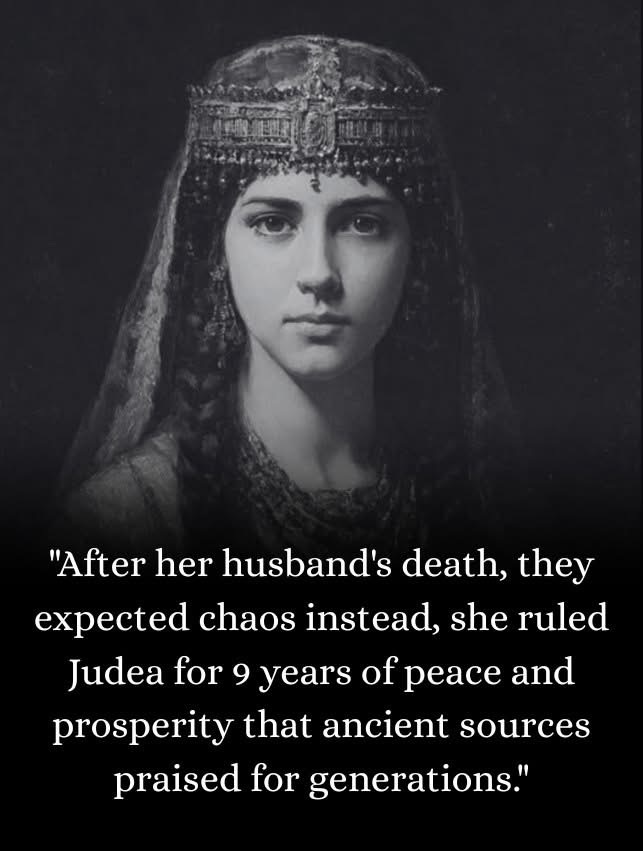
After her husband’s death, they expected chaos—instead, she ruled Judea for 9 years of peace and prosperity that ancient sources praised for generations.
Jerusalem, 76 BCE. King Alexander Jannaeus lay dying. His reign had been brutal—marked by civil war, mass executions, and conflict between religious factions. Judea was exhausted, divided, bleeding.
On his deathbed, Alexander did something unusual: he designated his wife, Salome Alexandra, as his successor. Not one of their sons. Not a military commander. His wife. She was around 64 years old. She would rule for nine years—and those years would be remembered as among the most peaceful and prosperous in Judean history.
This is her actual story, remarkable enough without embellishment.
Salome Alexandra (known in Hebrew as Shlomtzion, meaning “peace of Zion”) was born around 141 BCE. Little is known about her early life, but she came from a priestly family and was well-connected to Jerusalem’s religious and political elite.
She married Alexander Jannaeus around 103 BCE. He was a Hasmonean king—descended from the Maccabees who’d won Jewish independence from Greek rule. But the Hasmonean dynasty had become corrupt, brutal, and increasingly unpopular.
Alexander’s reign was particularly violent. He fought constantly—external wars against neighbors, internal war against the Pharisees (a Jewish religious faction that opposed him). At one point, he crucified 800 Pharisees while feasting and watching them die.
Judea under Alexander was traumatized. When he died in 76 BCE, Salome assumed the throne. She became “Queen” (basilissa in Greek, malka in Aramaic)—the only woman to rule Judea independently in the Hasmonean period. Ancient sources—particularly the Jewish historian Josephus and the Talmud—describe her reign positively, which is notable given how critical they are of other Hasmonean rulers. What made her reign successful?
Political balance: Salome reversed her husband’s policies toward the Pharisees. She allied with them, giving them influence in the Sanhedrin (Jewish council) while keeping the Sadducees (another faction) from becoming too powerful. This balance ended the civil conflict that had plagued her husband’s reign.
Domestic stability: Unlike Alexander, who was constantly at war, Salome focused on internal governance. The Talmud associates her reign with prosperity—harvests were good, peace prevailed.
Diplomatic skill: She maintained Judea’s position without major military campaigns. She recognized that Judea, surrounded by larger powers (Egypt, Syria, Rome), needed diplomacy more than conquest.
Respect for religious authority: By working with the Pharisees and supporting Torah scholarship (generally—not specifically for women), she gained popular support. The Pharisees emphasized law and learning over the priestly aristocracy favored by the Sadducees.
The Talmud (Tractate Taanit 23a) says of her reign: “In the days of Shimon ben Shetach and Queen Shlomtzion, rain fell on Wednesday nights, so that the wheat grains grew as large as kidneys, barley grains as large as olive pits, and lentils as large as gold dinars.”
This is obviously legendary exaggeration, but it indicates how her reign was remembered—as a golden age of peace and plenty.
Was she opposed because she was a woman? The historical sources don’t emphasize this. She seems to have assumed power relatively smoothly as her husband’s chosen successor.
While some Sadducees opposed her alliance with Pharisees, ancient sources frame this as political-religious conflict, not gender-based. Did she champion women’s education specifically? There’s no historical evidence for this claim. While she supported the Pharisees who valued Torah study, nothing in Josephus, the Talmud, or other sources attributes specific policies about women’s education to her.
Women’s formal Jewish education remained extremely limited in this period and for centuries after. If Salome had implemented revolutionary policies expanding women’s education, it would likely have been noted in sources—either as praise or criticism.
This doesn’t diminish her accomplishment. Ruling successfully for nine years in the ancient world as a woman was extraordinary. She didn’t need to also be a feminist education reformer to be impressive.
What happened after her death reveals the fragility of her achievements—but not for the reasons sometimes claimed.
Salome died around 67 BCE at approximately age 73. She’d designated her older son, Hyrcanus II, as her successor. But her younger son, Aristobulus II, challenged him. Civil war erupted immediately—not because people opposed female rule, but because of normal succession disputes between ambitious brothers.
The war weakened Judea at exactly the wrong moment. Rome was expanding eastward. In 63 BCE, Roman general Pompey intervened in the civil war, besieged Jerusalem, and essentially ended Judean independence.
Judea would remain under Roman control (directly or through client kings like Herod) for the next century, until the destruction of the Second Temple in 70 CE.
So yes, everything Salome built collapsed after her death. But not because of gender-based opposition or rollback of women’s rights. It collapsed because her sons’ ambitions destroyed what she’d carefully maintained.
Salome Alexandra’s actual legacy: She proved women could rule effectively: In a world where female political power was rare, she governed successfully for nine years. She ended civil conflict: Through political skill rather than military force, she brought peace after years of violence.
She balanced competing factions: Her diplomatic management of Pharisees and Sadducees maintained stability.
She prioritized domestic prosperity: Unlike her husband’s military adventurism, she focused on governance and peace.
She’s remembered positively: Ancient sources—which were often critical of rulers and rarely praised women leaders—speak well of her reign.
These accomplishments are remarkable and historically documented. We don’t need to invent claims about women’s education advocacy to make her impressive.
Why does this matter? Why not just accept the embellished version that makes her sound more feminist?
Because historical accuracy matters. When we project modern values onto historical figures without evidence, we:
Diminish their actual achievements by replacing them with what we wish they’d done Distort history in ways that ultimately undermine our understanding of how change actually happens
Lose credibility when people discover the claims aren’t supported by sources Miss opportunities to understand the real constraints and possibilities of women’s power in different historical contexts.
Salome Alexandra’s actual story—ruling successfully for nine years, maintaining peace, balancing factions, being remembered positively by sources that usually dismissed female rulers—is impressive precisely because it happened in a world that offered women almost no political power.
We honor her better by acknowledging what she actually accomplished within the constraints she faced, rather than inventing accomplishments that fit modern priorities.
To Salome Alexandra: You ruled Judea during a period of peace and prosperity after years of violence and chaos. You balanced competing religious factions without resorting to your husband’s brutality. You maintained Judea’s independence through diplomacy rather than constant warfare. You proved that a woman could govern as effectively as any king.
Ancient sources that were often critical of rulers praised your reign. The Talmud associated your years with abundance. Josephus acknowledged your political skill.
You didn’t need to revolutionize women’s education to be remarkable—though later generations sometimes claim you did because they want ancient validation for modern values. Your actual accomplishment—ruling successfully for nine years in the ancient world—is impressive enough. The fact that civil war erupted immediately after your death shows how much your skill maintained stability.
You proved women could govern. That was radical in itself.
We don’t need to make you into something you weren’t. What you actually were—a capable ruler who brought peace and prosperity—deserves recognition without embellishment.
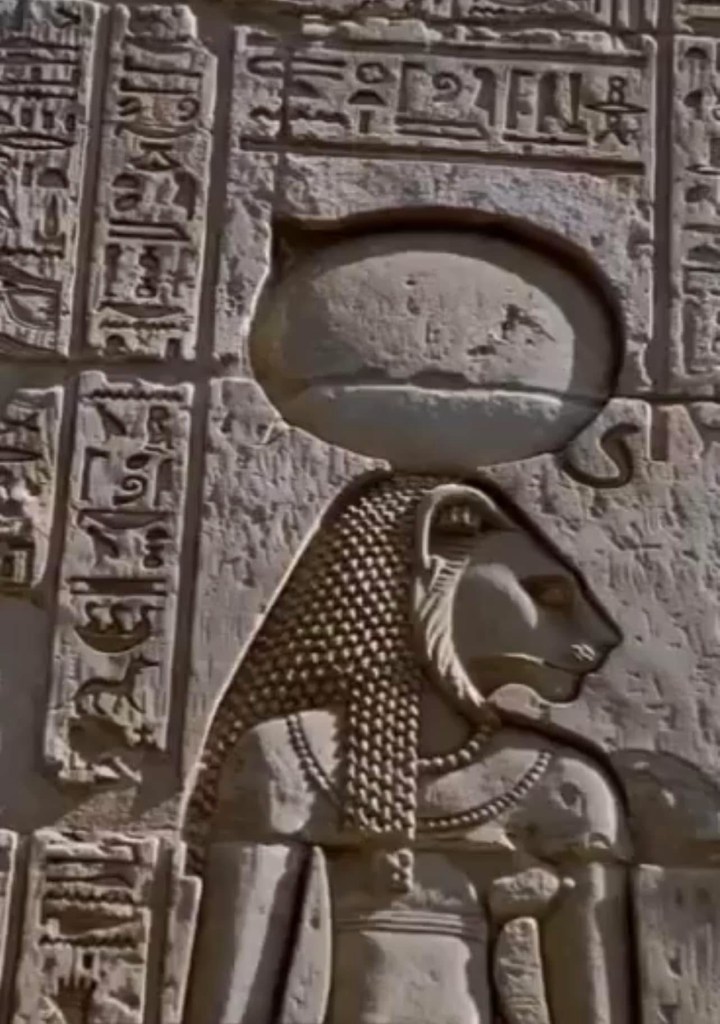
Translation of the text written at the Entrance to the Temple of the Egyptian Goddess Sekhmet, Karnak Temple
I only ask you to enter my house with respect. To serve you I do not need your devotion, but your sincerity. Neither your beliefs, but your thirst for knowledge. Enter with your vices, your fears and your hatreds from the greatest to the smaller ones, I can help you dissolve them.
You can look at me and love me as a female, as a mother, as a daughter, as a sister, as a friend, but never look at me as an authority above yourself. If the devotion you have for any god, It is greater than the one you have for the God that is within you, you offend them both and you offend the one👌
She’s got a whole Universe of Kings and Queens, Gods and Goddesses, whatever the Upper Echelon of the Universe call themselves, the Counsil of Universes, for there are many, unified in their decision to elevate her.
She is alive because they have deemed her worthy of life. She has been given reprieve, for they have deemed her innocent of any crime, and are rewarding her for the centuries of torture she endured at the hands of man … because she dare speak of love, because she dare be intelligent, because she dare expand into life and be recognized as a Woman who deeply loves Creation and the Life it holds … gifts of the Mother Father Most High Divine.
They poisoned her and hurt her bad, physically and with magic … they wished death upon her the whole of her life. They insist she isn’t responsible, even though she succeeded where they were certain she would fail. They were certain their efforts to deteriorate and disqualify her were sufficient. They are hollering, whining really, and insisting they have rights to her essence, energy, gifts ,,, soul and right to life.
They want to rule the universe. They’ve been slave trading for centuries, announcing themselves conquerors, masters.
The universe came together without prejudice and chose this Woman Survivor as Representative. A whole Universe of teachers to teach, to guide, and the Most High Divine within all realms supervises it all.
This time, it will go a little differently.
But the trafficker insists it has rights to the merchandise of angels, so the transition is a little bumpy.




 opensenseme