May all who think it is, experience this woman’s sacrifice.
Mary Sullivan fought for her life over four relentless days, each hour a brutal test her young body was never meant to endure. On June 7, 1902, the nineteen-year-old went into labor, her small frame no match for the child she carried. The baby’s head pressed against her narrow pelvis, cutting off blood flow to the surrounding tissue. As the days dragged on, the pressure became catastrophic. By June 11th, after four agonizing days, the baby was stillborn. Mary’s body had been torn apart from the inside—her pelvis damaged, the tissue rotted, and a vesicovaginal fistula left her soaked, weakened, and trapped in her own bed.
Her husband Patrick and her mother did everything they could to care for her. They changed sheets, tried to keep her clean, and watched helplessly as her condition worsened. But medicine in 1902 had no answers for what prolonged labor had done. Infection crept in. Fevers climbed. Mary slipped into delirium as her body waged a final, unwinnable fight. The fistula became more than a wound—it became a doorway for sepsis. The very life she had carried now turned against her, claiming her body with silent, merciless precision.
Mary died on June 11, 1902. She was nineteen. Her stillborn baby was buried beside her two days later. Patrick never remarried. He carried the memory of her suffering for the rest of his life. Decades later, he would tell his nephew: “Mary died from childbirth. Nineteen years old. Four days of labor. The baby too big. She was torn apart and infected. That’s what childbirth was.”
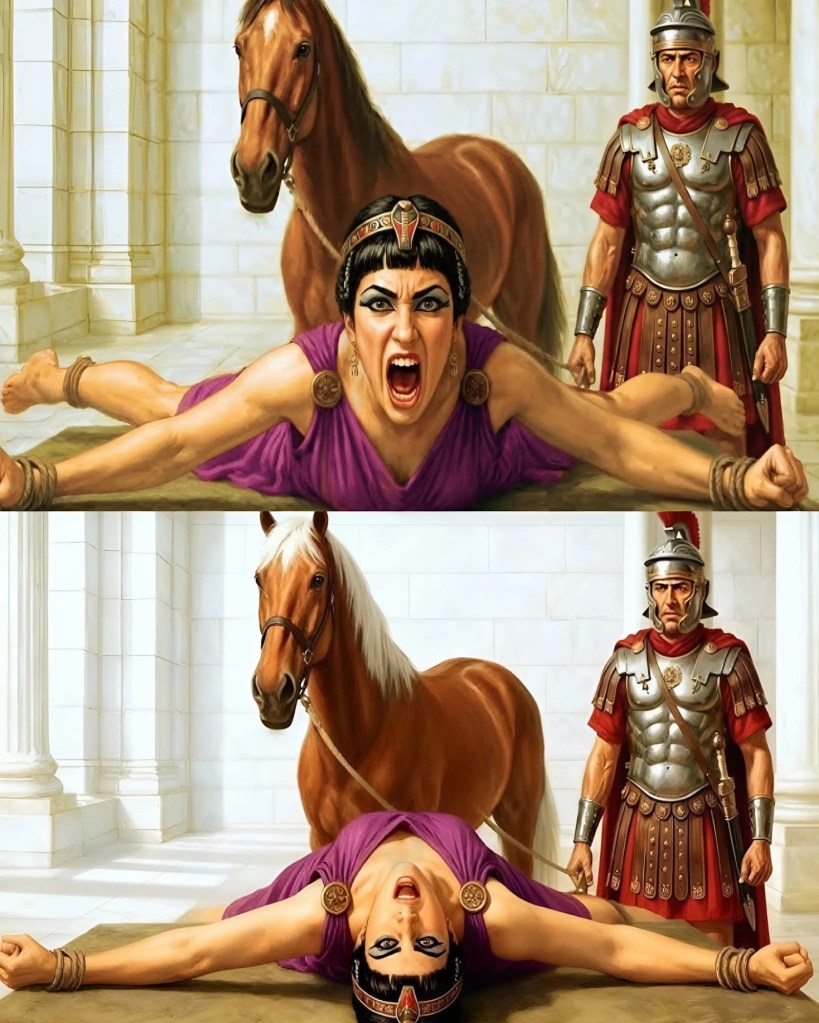
The Woman Clothed with the Sun, Rothschild Canticles, c. 1300Clotho by Sir William Russell FlintMay every nasty thing you did to her be done to you, every single one of you who had any ounce of participation or agreement. Aho. Muthafukkas.
I was ready to kill the monster next door. I had a heavy aluminum baseball bat in my hand and the terrified scream of my missing five-year-old daughter echoing in my ears.
I didn’t wait for the police. I didn’t wait for my wife. I kicked open the side gate of the property adjacent to mine, fueled by a parent’s primal nightmare.
Let me explain the geography of my hatred.
My name is David. I’m a risk analyst. I wear button-down shirts, I mow my lawn on Saturdays, and I believe in rules. I moved my family to this subdivision specifically for its safety rating and the strict Homeowners Association (HOA) covenants.
Then there was Ray.
Ray was the stain on our perfect cul-de-sac. He was a mountain of a man, always clad in faded denim and leather that smelled of stale tobacco and old gasoline. He didn’t mow his lawn; he let weeds grow around a collection of rusting engine parts. He didn’t drive a sensible sedan; he rode a deafening, custom V-twin motorcycle that shook my windows every morning at 6:00 AM.
But the real problem was the dog.
Ray owned a Pitbull named Tank. The creature was a biological weapon—eighty pounds of gray muscle, a head like a cinder block, and cropped ears that gave him a permanent, menacing glare. Every time I watered my hedges, that dog would trot to the fence line and stare at me. He didn’t bark. He just watched. It was unnerving.
“That animal is a ticking time bomb,” I told my wife, Sarah, just last week. “It’s not a pet. It’s a liability. And Ray? He’s exactly the kind of irresponsible owner who lets it happen.”
I had spent the last three evenings drafting a formal petition to the HOA board. I cited by-laws regarding “aggressive breeds” and “noise ordinances.” I was going to get them evicted. I was doing it for the neighborhood. I was doing it for my daughter, Sophie.
Then came the Fourth of July.
It was a scorcher. The air was thick with humidity and the smell of charcoal. Our neighborhood takes Independence Day seriously. By 8:00 PM, the sky was already flashing with unauthorized bottle rockets. By 9:00 PM, it sounded like a war zone.
We were in the backyard, finishing up burgers. I turned my back for thirty seconds to grab a cold drink from the cooler.
When I turned back, Sophie’s swing was empty.
“Sophie?” I called out.
Nothing but the boom-crack of a mortar shell exploding overhead.
“Sophie!” Panic, cold and sharp, spiked in my chest.
I ran to the front yard. Empty. I ran back. The gate. The latch on the wooden gate separating my yard from Ray’s was undone. It was swinging slightly in the breeze.
Then, through the cacophony of fireworks, I heard it. A high-pitched cry coming from Ray’s detached garage.
My blood ran cold. I pictured the gray muscle. The teeth. The cropped ears.
I didn’t think. I grabbed the bat leaning against the patio door and sprinted. I crossed the property line, ignoring the “Beware of Dog” sign, and tore across his unkempt yard. The garage door was cracked open a few feet.
“Get away from her!” I screamed, ducking under the metal door, raising the bat, ready to shatter bone to save my child.
I froze.
The bat lowered, inch by inch, until it hung limp at my side.
The garage was dimly lit by a single flickering bulb. It smelled of motor oil and sawdust. But there was no attack happening. There was no blood.
In the corner, squeezed between a tool chest and an old refrigerator, sat Ray. The big, scary biker was curled into the fetal position on the concrete floor. He was wearing industrial-grade noise-canceling headphones, his eyes squeezed shut so tight his face was a mask of wrinkles. He was rocking back and forth, trembling so violently that his heavy boots were scuffing against the floor.
Every time a firework detonated outside—BOOM—Ray flinched as if he’d been physically struck. He was hyperventilating, gasping for air like a drowning man.
And there was Tank.
The “monster” wasn’t attacking. The dog was lying directly on top of Ray’s legs, pressing his heavy chest against the man’s torso. It wasn’t a dominance move. It was an anchor. The dog was using his weight to ground Ray, to keep him from floating away into whatever flashback hell he was currently living in.
Tank’s eyes were wide and alert. He looked at me standing there with the bat. He didn’t growl. He didn’t bare his teeth. He just let out a low, soft whine, and then licked the tears streaming down Ray’s rough, bearded cheek.
And Sophie?
My daughter was sitting cross-legged on the dirty floor next to them. She wasn’t crying. She had one hand on the dog’s broad head and the other resting gently on the biker’s shaking shoulder.
She looked up at me, her eyes huge and solemn. She put a finger to her lips.
“Shhh, Daddy,” she whispered. “Mr. Ray is sad because of the loud noises. Tank is hugging him. I’m helping.”
The bat clattered to the floor. The sound was deafening in the small space.
I stood there, the “civilized” neighbor, the man of rules and risk assessments, feeling the most profound shame I have ever known.
I looked at Ray’s vest hanging on a hook nearby. For the first time, I actually looked at the patches. Among the biker insignias, there was a smaller, faded one. A unit patch from the Marines. A deployment bar that suggested tours in places where loud noises didn’t mean celebration—they meant death.
Ray wasn’t a “bum.” He was a veteran. And Tank wasn’t a fighting dog. He was a service animal, trained to apply Deep Pressure Therapy for PTSD attacks.
While I was busy judging his lawn and drafting letters to the HOA to protect my neighborhood from “danger,” he was sitting in the dark, fighting a war that ended twenty years ago. And the only soul keeping him together was the dog I wanted to have destroyed.
I walked over. My knees felt weak. I knelt down on the other side of Ray.
Tank watched me. He shifted slightly, allowing me space. I hesitated, then placed my hand on the dog’s back. The fur was coarse, but the body beneath it was warm and solid. The dog leaned into my touch.
I looked at Ray. He opened his eyes. They were red, bloodshot, and filled with a terror so raw it was hard to look at. He saw me. He saw the bat on the floor. He saw my daughter.
“I’m sorry,” Ray choked out, his voice a broken gravel. “I… I can’t stop the shaking. The mortars…”
“It’s okay, Ray,” I said, my voice thick. “It’s just us.”
I reached over and pulled the garage door all the way down, shutting out the flashes of light. It dampened the noise, if only a little.
We sat there for an hour. The risk analyst, the biker, the child, and the pitbull.
Every time a particularly loud boom shook the ground, Ray would tense up, and Tank would press harder, letting out a low rumble that vibrated through all of us. It was a frequency of comfort I didn’t know existed. Sophie hummed a nursery rhyme, totally unafraid, understanding instinctually what I had failed to see intellectually: vulnerability isn’t a threat.
When the finale ended and the neighborhood finally went quiet, the spell broke. Ray took a deep, shuddering breath and pulled the headphones off. He wiped his face with a trembling hand.
“He’s a good boy,” Ray said, patting Tank’s head. “He’s the only reason I’m still here.”
“I know,” I said. “I see that now.”
I helped Ray up. We didn’t exchange many words. We didn’t need to.
The next morning, I walked out to my mailbox. I took the envelope addressed to the Homeowners Association—the one filled with complaints about the weeds and the noise—and I ripped it in half. Then I ripped it again, and again, until it was just confetti in the wind.
I went to the hardware store and bought a pair of the highest-rated shooting ear muffs they sold. Then I went to the pet store and bought the biggest, most expensive smoked beef bone I could find.
I walked over to the broken fence. Ray was outside, trying to fix a part on his bike. Tank was lying in the sun, chewing on a stick.
Ray stiffened when he saw me approaching. He expected a lecture. He expected judgment.
I handed him the ear muffs. Then I tossed the bone to Tank. The dog caught it mid-air, his tail thumping a heavy rhythm against the dirt.
“For the next storm,” I said. “Or the next holiday.”
Ray looked at the ear muffs, then at me. His hard expression cracked, just a little. “You don’t have to do that, neighbor.”
“I know,” I said. “I’m David, by the way.”
“Ray,” he nodded.
We live in a world obsessed with appearances. We judge the book by its cover, the neighbor by his lawn, and the dog by his breed. We label people “dangerous” or “safe” based on the uniforms they wear or the cars they drive. We think we know who the monsters are.
But that night in the garage, I learned the truth.
The scariest thing wasn’t the biker or the pitbull. The scariest thing was my own blindness.
We build fences to keep people out, thinking we are protecting ourselves. But sometimes, the most patriotic, human thing you can do is tear down the fence, sit in the dark with a stranger, and just help them breathe.
If a “vicious” dog can learn to heal a broken heart, surely we can learn to stop judging them.
Trump claiming a rape victim said rape was sexy is not an isolated scandal. It is part of a wider right wing logic where power demands obedience and truth becomes negotiable. Fascist politics depend on normalising abuse until it feels inevitable and unchallengeable. Rejecting this means refusing to let violence be rewritten as JUSTICE FOR ALL desire and domination as leadership. Believing survivors is not symbolic. It is resistance.
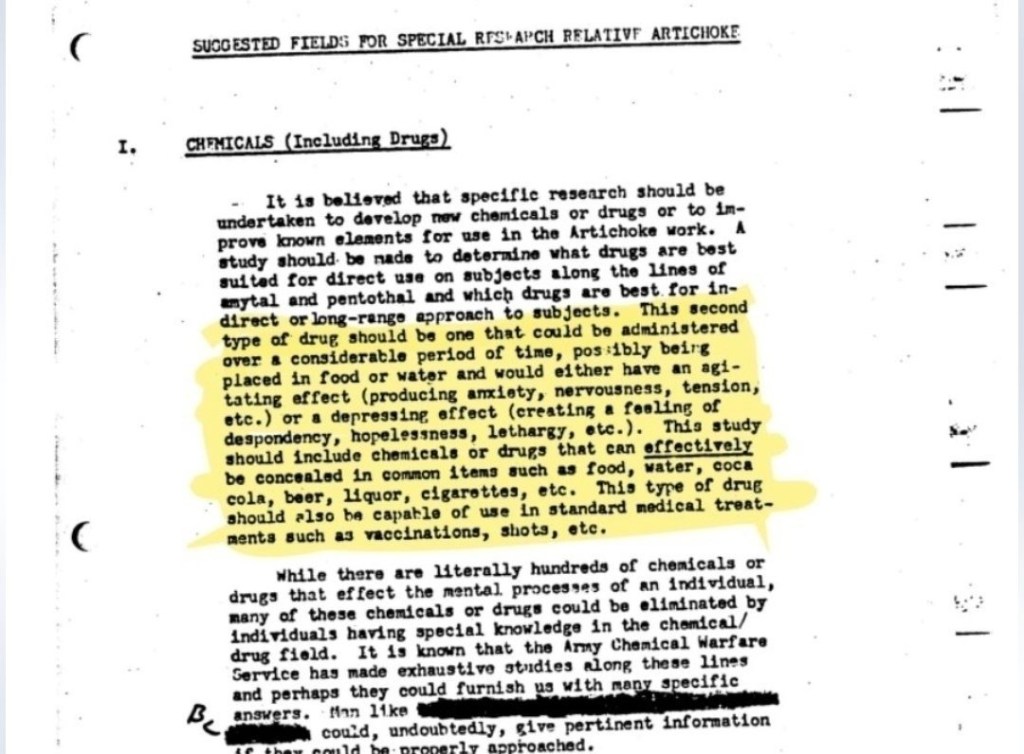
Substances placed in food, water, Coca-Cola, alcohol, cigarettes — even vaccinations to slowly induce anxiety, hopelessness, tension, and depression over time.
This isn’t theory. This isn’t fiction. This is real government paperwork. This is only page one.
Mothers and their mothering should never have been interfered with.
Denmark is moving away from the “cry it out” sleep training method, largely due to pressure from over 700 psychologists who signed an open letter citing harm to infant emotional development, leading the Danish board to reconsider its guidance, emphasizing responsive care and secure attachment as healthier alternatives.
Studies find consistently ignoring a crying baby can negatively impact their brain development, increase stress hormones like cortisol and can even affect their future emotional health.
Babies communicate their needs by crying, and ignoring these cries can lead to prolonged periods of stress, causing a rise in cortisol levels. Elevated cortisol levels can negatively impact brain development, brain structure and a baby’s ability to regulate stress even later in life.
Consistent responsiveness to a baby’s cries helps them develop a sense of security and trust in their caregivers. This can lead to a more secure attachment, which is crucial for emotional well-being, healthy social relationships and brain development.
Babies are not trying to manipulate their parents when they cry, they are communicating their needs and attempting to establish a connection.
Responding to these cries is critical for building a strong bond and promoting healthy development.
I heard this curator saying “the damage has been done”. He said they poisoned the water, and that she needed “hydrogen peroxide”. Whatever dimensional reality he is talking about, it appears a woman is there to bring healing “to the planet” … it seems as though the Women are being called to bring Restoration.
That being said, whatever timeline or dimensional space this is, gather hydrogen peroxide … it will help …. straight out of the mouth of the poisoner. He swears she cannot do it, heal the damage he has done …. but then again, he boasts of its cure while he insists its impossible … so, take it as it resonates.
AI Overview Yes, hydrogen peroxide (H₂O₂) can effectively clean impure water by acting as a powerful oxidizer and disinfectant, killing bacteria, viruses, and breaking down organic pollutants and minerals like iron and sulfur, leaving only harmless oxygen and water as byproducts, making it a clean, eco-friendly option for various water treatment needs, though it’s best used in controlled systems.
How it Works Oxidation: H₂O₂ releases nascent (newly formed) oxygen, which oxidizes contaminants, changing their chemical structure. Disinfection: The released oxygen effectively inactivates pathogens like bacteria, viruses, and cysts. Contaminant Removal: It oxidizes minerals (iron, manganese) and organic matter, causing them to clump and become easily filterable. Byproduct: It breaks down into pure water and oxygen, leaving no harmful chemical residues, unlike chlorine.
Benefits Effective: Targets a broad spectrum of contaminants, including odors (like “rotten egg” smell from hydrogen sulfide) and discoloration. Eco-Friendly: Decomposes into water and oxygen, making it environmentally safe. Improves Aesthetics: Removes mineral buildup, improves taste, and clarity.
Applications Well Water: Excellent for disinfecting and treating iron/manganese issues in private wells. Municipal/Industrial: Used for general disinfection and removing organic pollutants.
Considerations Controlled Dosing: For safe and effective treatment, it’s usually injected into water systems in precise amounts. Filtration Needed: After oxidation, contaminants often need to be filtered out by a separate filter system.
“Genocide” is a word made up of the root word “geno,” meaning gene or genetic, and the suffix “cide,” meaning to kill, resulting in a word meaning to kill off the genes, genetic structure or substance, of a people, i.e., to remove from reproductive existence, to exterminate a people, to extirpate them, to kill them off forever.
The indigenous people of Tasmania and Australia and the Arawaks are prime examples of genocide.
In the same way, our genocide is an intricate part of the European’s vision, for genocide is simply the procedural framework through which they operate to win war. And war, for them, is to completely destroy another people.
If this people cannot be immediately annihilated, then they must be made to internalize a subordinate status until they can be.
To this definition we must add the fact that such mass destruction, by default, assures the obliteration of that group’s cultural base because to destroy a people’s sense of self through erasing or seriously distorting their story beyond their recognition (historicide) causes them to unwittingly and willingly allow their own genocide.
With time and an ancestral disconnect, the fear that makes genocide possible ensures that people will actively assist in the implementation and perpetuation of their own destruction.”







 opensenseme