Eleven-year-old Lily Mae Tucker went into labor on January 9, 1916, in the middle of winter. She had been married for seven months to Elias Tucker, a sixty-two-year-old man, and by the time her contractions began she already understood one brutal fact about her life: she was on her own. As the pain worsened, Lily cried out for help from inside the house, but Elias refused to come. He told her that childbirth was “women’s business” and that he did not intend to watch or assist. When her cries became too loud for his liking, he ordered her to leave the house entirely.
After eighteen hours of labor, exhausted and terrified, Lily crawled from the house to the barn, fifty yards away, because she had nowhere else to go. There, alone on the frozen dirt floor, she gave birth to a baby girl. There was no midwife, no family, no comfort. Lily cut the umbilical cord with a shard of broken glass she found in the dirt. She wrapped the newborn in her own dress because there was nothing else, then lay there holding her child, shaking from cold and fear, crying quietly so she would not be heard. Lily’s own mother had died years earlier. No one had ever explained childbirth to her. She did not know whether what she had done was normal or whether she had made a terrible mistake. She only knew she was eleven years old and suddenly responsible for another life.
Lily named her daughter Ruth.
Lily herself had been sold into marriage at the age of ten. Her father had accepted fifty dollars and a cow from Elias Tucker and handed his daughter over as property. Lily became pregnant almost immediately. By eleven, she was both a child and a mother. In that freezing barn, holding Ruth against her chest, Lily felt something new and overwhelming—love so intense it frightened her. She made herself a promise there on the floor: whatever happened to her, Ruth would never be sold the way she had been.
For the next eight years, Lily lived under Elias’s control. He was violent and cruel, and Lily endured daily harm that no child should ever experience. Through it all, she focused on one thing—protecting Ruth. She kept Ruth away from Elias whenever she could. She taught her daughter to read using a worn Bible she found. At night, Lily whispered stories about a different world, one where girls were not traded, where they were allowed to grow up safely. To Ruth, her mother seemed unbreakable. Lily was only nineteen years old, but she had survived eight years of marriage and kept her daughter safe.
In 1924, Elias announced that he had arranged Ruth’s future. Ruth was eight years old. A fifty-seven-year-old man from a neighboring county had offered seventy-five dollars, and Elias had accepted. The marriage would take place the following month.
When Lily heard this, something inside her shattered. Everything she had endured, every blow, every night of fear, had been for one reason—to spare Ruth this fate. She knew she could not allow it. That night, after Elias fell asleep, Lily woke her daughter and told her they were leaving. She packed a small bundle of clothes and food, climbed out the window with Ruth, and began walking through the darkness toward the home of a cousin Lily had not seen since childhood. It was fifteen miles away, but Lily believed that someone—anyone—might help them.
At dawn, Elias realized they were gone and rode after them on horseback. He caught up just three miles from the cousin’s house. He grabbed Ruth and tried to pull her onto the horse. Lily fought him with everything she had—scratching, screaming, refusing to let go. Elias struck Lily in the head with his rifle. She fell to the ground and did not rise again.
Ruth screamed as Elias reached for her once more, but she bit his hand and ran. She ran toward the house ahead, ran without looking back, even though her mother lay bleeding in the road behind her.
Ruth reached the house, and Lily’s cousin, Sarah, rushed outside. She found Lily unconscious, her skull fractured. A doctor was summoned, but there was nothing he could do. Lily woke once. When she did, her first words were not about her pain, but about her daughter.
“Is Ruth safe?” she asked. “Did he take her?”
Sarah told her the truth: Ruth was safe. Elias had fled. Ruth would not be married. Lily smiled—a real smile, the first Sarah had ever seen on her face—and said, “Good. That’s all that matters.” Lily died thirty minutes later. She was nineteen years old.
Ruth Tucker lived until 1998. She never married, saying she could not after what had happened to her mother. Instead, she became a teacher, helped women escape abusive marriages, and spent decades advocating against child marriage. She adopted a child in the 1950s and raised her with the safety and dignity Lily had fought for.
At Ruth’s funeral, her daughter spoke of the grandmother she had never met: a child who gave birth alone, who endured years of suffering, who ran into the night to save her daughter, and who died making sure that one little girl would not be sold.
“My grandmother was eleven when she became a mother,” she said. “She was nineteen when she died protecting her child. She spent every year in between doing everything she could to keep my mother safe. She was a child who saved her child. That is what love looks like. That is what courage looks like.”
The Y chromosome is not merely a single mutation, but rather the result of millions of years of evolution, degeneration, and rapid mutation from an ancestral autosome. Originating from an X-like chromosome, the Y has lost ~90% of its shared genes due to lack of recombination
. It has a high mutation rate due to oxidative stress in the testes and reliance on sperm-only transmission
.
Evolutionary Origin: Roughly 165 million years ago, the Y chromosome started as a normal chromosome pair that evolved, rather than a mutation of the X chromosome itself.
Degeneration (Not just a mutation): Because the Y chromosome cannot swap DNA (recombine) with the X chromosome, it has accumulated mutations that led to the loss of over 90% of its original gene content.
High Mutation Rate: The Y chromosome mutates faster than other chromosomes because it passes only through sperm, which undergo frequent cell divisions in a high-stress (oxidative) environment.
Functionality: Despite losing many genes, the remaining genes on the Y chromosome are vital for male-specific functions (like sperm production) and are protected by unique palindromic (mirror-image) sequences.
Future Status: While some researchers argue the Y is degenerating toward extinction, others suggest it has stabilized and is “here to stay”.
While the Y chromosome accumulates mutations at a faster rate, it is better described as a specialized, heavily degraded, or “evolutionarily mutated” chromosome, rather than a singular “mutation” itself.
In 859 CE, a woman used her inheritance to build the world’s oldest continuously operating university—and 1,165 years later, it’s still educating students.
Her name was Fatima al-Fihri, and she understood something that would echo through centuries: the greatest investment isn’t in wealth or status—it’s in knowledge.
Fez, Morocco. The 9th century.
Fatima al-Fihri and her sister Mariam had just inherited substantial wealth from their father, Muhammad al-Fihri, a successful merchant who’d moved the family from Tunisia to Morocco.
They were young women with resources in a world where women’s choices were often limited. They could have lived comfortably, married well, secured their own futures. Instead, they chose to build something that would outlast them by over a millennium.
Fatima envisioned a center of learning—a place where knowledge could be pursued, where scholars could gather, where intellectual and spiritual growth would flourish together. Not just for the elite. Not just for one group. But a place where learning itself was sacred.
In 859 CE, she used her inheritance to found Al-Qarawiyyin in Fez.
It began as a mosque with an educational mission—but it became so much more. Within decades, Al-Qarawiyyin was attracting scholars from across the Islamic world and beyond. Students came to study theology, mathematics, astronomy, medicine, philosophy, law.
The library at Al-Qarawiyyin would eventually house some of the world’s oldest manuscripts. The institution would educate some of history’s most influential thinkers, including scholars whose work would later influence European universities during the Renaissance.
Meanwhile, Fatima’s sister Mariam founded the Andalusian Mosque nearby—also with educational functions, also still standing today. Two sisters. Two enduring centers of learning. Built with inheritance money that could have been spent on anything else.
Think about what that choice meant.
In 859 CE, Fatima al-Fihri looked at wealth and saw possibility. Not just for herself, but for generations she’d never meet. She understood that knowledge doesn’t die with us—it multiplies, spreads, transforms.
Every student who walked through those doors for the next eleven centuries carried forward something she started. Every scholar who debated in those halls. Every manuscript copied in that library. Every idea explored, challenged, refined.
All because one woman chose knowledge over comfort.
Today, Al-Qarawiyyin is recognized by UNESCO and Guinness World Records as the oldest continuously operating educational institution in the world. It became a modern university in 1963, but it’s been teaching students for over 1,165 years.
The same institution Fatima founded in 859 still stands in Fez, still educates, still preserves knowledge.
Think about that timeline. Al-Qarawiyyin was already ancient when Oxford was founded. It was 600 years old when Columbus sailed. It had been teaching students for over a thousand years when the internet was invented.
And it all started with a woman who inherited wealth and chose to invest it in something that would outlive her.
Fatima al-Fihri’s story isn’t just about building a university. It’s about understanding legacy. About recognizing that our choices ripple forward in ways we can’t predict or control—but we can choose what kind of ripples we create.
She chose education. She chose knowledge. She chose to create a space where learning could flourish.
And 1,165 years later, students still walk through those doors.
That’s not just architecture. That’s vision becoming reality across centuries.
Fatima al-Fihri never saw the Renaissance scholars who would study texts preserved in her library. Never saw the thousands upon thousands of students who would pass through Al-Qarawiyyin’s halls. Never saw how her choice would influence education across continents.
But she didn’t need to see it to believe it mattered.
She planted seeds of wisdom in the 9th century, and we’re still harvesting them in the 21st. That’s what happens when you invest in knowledge. When you choose to build something greater than yourself. When you believe education is worth dedicating your resources, your vision, your life’s work to create.
You don’t just change your own life. You change the trajectory of countless lives you’ll never meet.
Fatima al-Fihri: 800-880 CE (approximate dates). Founded Al-Qarawiyyin in 859 CE. The institution still operates 1,165 years later. One woman. One choice. One thousand years of impact.
Sometimes the most powerful thing you can do is believe that knowledge matters—and then build something to prove it.
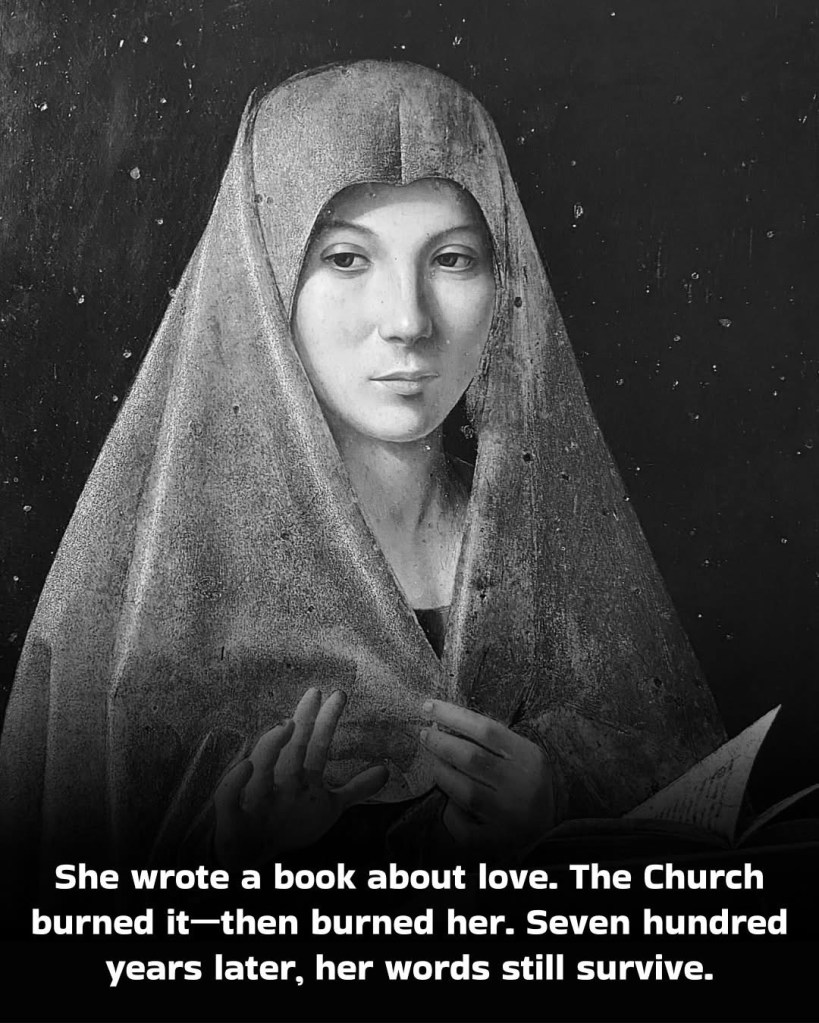
In the year 1310, a woman named Marguerite Porete was led to a stake in the heart of Paris, surrounded by a crowd of thousands. She had been condemned as a heretic—the first person the Paris Inquisition would burn for refusing to recant.
Her crime was writing a book.
Marguerite Porete was born around 1250 in the County of Hainaut, in what is now Belgium. She was highly educated, likely from an aristocratic family, and she joined the Beguines—a movement of women who devoted themselves to spiritual life without taking formal vows or submitting to male religious authority.
The Beguines lived by their own rules. They worked among the poor, prayed in their own communities, and sought God on their own terms. This freedom made Church authorities nervous. Women living outside male control, speaking about God without clerical permission, threatened the very foundations of institutional power.
Marguerite took this freedom further than most. Sometime in the 1290s, she wrote a mystical text called The Mirror of Simple Souls. It was a conversation between allegorical figures—Love, Reason, and the Soul—describing seven stages of spiritual transformation. At its heart was a radical idea: that a soul could become so completely united with divine love that it no longer needed the Church’s rituals, rules, or intermediaries. In the highest states of union, the soul surrendered its will entirely to God—and in that surrender, found perfect freedom.
“Love is God,” she wrote, “and God is Love.”
She did not write her book in Latin, the language of clergy and scholars. She wrote in Old French—the language ordinary people spoke. This meant her dangerous ideas could spread beyond monastery walls, beyond the control of priests and bishops.
And spread they did.
Between 1296 and 1306, the Bishop of Cambrai condemned her book as heretical. He ordered it burned publicly in the marketplace of Valenciennes, forcing Marguerite to watch her words turn to ash. He commanded her never to circulate her ideas again.
She refused.
Marguerite believed her book had been inspired by the Holy Spirit. She had consulted three respected theologians before publishing it, including the esteemed Master of Theology Godfrey of Fontaines, and they had approved. She would not let one bishop’s condemnation silence what she believed to be divine truth.
She continued sharing her book. She continued teaching. She continued insisting that the soul’s relationship with God belonged to no earthly institution.
In 1308, she was arrested and handed over to the Inquisitor of France, a Dominican friar named William of Paris—the same man who served as confessor to King Philip IV, the monarch who was simultaneously destroying the Knights Templar. It was a busy time for burning heretics.
Marguerite was imprisoned in Paris for eighteen months. During that entire time, she refused to speak to her inquisitors. She would not take the oath required to proceed with her trial. She would not answer questions. She maintained absolute silence—an act of defiance that infuriated the authorities.
A commission of twenty-one theologians from the University of Paris examined her book. They extracted fifteen propositions they deemed heretical. Among the most dangerous: the idea that an annihilated soul, fully united with God, could give nature what it desires without sin—because such a soul was no longer capable of sin.
To the Church, this suggested moral chaos. To Marguerite, it described the ultimate freedom of perfect surrender.
She was given every chance to recant. Others in similar positions saved their lives by confessing error. A man arrested alongside her, Guiard de Cressonessart, who had declared himself her defender, eventually broke under pressure and confessed. He was sentenced to life imprisonment.
Marguerite held firm.
On May 31, 1310, William of Paris formally declared her a relapsed heretic—meaning she had returned to condemned beliefs after being warned—and turned her over to secular authorities. The next day, June 1, she was led to the Place de Grève, the public square where executions took place.
The Inquisitor denounced her as a “pseudo-mulier”—a fake woman—as if her gender itself had been a lie, as if no real woman could defy the Church so completely.
They burned her alive.
But something unexpected happened in that crowd of thousands. According to the chronicle of Guillaume de Nangis—a monk who had no sympathy for her ideas—the crowd was moved to tears by the calmness with which she faced her death.
She displayed, the chronicle noted, many signs of penitence “both noble and pious.” Her serenity unnerved those who expected a screaming heretic. Instead, they witnessed a woman who seemed to have already transcended the fire that consumed her body.
The Church ordered every copy of The Mirror of Simple Souls destroyed. They wanted her words erased from history along with her life.
They failed.
Her book survived. Copies circulated secretly, passed from hand to hand across Europe. It was translated into Latin, Italian, and Middle English. For centuries, it was read anonymously—no one knew who had written it. The text was too powerful to disappear, even without a name attached.
It was not until 1946—more than six hundred years after her death—that a scholar named Romana Guarnieri, researching manuscripts in the Vatican Library, finally connected The Mirror of Simple Souls to its author. The woman the Church had tried to erase was finally given back her name.
Today, Marguerite Porete is recognized as one of the most important mystics of the medieval period. Scholars compare her ideas to those of Meister Eckhart, one of the most celebrated theologians of the era—and some believe Eckhart may have been influenced by her work. The book that was burned as heresy is now studied in universities as a masterpiece of spiritual literature.
Her ideas about love transcending institutional control, about the soul finding God directly without intermediaries, about surrender leading to freedom—these are not the ravings of a dangerous heretic. They are the insights of a woman centuries ahead of her time.
The Church that killed her eventually softened its stance on mystical experience. The Council of Vienne in 1312 condemned eight errors from her book, but the broader current of Christian mysticism she represented would continue flowing through figures like Julian of Norwich, Teresa of Ávila, and countless others who sought direct encounter with the divine.
What the flames could not destroy was the truth she had grasped: that love, in its purest form, is greater than fear. That no institution can ultimately control the relationship between a soul and its source. That words born from genuine spiritual insight have a way of surviving every attempt to silence them.
Marguerite Porete spent her final years in silence—refusing to speak to those who demanded she deny her truth. But her book has been speaking for seven centuries.
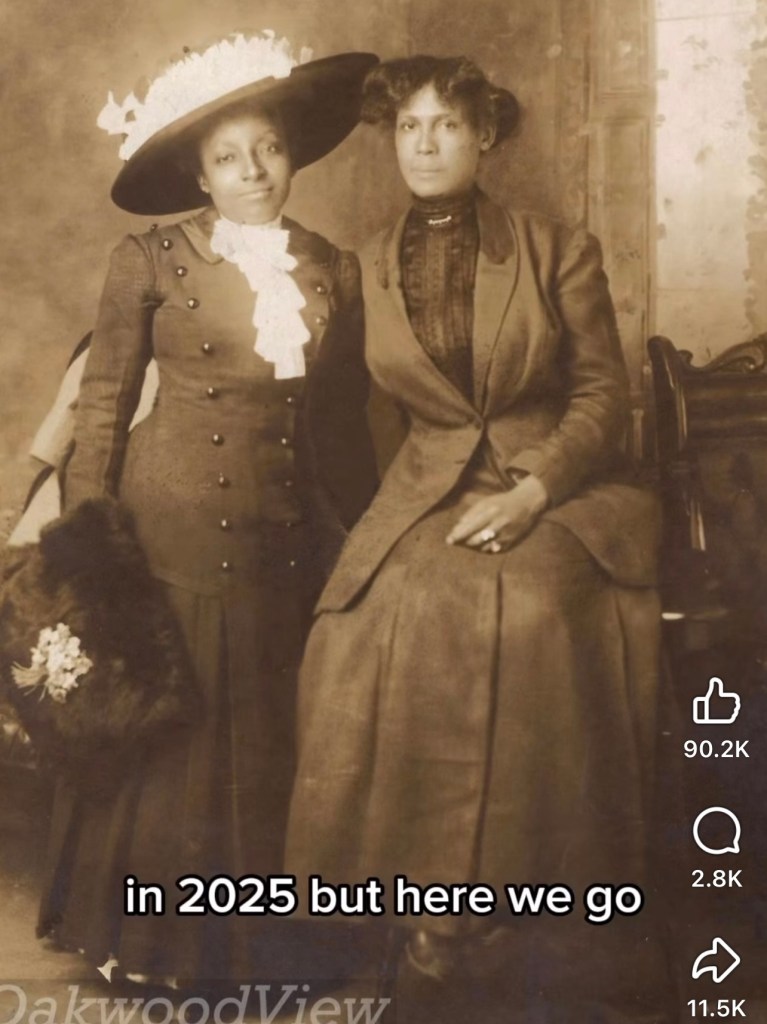
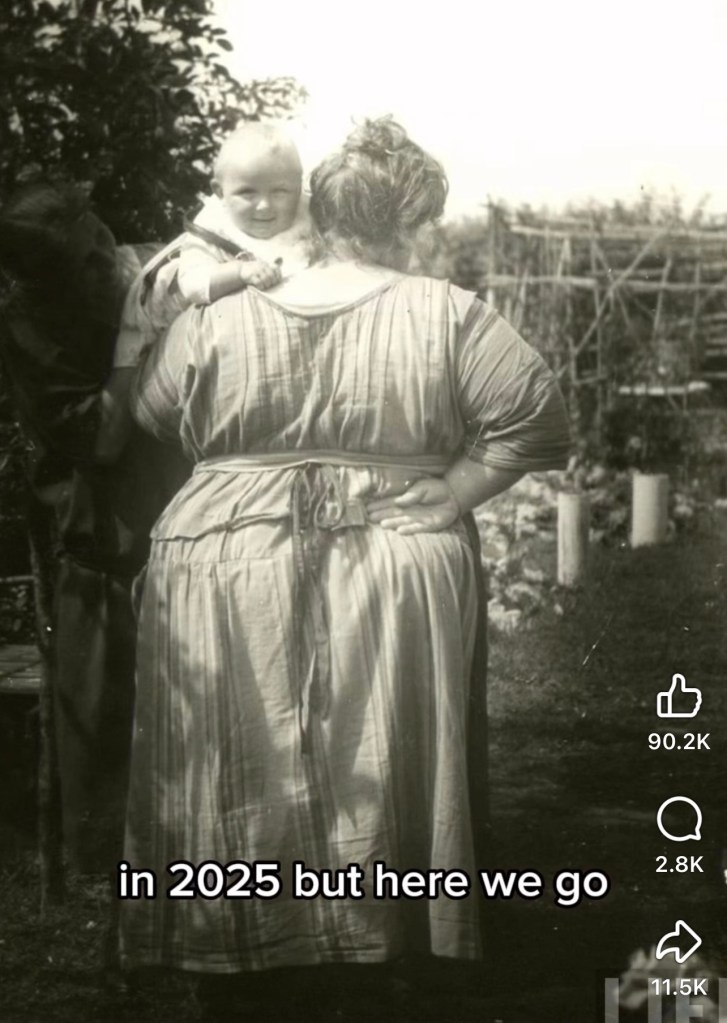
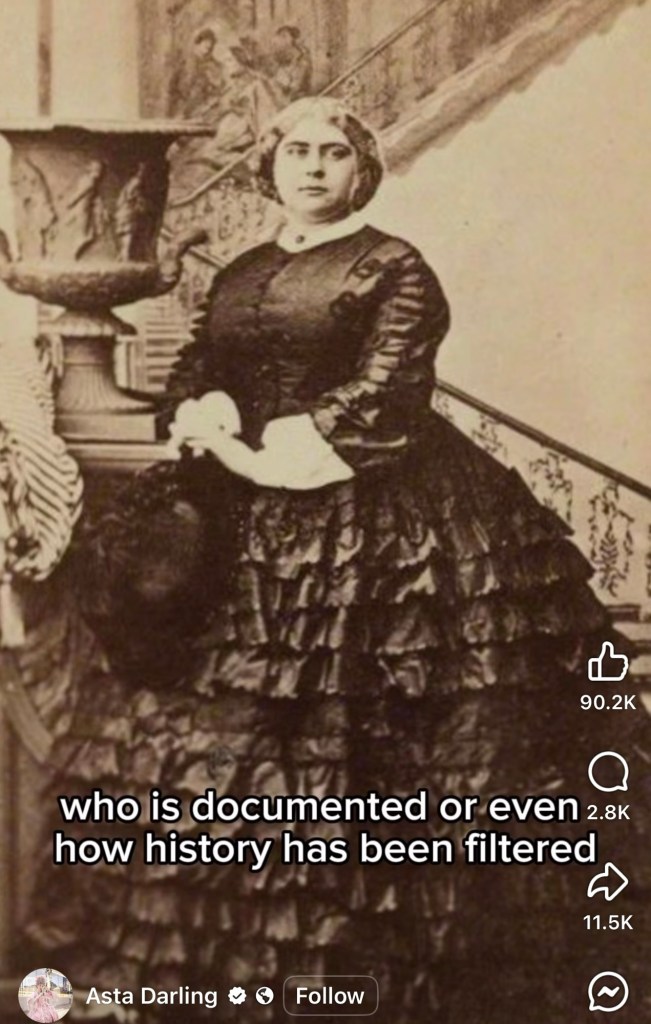
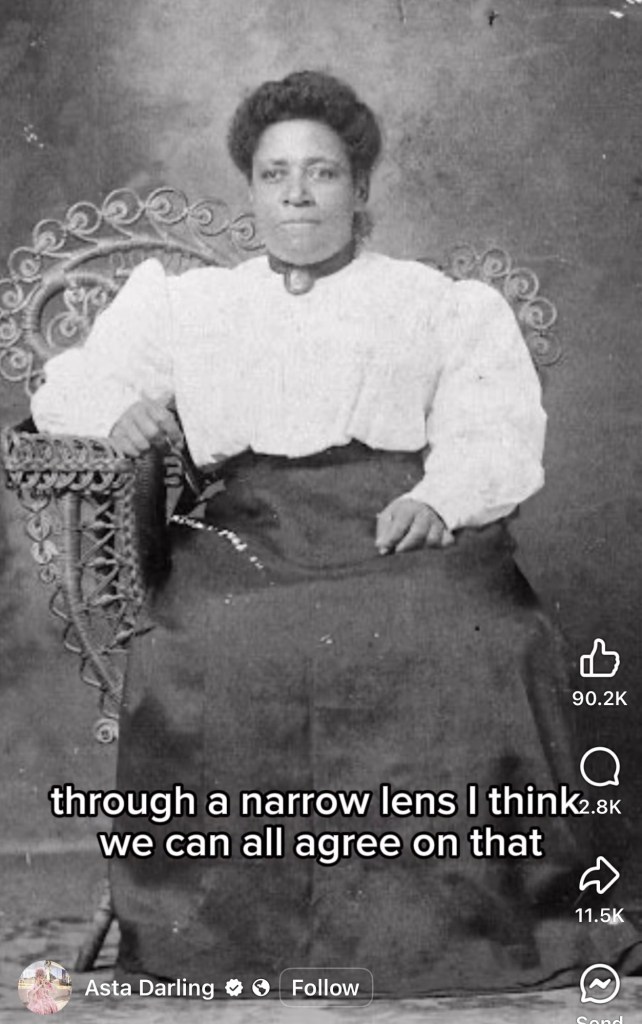
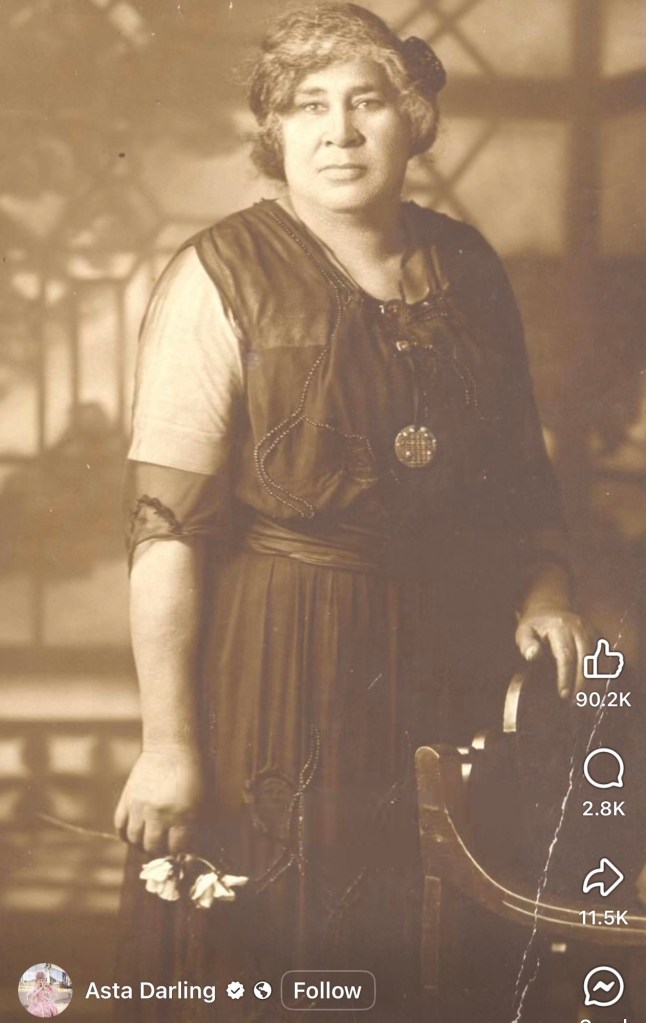
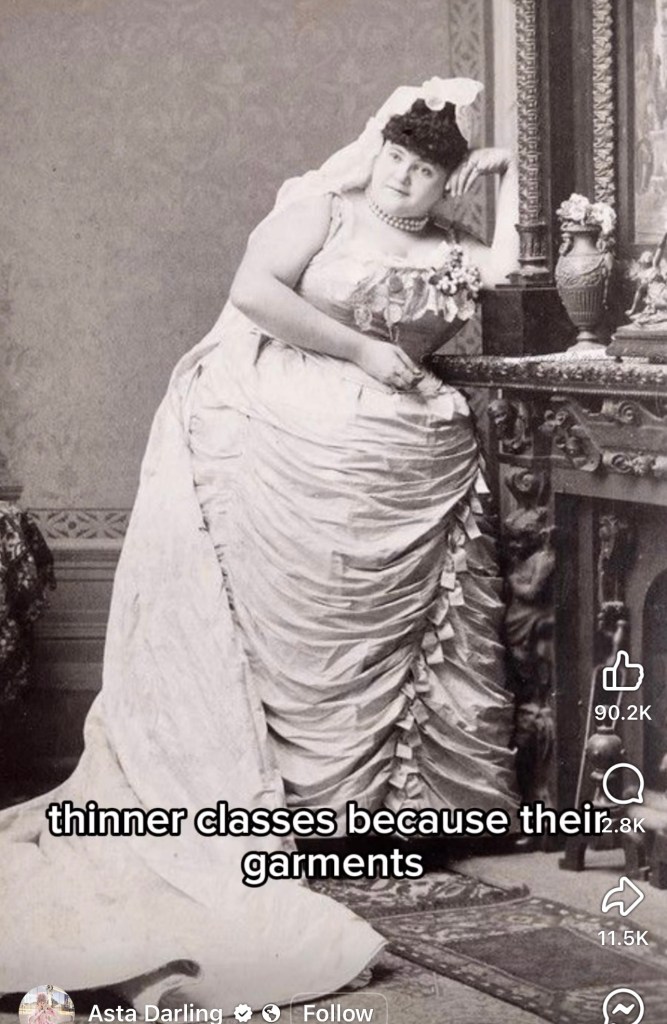
Look at this photo. I mean -really- look at it. What do you see?
Two women. Two battles.
Two hearts. Two souls. Two bodies.
When you look at this photo, try not to judge.
Instead, try to understand that we all face our own battles every day. Some we might share with others, some we keep to ourselves. They might be obvious. They might not be.
Everyone is facing something they struggle with. EVERYONE.
And no matter what separates your battles from hers, his battles from theirs, we are ALL human.
Here is a warning for all from an ER nurse who says, this is the best description of a woman having a heart attack that she has ever heard. Please read, pay attention, and SHARE……….
FEMALE HEART ATTACKS
I was aware that female heart attacks are different, but this is the best description I’ve ever read.
Women rarely have the same dramatic symptoms that men have … you know, the sudden stabbing pain in the chest, the cold sweat, grabbing the chest & dropping to the floor that we see in movies. Here is the story of one woman’s experience with a heart attack.
I had a heart attack at about 10:30 PM with NO prior exertion, NO prior emotional trauma that one would suspect might have brought it on. I was sitting all snugly & warm on a cold evening, with my purring cat in my lap, reading an interesting story my friend had sent me, and actually thinking, ‘A-A-h, this is the life, all cozy and warm in my soft, cushy Lazy Boy with my feet propped up.
A moment later, I felt that awful sensation of indigestion, when you’ve been in a hurry and grabbed a bite of sandwich and washed it down with a dash of water, and that hurried bite seems to feel like you’ve swallowed a golf ball going down the esophagus in slow motion and it is most uncomfortable. You realize you shouldn’t have gulped it down so fast and needed to chew it more thoroughly and this time drink a glass of water to hasten its progress down to the stomach. This was my initial sensation–the only trouble was that I hadn’t taken a bite of anything since about 5:00 p.m.
After it seemed to subside, the next sensation was like little squeezing motions that seemed to be racing up my SPINE (hind-sight, it was probably my aorta spasms), gaining speed as they continued racing up and under my sternum (breast bone, where one presses rhythmically when administering CPR).
This fascinating process continued on into my throat and branched out into both jaws. ‘AHA!! NOW I stopped puzzling about what was happening — we all have read and/or heard about pain in the jaws being one of the signals of an MI happening, haven’t we? I said aloud to myself and the cat, Dear God, I think I’m having a heart attack!
I lowered the foot rest dumping the cat from my lap, started to take a step and fell on the floor instead. I thought to myself, If this is a heart attack, I shouldn’t be walking into the next room where the phone is or anywhere else… but, on the other hand, if I don’t, nobody will know that I need help, and if I wait any longer I may not be able to get up in a moment.
I pulled myself up with the arms of the chair, walked slowly into the next room and dialed the Paramedics… I told her I thought I was having a heart attack due to the pressure building under the sternum and radiating into my jaws. I didn’t feel hysterical or afraid, just stating the facts. She said she was sending the Paramedics over immediately, asked if the front door was near to me, and if so, to un-bolt the door and then lie down on the floor where they could see me when they came in.
I unlocked the door and then laid down on the floor as instructed and lost consciousness, as I don’t remember the medics coming in, their examination, lifting me onto a gurney or getting me into their ambulance, or hearing the call they made to St. Jude ER on the way, but I did briefly awaken when we arrived and saw that the radiologist was already there in his surgical blues and cap, helping the medics pull my stretcher out of the ambulance. He was bending over me asking questions (probably something like ‘Have you taken any medications?’) but I couldn’t make my mind interpret what he was saying, or form an answer, and nodded off again, not waking up until the Cardiologist and partner had already threaded the teeny angiogram balloon up my femoral artery into the aorta and into my heart where they installed 2 side by side stints to hold open my right coronary artery.
I know it sounds like all my thinking and actions at home must have taken at least 20-30 minutes before calling the paramedics, but actually it took perhaps 4-5 minutes before the call, and both the fire station and St Jude are only minutes away from my home, and my Cardiologist was already to go to the OR in his scrubs and get going on restarting my heart (which had stopped somewhere between my arrival and the procedure) and installing the stents. Why have I written all of this to you with so much detail? Because I want all of you who are so important in my life to know what I learned first hand.
Be aware that something very different is happening in your body, not the usual men’s symptoms but inexplicable things happening (until my sternum and jaws got into the act). It is said that many more women than men die of their first (and last) MI because they didn’t know they were having one and commonly mistake it as indigestion, take some Maalox or other anti-heartburn preparation and go to bed, hoping they’ll feel better in the morning when they wake up… which doesn’t happen. My female friends, your symptoms might not be exactly like mine, so I advise you to call the Paramedics if ANYTHING is unpleasantly happening that you’ve not felt before. It is better to have a ‘false alarm’ visitation than to risk your life guessing what it might be!
Note that I said ‘Call the Paramedics.’ And if you can take an aspirin. Ladies, TIME IS OF THE ESSENCE!
Do NOT try to drive yourself to the ER – you are a hazard to others on the road.
Do NOT have your panicked husband who will be speeding and looking anxiously at what’s happening with you instead of the road.
Do NOT call your doctor — he doesn’t know where you live and if it’s at night you won’t reach him anyway, and if it’s daytime, his assistants (or answering service) will tell you to call the Paramedics. He doesn’t carry the equipment in his car that you need to be saved! The Paramedics do, principally OXYGEN that you need ASAP. Your Dr. will be notified later.
Don’t assume it couldn’t be a heart attack because you have a normal cholesterol count. Research has discovered that a cholesterol elevated reading is rarely the cause of an MI (unless it’s unbelievably high and/or accompanied by high blood pressure). MIs are usually caused by long-term stress and inflammation in the body, which dumps all sorts of deadly hormones into your system to sludge things up in there. Pain in the jaw can wake you from a sound sleep. Let’s be careful and be aware. The more we know the better chance we could survive.
A cardiologist says if everyone who sees this post would Share or re-post, you can be sure that we’ll save at least one life.
*Please be a true friend and SHARE this article to all your friends, women & men too. Most men have female loved ones and could greatly benefit from know this information too!














 opensenseme