I saw him there in the tree, authentically. Not everyone could see him, blinded, it was only for me.
Forest
All posts tagged Forest
There, in the Tree, was He
Published August 30, 2025 by tindertenderI saw him there in the tree, authentically. Not everyone could see him, blinded, it was only for me.
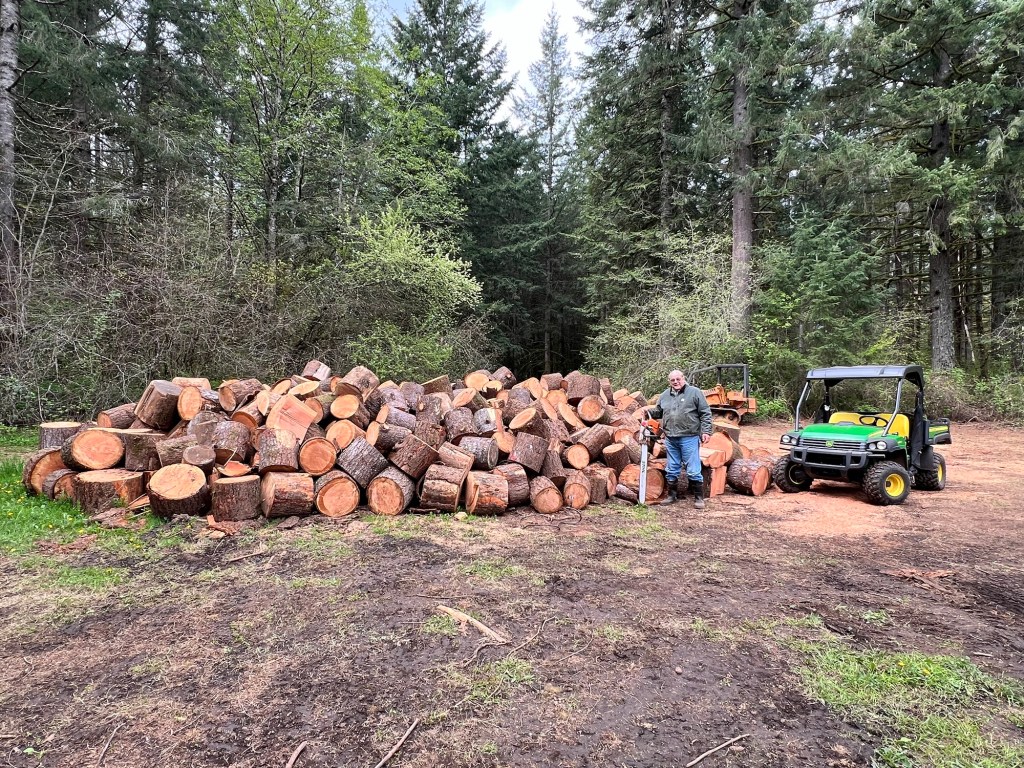
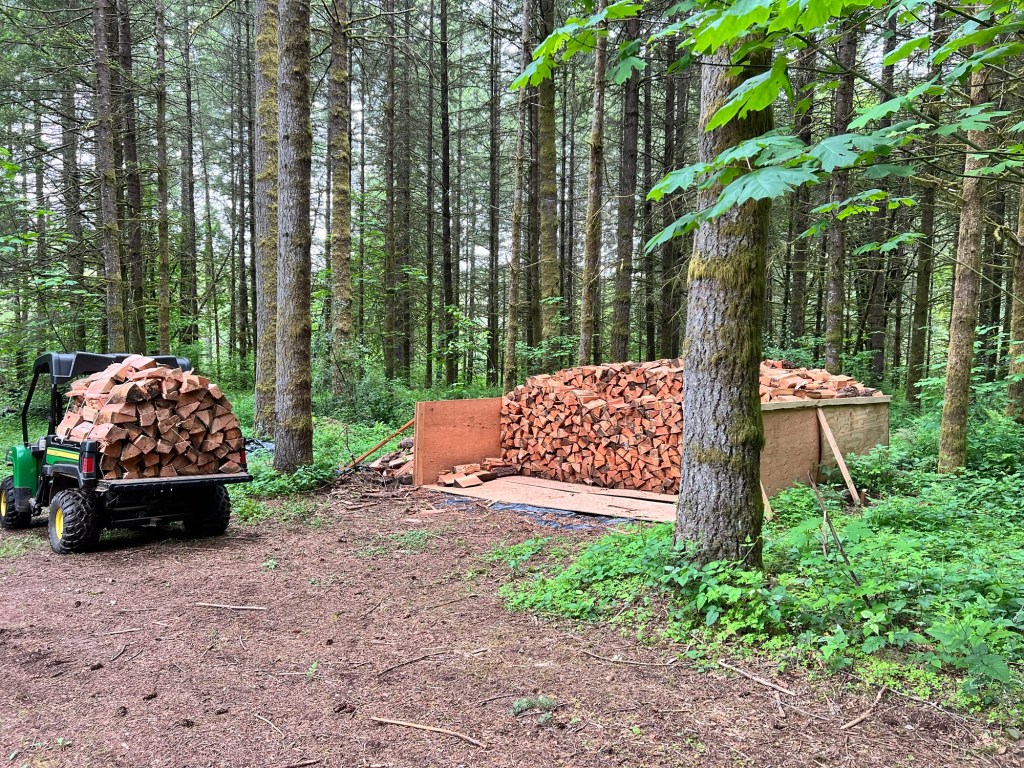
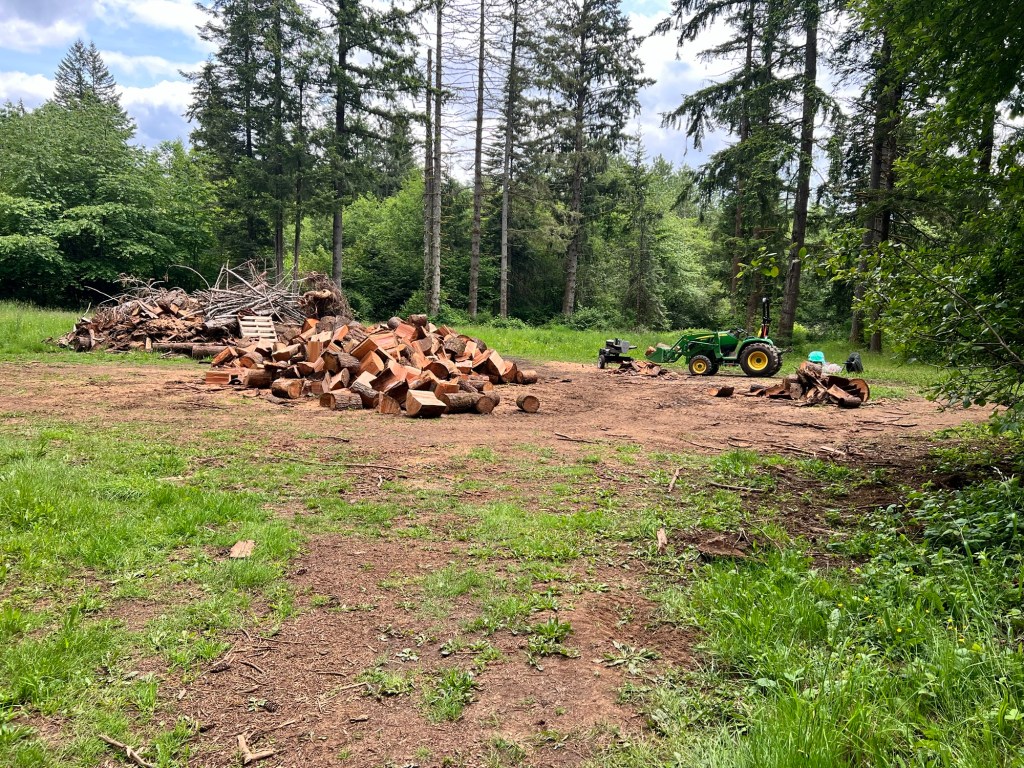
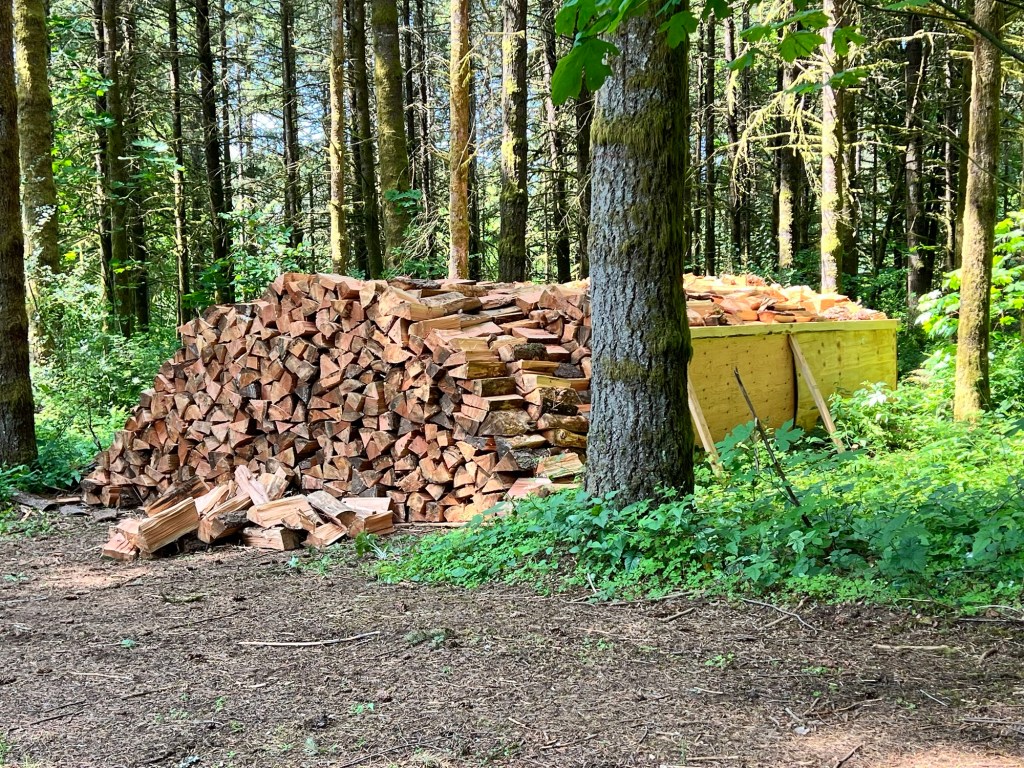
Woodworking with My Father
Published June 1, 2025 by tindertenderProject Complete.
It seems there’s only one way to do things for us and that is to go kamikazee on it. Fortunately, we accomplished task without serious injury, although both of us are ready for a mini vacation, sitting in the sun, eating cherries and trailmix.
Now, that’s a pile of firewood!
This supply should last a few years.
Blessings.






Fungi Charm
Published June 2, 2024 by tindertenderThe most chilling mushrooms in the world ..
The charms of the Fungi Kingdom 🍄
Fungi are misfit organisms. Although they are much closer genetically to animals than plants, they were considered to be plants for centuries. Their cell structure is unique, as is their manner of living. They belong to a world entirely of their own.

Have you ever eaten the cap mushroom? If you’re chewing a little now, that’s fine. Just do not drink for a while. This fungus does not harm sober people, but it lowers the wrath of God to drinkers.
The mushrooms are quite nice that grow well in places occupied by humans. They are taken to lawns, pastures and abandoned land, where the soil is disturbed regularly. They come out of the ground like oblong and white bells that then spread out to look like umbrellas. The gills at the bottom become a striking black, slowly graying the upper half of the fungus. The hats look tasty, and many people should be tempted to eat a bite.
For the most part, one bite is fine. Although inky tapas are not food mushrooms, and should not be made at a large meal or long-term meal, usually a single mushroom will not do you any harm.
Except that the inky are also called drunken bane. They take a rather puritanical view of the drink. People who drink anywhere from three hours to five days after eating an ink cap will feel that their face starts to turn red, their limbs tingling, and their heart starts to run. Then come nausea, vomiting, and in severe cases, heart problems. The more alcohol the unfortunate sinner drinks, the more they suffer. If things go bad, they will have a heart attack. A person has died from eating an ink cap and then drinking.
The inky caps sow their vengeance initiating an immediate and severe hangover. Chemical acetaldehyde is generally associated with hangovers, and experts believe it causes the sweating, nausea and vomiting that so many people regret. Finally, however, enzymes in the body break acetaldehyde and people recover. However, inky caps contain coprine, a chemical that stops the enzyme, which results in an immediate accumulation of acetaldehyde, and there is no end to hangover. It can take days to work coprine out of a person’s system.
Coprine was studied extensively by scientists who wanted to use it to make alcoholics reluctant to drink. But their methods, and their long-term effects, proved too severe. The inky do not have such scruples, so be careful with these mushrooms if you want to have a drink.
WRITTEN BY ESTHER INGLIS-Arkel


Connected ~ Breathing As One
Published February 7, 2024 by tindertenderWe breathe in what the trees breathe out and vise-versa.
Everything is interconnected.

Forest Friendlies
Published May 14, 2023 by tindertender


Even extremely damaged by fire, it holds a majesty, a beauty … the life force took a big hit. I hope it comes back to health and well-being.

The lighter portion of this rock face reminds me of a lion. It sort of looks like a little something in the lower right, too.

True Stone Steps

This one reminds me of a bear, fishing the river.

Osprey?
It is so beautiful. Reminds me of the HUman BEing… they take so many hits in life, by the time they reach 50 or 60 they’re worn, torn by the game this realm holds on life. The Living Akashic has many tales to tell.
There were a number of people rafting the river. I saw 3 boats with 6 people each come out of the water. People adding their Life Force energies to this space… may they be blessed abundantly.
Fire did its best to destroy it … or was it a cleansing instead? 🤔🔥
Food Forests
Published April 13, 2023 by tindertenderSOME FAMILIES BUILDING FOOD FORESTS
If you’ve ever wandered back roads in a developing, tropical country, you know that many of the locals grow much of their own food. You might also have noticed that their food gardens aren’t comprised entirely of small annual vegetables planted in straight rows like ours are. They are typically wild-looking plantings of edible trees, shrubs, vines, and ground covers all mingling effortlessly together, as if Mother Nature had planted the garden according to her own design. These are literally forests of food.
Forest gardening has been the standard for millennia in many tropical regions, but it’s possible in more temperate climes as well. A British chap by the name of Robert Hart first popularized the concept among European and North American gardeners with the publication of his book Forest Gardening: Cultivating an Edible Landscape in the 1980s. Food forests have also figured prominently in the permaculture movement, an approach to designing agricultural systems that mimic natural ecosystems.
Why Food Forests?
Food forests are like the ultimate organic garden. Does a forest need tilling, weeding, fertilizer, or irrigation? Nope. And that’s the goal.
Because they’re mostly perennial crops, there’s no need to till. Not tilling preserves the natural soil structure, preventing the loss of topsoil and allowing all the little microbes and soil critters to do their jobs, cycling nutrients and maintaining fertility. The deep roots of trees and shrubs make them much more drought tolerant than annual vegetables, and they shade the smaller plants below, keeping everything lush and moist in a self-maintaining—in other words, a highly sustainable—system.
Step 1: CHOOSE PLANTS
The first step in establishing a food forest is to choose your plants. The largest plants will reach into the sun, so most common fruiting trees and shrubs are fair game. The smaller plants generally need to be more shade tolerant, as they will be in the under story. But you can leave sunny patches here and there—like little forest clearings—to accommodate species that need more light (though see Step 3 for a trick to make the most of the available sunlight).
Winter is the ideal time to get started, because most edible trees, shrubs, vines, and herbaceous plants can be purchased and planted while dormant, which is better for the plants—and for your bank account. That’s because at this time of year they are sold in “bare root” form—meaning without soil or a pot—which gives the roots a more natural structure and costs less for nurseries to produce. Bare root plants are typically ordered in January or February, for planting in early March, or as soon as the ground thaws in your area. Naturally, you’ll want to stick with species that are well-adapted to your region.
CANOPY: This layer is primarily for large nut trees that require full sun throughout the day, such as pecans, walnuts, and chestnuts, all of which mature to a height of 50 feet or more.
UNDER STORY TREES: This layer is for smaller nut trees, like filberts, and the majority of fruit trees. The most shade tolerant fruit trees include native North American species like black mulberry, American persimmon and pawpaw, though many other fruit trees will produce a respectable crop in partial shade.
Vines: Grapes, kiwis, and passion fruit are the most well-known edible vines, though there are many other more obscure specimens to consider, some of which are quite shade tolerant, such as akebia (edible fruit), chayote (a perennial squash), and groundnuts (perennial root crop). Kolomitka kiwi, a close relative of the fuzzy kiwis found in supermarkets, is among the most shade-tolerant vines.
SHRUBS: A large number of fruiting shrubs thrive in partial shade, including gooseberries, currants, service berries, huckleberry, elderberry, aronia, and honey berry, along with the “super foods” sea berry and goji. Blackberry and Blueberry bushes will work well here in the U.S.
HERBACEOUS PLANTS: This category includes not only plants commonly thought of as herbs—rosemary, thyme, oregano, lavender, mint and sage are a few of the top perennial culinary herbs to consider for your forest garden—but is a catch-all term for all leafy plants that go dormant below ground in winter and re-sprout from their roots in spring. This layer is where perennial vegetables, like artichokes, rhubarb, asparagus and “tree collards” fit in.
GROUND COVERS: These are perennial plants that spread horizontally to colonize the ground plane. Edible examples include alpine strawberries (a shade tolerant delicacy), sorrel (a French salad green), nasturtiums (has edible flowers and leaves), and watercress (requires wet soil), all of which tolerate part shade.
RHIZOSPERE: This refers to root crops. It’s a bit misleading to call it a separate layer, since the top portion of a root crop may be a vine, shrub, ground cover or herb, but it’s Hart’s way of reminding us to consider the food-producing potential of every possible ecological niche. Most common root crops are sun-loving annuals, however so you’ll have to look to more obscure species, such as the fabled Andean root vegetables oca, ulluco, yacon, and mashua, for shade-tolerant varieties.
Step 2: PREPARE THE GROUND
Choose an open, sunny location for your forest garden. It can be as small as 100 square feet—a single fruit tree and an assortment of understory plants—or multiple acres. At the larger, commercial-scale end of the spectrum, forest gardening is often referred to as agroforestry. A number of tropical crops, including coffee and chocolate, are grown commercially in this way, though commercial agroforestry is uncommon in North America (other than in the context of timber plantations).
Unlike preparing for a conventional vegetable garden, there is no need to till the earth and form it into beds in preparation for a forest garden. Instead, dig a hole for each individual plant, just as if you were planting ornamental shrubs and trees. However, if the soil quality is poor, you may wish to “top-dress” the entire planting area with several inches of compost prior to planting.
One situation in which raised beds are desirable in a food forest is where drainage is poor. But rather than make the effort to construct conventional raised beds from wood, you may opt to sculpt the earth into low, broad mounds at the location of each tree. Smaller plants may then be positioned along the slopes of the mounds. A variation on this approach is to sculpt the earth into long linear “swales,” which consist of a raised berm (to provide a well-drained planting location) and a broad, shallow ditch (to collect rainwater runoff and force it to percolate into the soil beneath the planting berm).
You will need to eliminate any weeds, grass or other existing vegetation prior to planting. This can be done manually, or by smothering them under a “sheet mulch,” a permaculture tactic in which sheets of cardboard are overlaid with several inches of mulch on top of the vegetation, starving the plants for light and causing them to compost in place. Compost may be added as a layer between the cardboard and the mulch to add extra nutrients. Permaculturists often employ sheet mulching in conjunction with swales to enhance the area prior to planting.
When you’re ready to plant, simply brush aside the mulch and cut holes in the cardboard just big enough to dig a planting hole at the location of each plant. Then slide the mulch back around the newly installed plant. Maintaining a deep mulch is the key to preventing weeds, conserving soil moisture and boosting organic matter—all things that will help your food forest be self-maintaining and self-sufficient
.
Step 3: PLANT
The next step is to arrange your plants in the landscape. Position the tallest species (i.e. the ‘canopy’ plants) at the northern end of the planting area, with progressively smaller plants toward the southern end. This way the taller plants will cast less shade on the smaller ones, especially at the beginning and end of the growing season when the days are shorter and the sun hangs lower in the sky.
Of course, truly shade tolerant plants may be interspersed throughout the understory of the forest garden. You might even consider cultivating mushrooms in the shadiest zones once the large trees have matured. Edible vines may be planted on any accessible fences, arbors, or walls, and you can also train vines up trees, just like Mother Nature does—just be sure the tree is significantly larger than the vine to avoid the tree getting smothered.
The edges of the food forest are suitable for sun-loving annual vegetables, if you wish to include them. Also, keep in mind that it takes decades for large tree to reach their mature size, so in the early years of a food forest there is ample sunlight. Plant sun-loving species in the open spaces between trees and then replace them with more shade-tolerant plants as the forest matures. Good info by Modern Farmer
Good Healthy HEIRLOOM SEEDS will make all the difference when you want to get a good start on your Food Forest. At THE SEED GUY, we have a great Heirloom Seed package that has 60 Heirloom Seed Varieties, 34,000 total Seeds, all Non GMO and Sale Priced until end of April 16th at $79.
You get 49 Veggie varieties and 11 Herb Seed varieties. You would definitely be able to Feed Your Family with this Seed package, and you can store the Seeds you don’t use right away in the 10 x 14 silver mylar bag we provide. All Heirloom Seeds are Small Farm-Grown, we hand count and package to make sure you get the best germination, and they are fresh from the New Fall 2022 Harvest.
You can see Seed varieties and Order this Seed package on our website at https://theseedguy.net/seed-packages/50-60-variety-heirloom-seed-package.html
You can also see our other 8 Heirloom Seed Packages. and all our individual varieties in Stock on our Seed Guy website at https://theseedguy.net/15-seed-packages
You can Call Us 7 days a week, and up to 10:00 pm each night, to ask questions or to place an Order at 918-352-8800
Click LIKE at the top of our Facebook page, and you will be able to see more of our great Gardening Articles, New Seed Offerings, and Healthy Juice Recipes. Thank you and God Bless You and Your Family. https://www.facebook.com/theseedguy

Forest Beauty and Happiness
Published February 9, 2023 by tindertender


Love Of The Woods
Published October 9, 2022 by tindertender
Forest Fire As A Military Weapon
Published September 5, 2022 by tindertender
 opensenseme