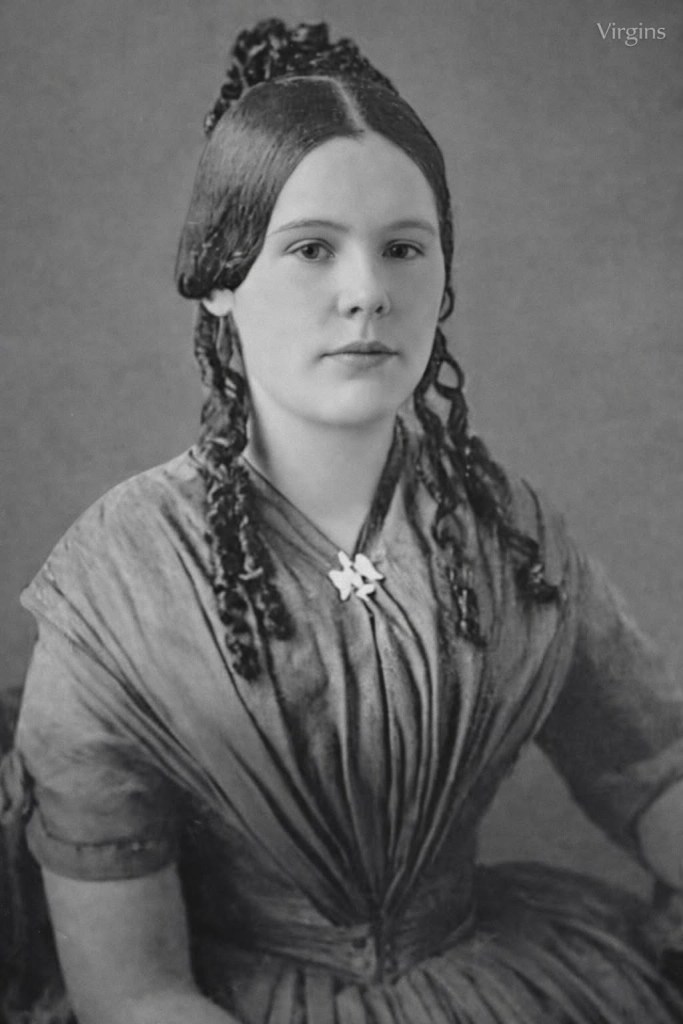
She was 14 when they sold her to a stranger—but the choice she made on her wedding night changed everything. This is the story of survival, steel, and the kind of courage that reshapes destiny.
[Author’s note: While specific details of this individual remain unverified, the following represents the reality faced by countless young women in the American frontier during the 1860s-1870s, when child marriages were legal and women’s autonomy was often negotiated by men.]
The year was 1867, somewhere in the vast American West where marriage contracts were signed like property deeds and daughters were bargaining chips.
She was fourteen years old when her father shook hands with a man who could have been her grandfather. Silver coins changed hands. A wedding date was announced. Her entire future was determined in a conversation she wasn’t allowed to attend.
They gave her a white dress that didn’t fit. They told her to smile. They said she was lucky.
She didn’t feel lucky. She felt trapped.
But here’s what her father and her husband-to-be didn’t understand: desperation doesn’t make people weak. It makes them dangerous. And cornered animals don’t surrender—they fight.
On her wedding night, while the household slept off celebration whiskey, she made the decision that would define everything that followed.
No goodbye note. No second thoughts. No looking back.
Just a mule from the stable, a stolen knife, the clothes on her back, and the kind of determination that transforms terror into action.
The frontier was merciless to runaways, especially young women alone. The cold cut through her thin dress like razors. Hunger became her constant shadow. Every town was a risk—someone might recognize her, might return her to the husband who owned her by law.
But survival is the greatest teacher.
She learned to trap rabbits. She learned to shoot straight. She learned to make herself invisible when strangers rode past. She learned that being underestimated was sometimes the best protection.
For months, she worked cattle ranches under borrowed names, her hands transforming from soft and pampered to calloused and capable. Her arms grew strong from hauling water. Her back grew straight from refusing to break.
Every sunrise she survived was proof of something: she was stronger than the men who’d traded her like livestock.
Every meal she earned herself tasted like freedom.
Every skill she mastered was another lock on the door to the life they’d planned for her.
Five years of grit, sweat, and absolute refusal to surrender led her to an opportunity most people said was impossible.
A blacksmith—an older man who’d lost his sons to war and his wife to illness—took a chance on her. Maybe he saw something in her desperation. Maybe he just needed help and didn’t care about convention.
She never gave him reason to regret it.
Her hammer strikes found rhythm. The forge became her meditation. The heat that would drive others away felt like purification. She learned to read metal like people read books—how it moved when heated, when it was ready to shape, when to strike and when to wait.
The work was brutal. The heat was suffocating. The burns were constant.
She’d never been happier.
When the old blacksmith died, he left her his tools, his forge, and his reputation. She was nineteen years old.
She opened her own smithy in a town that didn’t know her history. The sign outside read simply: “Metalwork. All jobs considered.”
Something shifted in that community.
The same men who’d insisted women belonged in kitchens or brothels or marriage beds found themselves waiting in line for her craftsmanship. Her horseshoes didn’t break after one season. Her metalwork didn’t bend under pressure. Her repairs lasted longer than the original construction.
Her reputation didn’t need defending. Her work spoke louder than gossip.
Word spread across three counties: there’s a woman blacksmith who won’t take payment until you’re satisfied, and she’s never had to refund a single coin.
They say her father heard the stories. They say he rode past her shop once—saw the sparks flying like stars against the darkness, heard the hammer singing like thunder against the anvil, watched the smoke rising from the forge like a signal fire.
They say he kept riding.
Because what could he say to her? The daughter he’d sold was gone. The woman standing in that forge, covered in soot and sweat and success, owed him nothing.
She never married. Never apologized. Never softened her hands again.
She never forgot where she came from, but she refused—absolutely refused—to let that beginning dictate her ending.
Because here’s what her story teaches us:
Your worth isn’t determined by people who see you as currency. Your story doesn’t end where someone else’s greed begins. The only prison that truly holds you is the one you accept as permanent.
Freedom isn’t handed over in signed documents or legal declarations. Real freedom—the kind that can’t be revoked by law or custom or opinion—is forged in fire, one decision at a time, by hands that refuse to stay soft and hearts that refuse to stay broken.
The girl who was sold at fourteen didn’t become a victim. She became a blacksmith. She became her own rescue. She became proof that the future is not written by the people who tried to own your past.
Sometimes the bravest thing you can do is survive the story they wrote for you.
And then pick up the hammer and forge your own ending.
One strike at a time.
 opensenseme