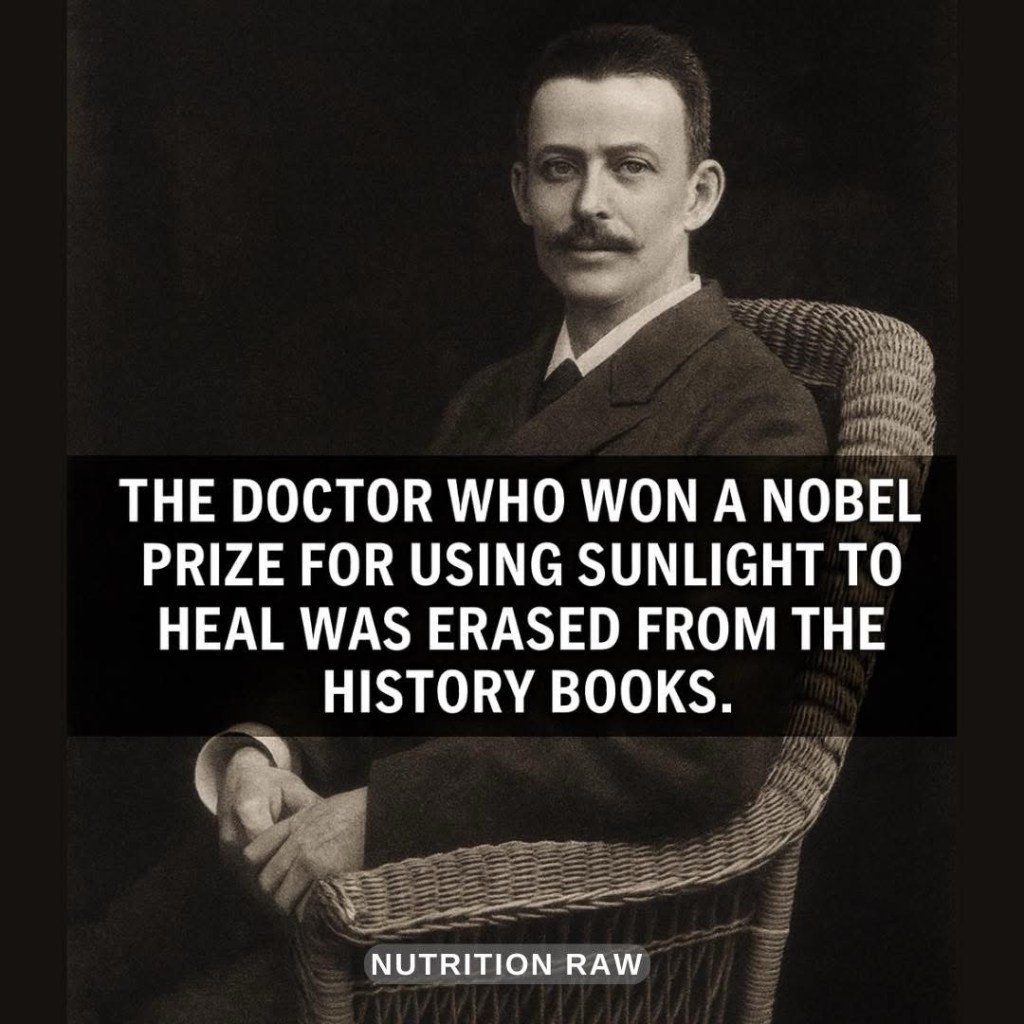
The physician who won a Nobel Prize for using light to treat diseases, particularly a form of skin tuberculosis, was Niels Ryberg Finsen
. He was awarded the 1903 Nobel Prize in Physiology or Medicine.
Key details of Finsen’s work:
- The award: Finsen won the prize “in recognition of his contribution to the treatment of diseases, especially lupus vulgaris, with concentrated light radiation, whereby he has opened a new avenue for medical science”.
- His motivation: Suffering from a debilitating metabolic disease, Finsen noticed that sunlight made him feel more energetic, which inspired his research into the medical effects of light.
- His invention: Finsen developed a carbon arc lamp, known as the “Finsen light,” to produce concentrated light.
- His discovery: He found that concentrated ultraviolet (UV) light had a bactericidal effect and used it to treat patients with lupus vulgaris, a disfiguring skin form of tuberculosis caused by bacteria.
- The Finsen Institute: The Medical Light Institute was founded in Copenhagen in 1896 to further his research. Later renamed the Finsen Institute, it became a center for phototherapy.
- Legacy: While his light therapy was eventually supplanted by antibiotics, Finsen’s work is considered a cornerstone of modern phototherapy, which is still used today to treat skin conditions like psoriasis and eczema.
https://www.nobelprize.org/prizes/medicine/1903/finsen/facts/
https://www.nobelprize.org/prizes/medicine/1903/finsen/biographical/
https://pmc.ncbi.nlm.nih.gov/articles/PMC3014565/
https://en.wikipedia.org/wiki/Niels_Ryberg_Finsen


 opensenseme